
3 Recycling and Composting Mistakes in Seattle That Could Result in Warnings or Fines for Washingtonians

Seattle firefighters have responded to 79 fires linked to lithium-ion batteries in just two years, many of them sparked inside a packed collection truck.
Other Seattle recycling and composting mistakes come with a paper trail of their own: A warning first, sometimes a bill after.
These are the common recycling and compositing mistakes in Seattle that could result in warnings or fines for Washingtonians.
Note: This is general information, not legal advice. Recycling rules, contamination limits, fine amounts, and how strictly they’re enforced all vary by city, hauler, and year, and are subject to change.
1. Tossing Bottles and Cans
Seattle treats a garbage can full of bottles and cans as a violation with a price tag attached, at least on paper.
Seattle Public Utilities requires households to keep paper, cardboard, glass, metal, and accepted plastics out of the garbage cart completely, not just mostly.
Collection crews check every cart on the route.
Slip past 10% recyclables by volume, and a bright warning tag goes on the lid instead of a pickup.
The cart just sits there.
A single-family account is supposed to get two of those tags before anything costs money.
The third violation is supposed to add a $1 charge to the water bill.
That charge is written to repeat every time a crew finds the cart still wrong.
Seattle Public Utilities’ own planning report puts it plainly: It isn’t charging that fee to single-family customers right now.
The tag on the lid, not the charge, is the part many Seattle households run into.
Apartment buildings and commercial accounts face the same rule at a steeper price: A $50 fine per violation once two written warnings have gone out.
Even there, the utility’s own reporting says enforcement is rare.
What Counts as “Contaminated” Under Seattle’s Rule
Seattle’s 10% rule sounds strict.
It only takes one grocery bag of bottles and cans dropped into a mostly full garbage cart to cross it.
Crews don’t dig through the bag to check.
They eyeball the volume and move on to the next house.
One bad week rarely triggers a fee on its own.
It’s the repeat pattern crews keep seeing, week after week, that pushes an account toward the fine stage.
2. Dumping Food Scraps and Yard Waste
Seattle’s mandatory sorting rule doesn’t stop at bottles and cans.
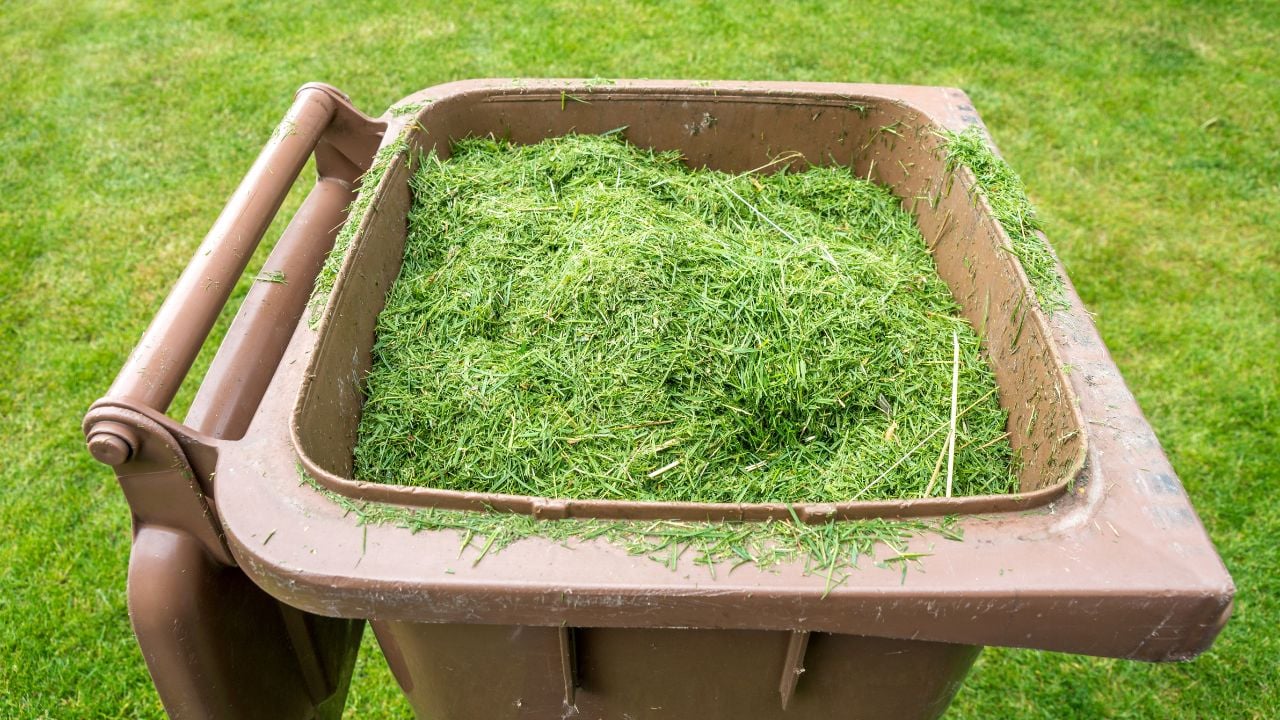
The same city ordinance that bans recyclables from the garbage also bans food scraps and yard waste, coffee grounds, apple cores, and grass clippings included.
Seattle Public Utilities’ own warning-tag notice lists compostables right alongside recyclables under that same two-warnings-then-fine process.
That surprises many residents who treat composting as optional.
It isn’t, not inside city limits.
A cart found more than 10% full of food or yard waste gets the identical tag-then-fee treatment as one full of cans.
Two warnings come first.
A charge follows after that, at least on paper.
As with the bottles-and-cans rule, that charge is the part Seattle rarely applies to a single house in practice; the tag on the lid is the part that shows up.
The single biggest trip-up is scraping dinner plates straight into the kitchen trash instead of the compost bin under the sink.
Greasy napkins and a pizza box with cheese still stuck to it belong in that same compost bin, not the garbage.
Psst! How recycling-ready is your Washington household? Run through this checklist and see where you land.
3. Throwing Batteries or Old Electronics in the Garbage
Seattle added a rule in 2024 that has nothing to do with paper or plastic.
Seattle now bans batteries, from a single double-A to an e-bike pack, plus electronics like laptops, monitors, and old tube TVs, from the garbage entirely.
The reason is fire, not clutter.
Seattle firefighters have responded to 79 fires linked to lithium-ion batteries over a recent two-year stretch, sparking when a crushed cell hits metal inside a packed truck.
A crew that spots a battery or an old monitor in a garbage cart doesn’t skip the pickup.
Seattle Public Utilities places an “oops” tag on the lid instead, a warning rather than a citation.
The garbage still goes out that day.
A household that keeps doing it can expect a follow-up phone call or letter, not a bill.
No fine, not yet.
Free drop-off exists for exactly this problem: Transfer stations, household hazardous waste sites, and Call2Recycle bins take batteries and old electronics at no charge.
Bagging Your Recyclables
Seattle households hear constantly that they should bag their garbage.
That habit follows many people straight into the recycling cart.
It shouldn’t.
Seattle and King County stopped accepting plastic bags and film in curbside recycling carts back in 2020, after haulers found the bags jamming sorting machines and shutting down whole processing lines.
Loose recyclables move through those machines the way they’re designed to.
Bagged recyclables don’t.
Workers at the sorting facility often pull a bag of cans and bottles tied shut back out and throw it away unopened, which defeats the entire trip to the curb.
There’s no tag for this one and no bill behind it, just a bag in the landfill pile instead of the recycling stream.
The fix costs nothing.
Rinse the container, pull it out of any bag, and drop it into the cart loose.
Plastic grocery bags themselves still have a home: Many Washington supermarkets keep a drop bin at the entrance for clean, dry film, separate from anything curbside.
Washington’s Recycling Reset
Washington passed a law in 2025 that will rewrite how recycling works statewide.
Many residents haven’t heard a word about it yet.
The Recycling Reform Act shifts the cost of recycling onto the companies that make the packaging, instead of leaving it entirely on cities and haulers.
Producers now have to join.
They also have to help fund the program.
By 2027, the Department of Ecology plans to publish one harmonized list of what’s recyclable statewide, ending the patchwork where one county takes glass curbside and the next doesn’t.
Draft versions of that list took public comment through August 19, 2026, a first look at what will and won’t make the final cut.
Starting in 2030, that same program is set to cover at least 90% of what local recycling services cost.
The state expects that to mean lower bills for anyone who already pays for curbside pickup.
Still No Bottle Deposit
Washington drivers who cross into Oregon see a deposit printed right on the can, refundable at the store.
They come home, though, to a state with no such system.
Lawmakers have proposed a statewide bottle deposit system more than once.
The idea has stalled in Olympia every session it’s come up.
Same result, every time.
The pitch keeps failing for a familiar reason: Grocers, through the Washington Food Industry Association, argue it would raise costs and duplicate the curbside system Washington already pays for.
Beverage distributors, notably, back the bill; grocers are the group keeping it stalled.
Oregon and California are two of the ten states that already run a bottle deposit system.
Washington keeps landing on the outside of that list.
A six-pack of cans that earns money back in Portland earns nothing at all once it crosses the Columbia River into Vancouver, Washington.
10 Washington Beach Finds Visitors Aren’t Allowed to Take Home

Washington’s coastline crosses state parks, a national park, tribal land, and protected marine sanctuaries, and every one of them writes its own rule for what a visitor can pocket.
A piece of driftwood or a handful of sand can look like harmless beachcombing and still break the law the moment you cross from one jurisdiction into the next.
10 Washington Beach Finds Visitors Aren’t Allowed to Take Home
9 Things Washingtonians Get Wrong About Their Own State

Washingtonians repeat the state’s rainy reputation as often as any tourist does, passing along a stat that doesn’t hold up.
That’s only the first mix-up on a list of things longtime residents get wrong about their own state, right along with the transplants.
