
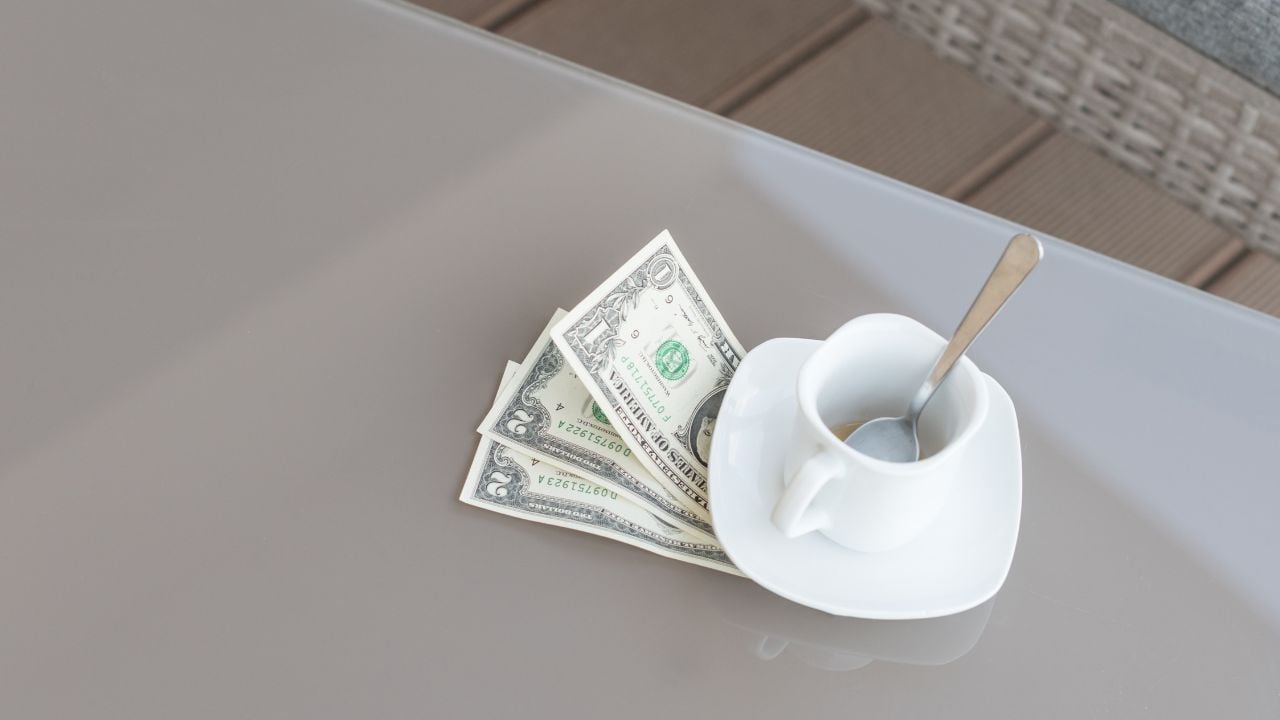
6 Restaurant Tipping Habits That Start Arguments Among Californians

California pays some restaurant workers a full minimum wage before a single tip ever lands on the table.
That’s the law.
But as Americans across the country can attest, a higher paycheck has never fully settled what a tip is supposed to cover.
These are the tipping habits that keep splitting Californians at their own dinner tables.
Note: This is general information, not legal advice. California’s tipping and wage rules are subject to change.
1. Tipping on Top of the Service Fee
California diners keep running into a mandatory “service fee” printed near the bottom of a check, right where a tip line used to sit.
Some people add a tip anyway.
Others assume the fee already covers it.
Both groups think the other group is wrong.
Former servers at Jon & Vinny’s, a Los Angeles restaurant, sued in 2023 over an 18% fee added to every check.
They argued the fee should be paid out to them as if it were gratuity, not spread across the whole staff.
The law treats a tip and a service fee as two different things.
A tip is legally the server’s money the moment a customer leaves it.
A mandatory fee isn’t automatically anybody’s money in particular.
That gap is exactly what the lawsuit argued over.
2. Trusting a No-Tipping Menu
Some California restaurants have dropped tipping altogether and folded a flat charge into every check instead.
Burdell, an Oakland restaurant the San Francisco Chronicle named one of the Bay Area’s best in 2024, charges a flat 20% charge instead of relying on tips, meant to fund steadier pay for staff.
A diner’s photo of that line item went viral on Reddit in February 2026.
The thread that followed split California diners right down the middle.
Some argued the flat charge just shifts a labor cost onto the customer, since a restaurant could raise wages on its own instead.
Others answered that walking away from a restaurant, not refusing to tip, is what changes a business’s pay practices.
A third group defended tipping itself, since a percentage tied to service is the only leverage a diner has when a meal falls short.
Owner Geoff Davis defended the flat charge publicly as a steadier paycheck for his staff.
The diners never agreed.
3. Tipping Less for a Higher Wage
California bars restaurants from paying a tipped worker anything less than the full minimum wage, no matter how much that worker collects in tips.
Many other states let an employer count part of a worker’s tips toward that wage instead.
California never has.
That gap shows up directly in what Californians leave on the table.
Restaurants on the Toast payment platform recorded California’s average tip at 17.2% in the last quarter of 2025, the lowest of any state and well below the 19.2% national average.
Delaware, which still runs a tip-credit system, averaged 21.8%, the highest in the country.
Uri Gneezy, an economist at the University of California San Diego, calls California’s guaranteed paycheck “a good reason” diners leave less.
The state’s average still isn’t close to zero.
It sits only about two points under the national number, proof many Californians keep tipping close to the old rate anyway.
The Wage Gap Behind California’s No-Credit Rule
California bars any “tip credit” outright, so a server’s hourly pay never drops just because tips came in that shift.
A tipped worker collects the full hourly wage first, then keeps every tip on top of it.
Federal law lets many other states pay a tipped worker as little as $2.13 an hour in cash wages, with tips expected to cover the rest.
That gap, not the number on any single paycheck, is what shows up when California’s tipping data is stacked against the rest of the country.
4. Adding a Second Tip to the Gratuity
California restaurants can add their own automatic gratuity to a big table’s bill, often 18% to 20%, as long as the restaurant lists the charge on the menu.
That’s legal.
A group that already sees an automatic charge printed on the check still has to decide whether a second, voluntary tip belongs on top of it.
Diners disagree about the answer.
Reader replies to LAist’s explainer on restaurant surcharges split into camps.
One reader called the practice fair as written, saying it’s usually stated on the menu and a diner who has a problem with it should go elsewhere.
A second reader called it dishonest, arguing restaurants should bake the cost into the menu price instead of splitting it out on the check.
Neither view settles what to do once that charge is already printed in front of you.
Some treat the automatic charge as the whole tip and stop there.
Others add cash anyway, worried the automatic cut somehow skips their actual server.
Psst! Plug in tonight’s California bill and see exactly what everyone owes, tip included.
5. Mistaking a Surcharge for the Tip
San Francisco restaurants often add a separate health-care line item to the bill, tied to a city law that requires employers to spend on workers’ coverage.
Che Fico, a San Francisco restaurant, has added its own 10% dine-in fee on top, separate from that health-care line and separate from any tip.
Some diners read either charge as their server’s tip and skip leaving a tip.
It isn’t.
Bay Area servers have spent years explaining the difference to confused tables.
The argument resets with every new customer who hasn’t seen a bill like it before.
6. Tipping the Twenty-Dollar Counter
California guarantees workers at large fast-food chains at least $20 an hour, a first-in-the-nation wage floor built for fast-food workers.
That wage took effect in the spring of 2024.
A counter tip screen at one of those chains still flips around and shows 15%, 20%, or more before it hands over the receipt.
Some Californians tap past it, pointing to that $20 wage as reason enough.
Others tip anyway, out of habit or because the person behind the register is watching.
Nationally, only about one in five people say they always tip at a counter-service coffee shop.
Even fewer always tip picking up takeout.
The same kind of split plays out at California’s fast-food registers.
Neither side budges.
Splitting Your Tip With the Kitchen
California servers can be required to share tips with the kitchen, a rule many other states don’t allow.
A 2009 California appellate ruling lets restaurants pool tips among cooks and dishwashers, not just servers and bartenders, as long as owners, managers, and supervisors stay out of the pool entirely.
Some servers see that as fair, since the kitchen shapes the meal too.
Others don’t.
They still resent losing a cut that a server in many other states never has to give up.
Assuming Every City Protects That Charge
California doesn’t require a restaurant to hand over every dollar of a mandatory service charge to its staff.
State law treats that money as the restaurant’s own by default.
Not always.
A restaurant can choose otherwise.
In a few cities, the law makes that choice for them.
A handful of California cities have written that protection into their own codes, requiring every dollar of a mandatory service charge to reach the staff who earned it, with none of it kept by the business.
The rest of the state has no such rule.
The exact same line item on two California checks can mean two completely different things, depending on which city the table happens to sit in.
Psst! How much do you know about California’s tipping and wage laws? Take our quiz and see how many you can get right.
Quiz
California Tip IQ
Answer these questions on California’s tipping and wage rules. We bet you can’t get them all right. Prove us wrong?
What 2024 California law guarantees workers at large fast-food chains a $20-an-hour minimum wage?
4 Fees California Drivers Pay That Many Other States Skip
At least 23 states never make a driver pay to prove a car isn't polluting.
California isn't one of those states.
The fees keep piling onto a driver's bill in ways many people never notice until they add them up.
4 Fees California Drivers Pay That Many Other States Skip
9 Things That Surprise People Who Move to California

California's electricity runs about 27 cents a kilowatt-hour, the second-priciest in the nation.
That's the kind of number a new resident never expects to see on a monthly statement.
It's far from the only surprise waiting on move-in day.
