
8 Things Mississippians Are Tired of Explaining to the Rest of the Country

Ask a Mississippian about their home state, and there’s a good chance they’ll have to correct at least one assumption.
No, Mississippi isn’t landlocked. No, Elvis wasn’t born in Memphis. And no, the Mississippi River didn’t get its name from the state.
Some things just shouldn’t have to be explained this many times.
1. Mississippi’s Coastline
Mississippi’s coastline runs for miles along the Gulf of Mexico, yet many people picture the whole state as flat, landlocked cotton country.
Harrison County’s beach stretches twenty-six miles along the Mississippi Sound, behind a seawall finished in 1926.
The sand came later. Engineers didn’t start dredging it in from the Gulf until 1951, a quarter-century after the wall went up.
Biloxi, Gulfport, and Ocean Springs all sit right on it, with charter boats, casinos, and seafood shacks lined up along the water.
Mississippians who mention a beach trip get the same surprised look every time, like they’ve made the whole thing up.
2. Where Elvis Presley Was Born
Mississippi holds Elvis Presley’s actual birth certificate, even though Memphis, Tennessee, gets much of the legend.
He was born in Tupelo on January 8, 1935, in a two-room house his father and grandfather built by hand, and he didn’t move to Memphis until he was thirteen.
Graceland wasn’t first.
Graceland sits in Memphis, so that’s the address many people know, but the crib came first, in a small Mississippi town that still runs tours through the house.
3. Mississippi River’s True Source
Mississippi shares its name with the country’s most famous river, and that overlap creates a genuine mix-up.
People meeting someone from the state often assume the river begins somewhere inside it, or that the state itself came first and lent the river its name.
Neither is true.
French explorers were already recording the name “Mississippi” for the river by the 1670s, adapted from the Anishinaabe word misi-ziibi. That’s more than a century before the Mississippi Territory existed in 1798.
The river’s actual source is Lake Itasca, in northern Minnesota, where it starts as a stream barely wide enough to wade across.
From that stream, the river runs roughly 2,300 miles before it empties into the Gulf of Mexico, picking up rain and current from states many people never think to connect to it along the way.
A Mississippian pointing to a map of the river’s full length is usually met with genuine surprise that the state only holds one edge of it.
4. What “Ole Miss” Means
Outsiders shorten Mississippi’s name to Ole Miss constantly, and many people saying it have no idea the nickname isn’t about the state at all.
“Ole Miss” belongs to the University of Mississippi. Students gave their yearbook that title starting in 1898, and the name stuck to the whole school soon after.
Not the state.
Mississippians in Oxford hear tourists use it as a stand-in for the whole state and end up walking the whole thing back, one football Saturday at a time.
Psst! How much do you know about Mississippi’s history and firsts? Take our quiz and see how many you can get right.
Quiz
Magnolia State IQ
Answer these questions on Mississippi firsts, names, and history. We bet you can’t get them all right. Prove us wrong?
Which Mississippi city claims the first time Coca-Cola was ever sold in a bottle?
5. Mississippi's 1995 Ratification Vote
Mississippi's Legislature voted to ratify the 13th Amendment, which ended slavery nationwide in December 1865, in 1995, 130 years after it took effect everywhere else.
Many people who hear that date assume it means slavery stayed legal in Mississippi, or that the state actively refused to ratify the amendment, until 1995.
The slavery question was already settled.
The 13th Amendment ended slavery nationwide the moment three-quarters of the states ratified it in December 1865, regardless of what Mississippi's legislature did decades later. Mississippi's 1995 vote was a symbolic ratification, not a legal condition of the amendment applying inside the state.
That symbolic vote came with a separate problem of its own: The completed paperwork was never filed with the federal government, so even the symbolic ratification never formally registered.
The gap sat unnoticed until 2013, when two employees at a state medical center got the certificate filed with the U.S. archivist. One had noticed the oversight after watching the movie Lincoln, and a colleague then contacted the Mississippi secretary of state's office.
It closed a paperwork gap that had lasted eighteen years, not a moral one that lasted a century and a half.
6. Mississippi's Still-Dry Counties
Mississippi ended statewide Prohibition in 1966, the last state in the country to do it, and a lot of outsiders assume that settled the matter everywhere in the state.
It didn't fully settle anything.
Alcohol sales in Mississippi are still decided county by county, under a local option system that's stayed in place for almost sixty years.
A Mississippian crossing from a wet county into a dry county can watch the shelf of a gas station change completely in the length of one drive.
Mississippi's Wet-and-Dry Map
Mississippi's Department of Revenue keeps a running county-by-county map of who allows what, since the rules never went uniform after 1966.
More than half of the state's 82 counties allow full retail alcohol sales today.
Many of the rest ban alcohol sales everywhere except their county seat. Three counties split the difference instead, going wet or dry by judicial district.
One county, Benton, still allows none at all.
7. Where the Blues Started
Mississippi is where the blues began, according to the National Park Service, even though Memphis and Chicago get more of the credit in popular memory.
Musicians like Robert Johnson, Charley Patton, and B.B. King all came up playing in the Delta's small clubs and cotton-country crossroads before their careers carried them north.
The Delta came first.
Memphis built the recording studios and Chicago built the record labels, but the sound both cities packaged up started in Mississippi fields and front porches decades earlier.
8. Mississippi's New State Flag
Mississippi flew a flag carrying the Confederate battle emblem for 126 years, from 1894 to 2020, and some people picturing the state today still imagine that same flag flying.
Lawmakers retired that flag first. The Mississippi Legislature passed a bill retiring it in June 2020, and Governor Tate Reeves signed it into law days later.
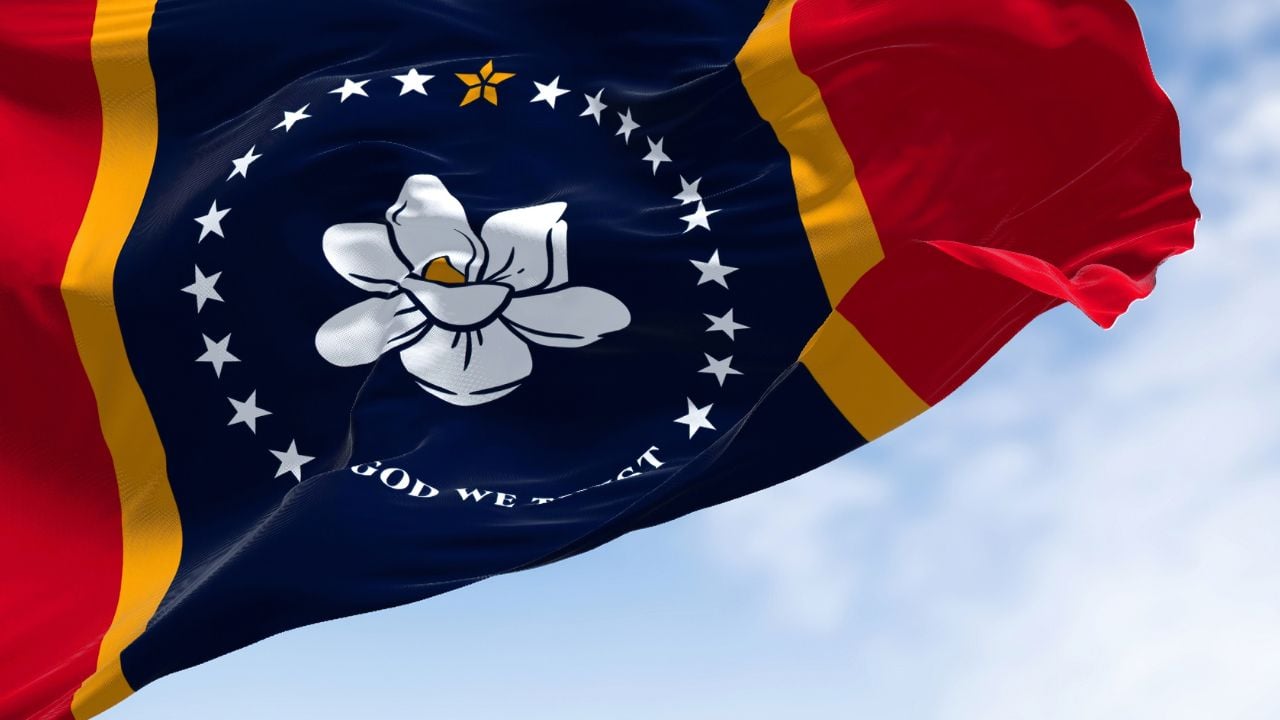
Voters then chose its replacement that November: A design built around a magnolia blossom, a nod to the state's long-running nickname, the Magnolia State.
The new flag didn't become Mississippi's official state flag until the Legislature and the governor signed off on it again in January 2021.
It took three separate steps to finish the job.
The new flag flies over the state capitol in Jackson today, stitched with the words "In God We Trust" beneath the magnolia.
Mississippians who left the state before 2020 sometimes don't recognize the flag on a license plate until somebody points it out to them.
9 Things Mississippians Miss Most After They Move Away

A Mississippi transplant can spot the gap on a grocery shelf a thousand miles from home, especially in the condiment aisle.
These are the things Mississippians miss most once they've packed up and moved away.
9 Things Mississippians Miss Most After They Move Away
10 U.S. Towns Where Residents Still Get Their Mail in an Unusual Way
Some towns never gave up on the way mail used to arrive, and the method isn't what many people expect.
These are the U.S. towns still getting their mail in ways the rest of the country left behind.
10 U.S. Towns Where Residents Still Get Their Mail in an Unusual Way, including 2 in Alaska
