

6 Kinds of Evidence That Move a Texas Appraisal Review Board, and the Ones That Don’t

Texas homeowners reportedly left $1.2 billion in property tax savings on the table in 2025.
Ownwell’s 2025 analysis of tax rolls across 17 Texas counties found that roughly seven in ten homeowners skipped their protest that year.
Many who filed a protest walked away with a lower bill.
The difference comes down to what a homeowner hands the Appraisal Review Board (ARB), and these are the kinds of evidence that move it, and the kinds that don’t.
Note: This is general information, not legal or tax advice. Protest deadlines and evidence rules are subject to change, so confirm current requirements with your county appraisal district.
1. Recent Comparable Sales
What similar homes nearby recently sold for carries more weight at a Texas ARB hearing than almost anything else a homeowner can bring.
Sales price documentation sits on the Texas Comptroller’s own list of records every property owner should gather, listings and closing statements included.
Three or four closed sales from your own subdivision beat a hundred general complaints about rising prices.
Match the details that matter: Square footage, age, condition, and lot size, not just the same zip code.
A closing statement outranks a listing that never sold.
A listing’s just an asking price.
A closing statement is proof.
2. Equity Comparison
A homeowner’s equity argument forces a Texas ARB’s hand when the math shows the county over-valued them next to their neighbors.
Texas Tax Code Section 41.43(b) puts the burden on the appraisal district at that hearing: Unless it can show the property’s appraisal ratio sits at or below the median for comparable homes, the ARB has to rule for the homeowner.
Market value never even enters the argument.
An owner just has to show their home is assessed higher, proportionally, than similar homes around it.
That’s a different, easier bar than the one a district court applies later, where Texas Tax Code Section 42.26 requires the ratio to exceed the median by at least 10% before a judge orders relief.
This kind of median-level calculation is exactly the sort of number a spreadsheet can build from public sales records, and it’s on the Comptroller’s own list of evidence to bring.
Just the math.
3. Certified Fee Appraisal
A certified appraiser walking into the picture changes an ARB hearing’s shape.
Texas Tax Code Section 41.43(a-1) lets an owner of a home valued at $1 million or less deliver a certified appraisal, completed within the prior 180 days, to the chief appraiser at least 14 days before the hearing.
Do that, and the burden of proof flips.
The appraisal district now has to disprove the appraiser’s number by “clear and convincing evidence,” a far higher bar than its usual standard.
If the appraisal district misses that standard, the law rules in the homeowner’s favor automatically.
Big leverage.
That’s a lot of weight for one document to carry.
4. Photos of Property Condition
No one from a Texas ARB walks through your house before setting its value.
Tax Code Section 23.01(b) is what lets appraisal districts value homes with a mass-appraisal model built on statistics and recent sales, not a room-by-room inspection of every property.
That’s how a cracked slab, a sagging roofline, or water damage in a guest bath slips through completely.
Property photographs, yours and any comparables, are exactly the sort of thing the Comptroller’s evidence checklist calls out by name.
A dated photo turns a vague condition complaint into something the board can see.
Proof, not opinion.
5. Repair Estimates and Cost-to-Cure Numbers
A problem without a dollar figure attached carries no weight at a Texas ARB hearing.
A vague complaint about a cracked foundation moves nothing on its own.
A contractor’s written estimate for that same repair does.
Numbers persuade.
Receipts and repair estimates share space on the Comptroller’s evidence checklist with sales records and photographs. That’s sourced, dated paperwork, not a verbal complaint.
Bring the number, and the board has something concrete to weigh against the county’s value.
Bring only the complaint, and there’s nothing to weigh at all.
6. Property Survey or Deed Record
A county’s own paperwork is sometimes wrong before a Texas ARB ever gets to condition or comparables.
County records occasionally overstate a lot’s square footage, misdraw a boundary line, or list the wrong owner.
Property surveys and deed records made the Comptroller’s checklist for exactly this reason.
Facts first.
A licensed surveyor’s plat or a recorded deed settles the question in a way no photograph or sales chart can.
Fix the square footage, and the assessed value shifts too, since mass appraisal math is built on a price-per-square-foot calculation.
It corrects the number by correcting the facts underneath it, not by arguing what the home is worth.
What Doesn’t Move the ARB
Frustration with a tax bill carries no weight at a Texas ARB hearing without something behind it.
The Comptroller’s own guidance for hearings is direct about this: A homeowner can’t simply show up and call the appraisal wrong without something to prove it.
Comparable sales carry limits of their own, too.
Texas Tax Code Section 41.43(b) requires a comparable to be similarly situated, or of the same general kind or character, to the property under protest, which rules out a sale from across town or a completely different kind of home.
An automated home-value estimate fares no better than a bare complaint.
A printout from an online estimator isn’t an actual sale, and it doesn’t appear anywhere on the Comptroller’s own list of hearing evidence.
Both sides get to argue their case at a hearing, but arguing isn’t evidence, and a Texas ARB rules on what a homeowner can document, not on how the homeowner feels about the bill.
Documentation, not frustration.
Psst! Want to see how these kinds of evidence stack up side by side? Tap a column to sort, or search for the one you’re planning to use.
The Protest Deadline Clock
Missing the protest deadline means no ARB hearing, no matter how strong the evidence.
State law sets the deadline at May 15, or 30 days after the appraisal district mails its notice of appraised value, whichever falls later.
Homeowners with a homestead exemption usually see May 15 control, since the appraisal district mails their notice by April 1 and 30 days from that date lands before mid-May.
Owners of other property see their notice mailed later, by May 1, which often pushes their personal 30-day deadline past May 15 instead.
Either way, the appraisal district’s mailing date is the number that matters, not the day the notice arrives in the mailbox.
Mark the date.
Texas’s Protest Deadline Has Built-In Exceptions
Missing May 15 doesn’t automatically end a Texas homeowner’s protest.
State law lets the ARB hear a late protest anyway if the owner shows good cause for the delay, as long as it’s filed before the board approves that year’s appraisal records.
Separate exceptions cover active military deployment overseas or offshore work in the Gulf of Mexico when the deadline passed.
Both of those exceptions require proof: A deployment order and military ID for service members, or a letter from an employer or a sworn affidavit for offshore workers.
The Informal Conference
Before any Texas ARB hearing happens, homeowners usually get a warm-up round first: The informal conference.
Texas law entitles every homeowner who requests one to an informal conference with the appraisal district’s own staff, held before the formal ARB hearing.
Bring the same evidence to that meeting.
Settle it early.
Some protests resolve there, since appraisal district staff can agree to adjust a value without the case ever reaching the board.
A protest that doesn’t settle informally moves on to the ARB, where the same evidence gets a formal, on-the-record hearing instead.
The chief appraiser’s own staff sit across the table at that informal step, not the ARB members who hear the formal case.
Nothing brought to that meeting goes to waste if it doesn’t settle there, either, since the same paperwork carries straight into the ARB hearing that follows.
8 Texas Fence and Property-Line Rules Homeowners Learn Mid-Argument
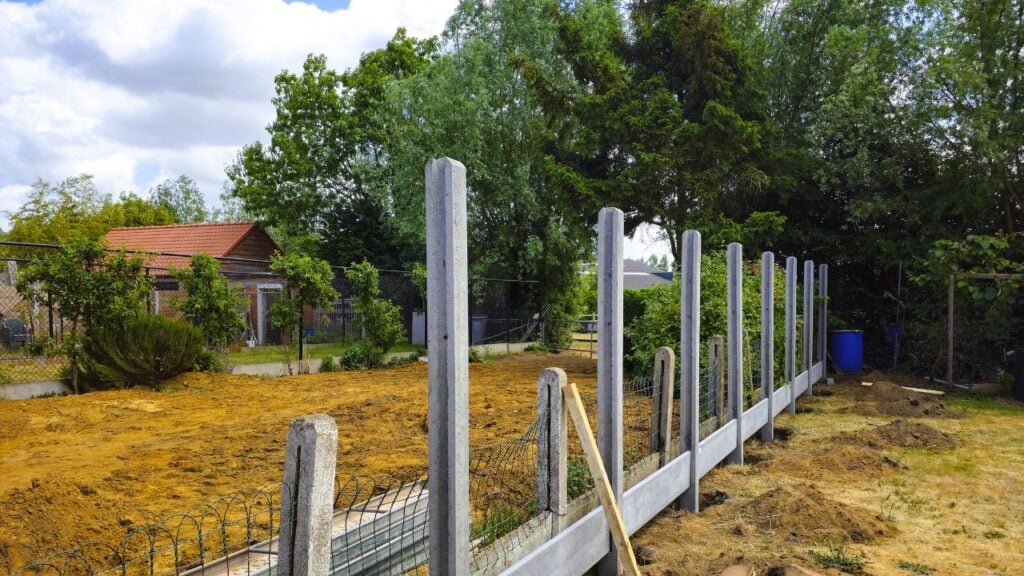
Property lines start their own kind of argument in Texas, and it rarely begins with anyone checking the actual rule first.
By the time a neighbor calls the city or loops in a homeowners association (HOA), the disagreement has usually been going on for weeks.
8 Texas Fence and Property-Line Rules Homeowners Learn Mid-Argument
9 Arguments Texas and Oklahoma Will Never Settle
Texas leads its all-time football series against Oklahoma by fourteen games.
Ask an Oklahoman what that proves, and the answer comes back fast: Nothing.
