
6 Rules That Decide When a South Carolina County Can Haul Off a Car in Your Yard

That old car in your yard might be perfectly legal today, and a county problem tomorrow.
The difference can come down to its condition, where it sits, and even how many other vehicles are on the lot.
Here are the rules that can determine when a South Carolina county can haul a car off your property.
Note: This is general information, not legal advice. Notice periods, correction windows, and removal procedures vary by county and are subject to change, so confirm the current process with your county’s code enforcement office or sheriff’s department.
1. The Legal Definition of a Derelict Car
South Carolina law draws a hard line between a car that’s simply old and a car the state calls derelict.
A vehicle only crosses into that category when it meets one of a short list of state triggers, and local ordinances build on that list with a few added requirements.
An expired registration counts, but only once the registered owner no longer lives at the address on file.
So does a missing motor, stripped identification plates, or an owner who’s disclaimed the car outright.
A car more than eight years old with no current registration lands on the list too, which sweeps in more driveways than you’d expect.
West Columbia’s ordinance adds another trigger: Tires that aren’t mounted and inflated the way they’re supposed to be.
Horry County runs the other direction and requires all three of its conditions at once: disrepair, no usable purpose left, and no current tag.
A little rust alone isn’t a trigger.
The label has to fit first.
2. County Reach Past the Fence Line
South Carolina counties get their authority to reach onto private land from a 1989 law that lets a county write rules for health and order inside its borders.
Those ordinances put the duty on whoever controls the property, not whoever holds the title to the car, and there’s no exception for a car that isn’t yours.
State law also lets an officer, or a contractor the county hires, go onto private property to enforce the vehicle rules.
Greenville County’s code enforcement division, for example, handles the standards for abandoned or dismantled vehicles on private property, separate from whatever the sheriff’s office covers on public land.
Your address takes the citation.
Whose Name Is on the Title Doesn’t Matter Here
On South Carolina property, code enforcement looks at who controls the land, not whose name sits on a vehicle’s title.
West Columbia’s version of the rule lets either the registered owner or the property owner disclaim the vehicle.
That’s why a homeowner can end up cited over a car that legally belongs to someone else, a family member, an ex, or an estate still working through probate.
Holding the title to that car doesn’t shield your yard from a citation.
3. The Covered-Car Exception
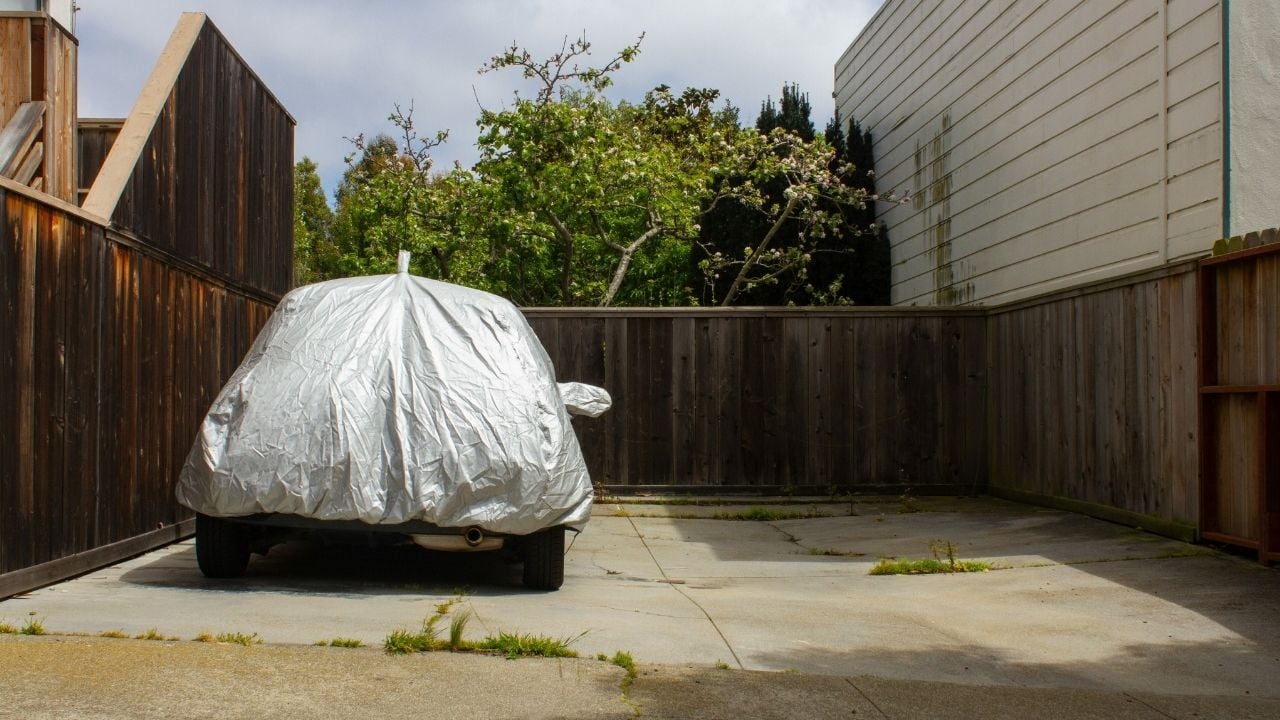
The state’s whole abandoned and derelict vehicle article skips a vehicle that’s housed or protected from the elements, unless that vehicle turns into a hazard or a nuisance.
Local ordinances build the same idea into a cover rule, and it takes a full vehicle cover, not a tarp thrown over the hood.
Horry County’s ordinance allows one junked vehicle to sit in a rear yard if a canvas covering conceals it, and that covering has to stay in good repair.
Horry leaves two other doors open.
Park the vehicle inside a building, or screen it from the street and from neighboring property.
West Columbia’s version of the same idea works almost identically: One covered vehicle per lot, tucked in a rear or side yard or parked on a paved driveway, capped at two occurrences a year.
A second vehicle, even covered, breaks the limit.
4. A County-by-County Countdown
South Carolina never set one statewide number of days for a homeowner to fix a cited vehicle, and that’s by design under home rule.
Horry County’s nuisance ordinance gives a cited property owner no less than 10 days to correct the violation, and the citation itself counts as legal notice.
Another county down the coast can pick a different number.
Both are equally legal.
Nothing forces two neighboring counties to agree.
5. Windshield Tag as Legal Notice
South Carolina law doesn’t make anyone mail you a certified letter first.
An officer places a colored tag right on the vehicle, and that tag is the only legal notice the state requires.
On a highway, the vehicle has to be gone within 48 hours.
On other public or private property, the window stretches to seven days from the date on the tag.
No knock required.
One limit matters here.
The tag rule covers a vehicle left somewhere without the consent of whoever controls the property.
A car sitting in your yard with your blessing runs through your county’s nuisance ordinance instead.
6. The Second-Tag Shortcut
South Carolina’s tagging rule has a repeat-offense shortcut many homeowners don’t know exists.
State law counts a vehicle that’s already carried two colored tags as an abandoned vehicle.
No third warning.
Once the second tag has come and gone, a law enforcement agency can remove the vehicle right away, with no fresh seven-day clock to wait out.
The first two tags were the warning.
A Magistrate’s Sale for Unclaimed Cars
South Carolina doesn’t let a county just haul an unclaimed vehicle to the scrapyard once it’s off your property.
State law routes it through a public auction under a magistrate’s order of sale, after notice goes out by certified or registered mail to the owner and any lienholders.
The sale price pays towing, storage, and notice costs first.
The towing company or storage lot holding the car is the one that starts it.
Whatever’s left over sits aside for the owner or lienholder for 90 days before it’s gone for good.
A buyer at that auction gets a clean title, free of your name and every old lien attached to it.
Psst! How much do you know about South Carolina’s county governments and the quirky powers they hold? Take our quiz and see how many you can get right.
Quiz
Carolina County Powers Quiz
Answer these questions on South Carolina’s county governments and the powers they hold. We bet you can’t get them all right. Prove us wrong?
How long is a term for a South Carolina county council member?
Ten Cars, One Salvage Yard
South Carolina draws a hard line between a homeowner with a few project cars and an actual junkyard, and the number is ten.
State law defines a salvage yard as any licensed retailer holding ten or more derelict vehicles and regularly buying or selling used parts off them.
The tenth car changes everything.
That threshold matters because a licensed salvage yard answers to a different set of rules than a residential lot ever does: Zoning setbacks, retailer licensing, and separate inspection standards among them.
Cross into salvage-yard territory without that license, and the violation stops being about one derelict car sitting too long and becomes an unlicensed business running out of a residential lot.
9 South Carolina Beach Parking Mistakes Visitors Keep Making
Isle of Palms hands out a flat fine for parking against traffic, even on a public street with no meter anywhere in sight.
That's just one of several South Carolina parking rules that catch visitors who assume a free street means no rules at all.
9 South Carolina Beach Parking Mistakes Visitors Keep Making
10 Things Trash Crews in South Carolina Wish You'd Stop Doing
A dead battery seems harmless once it lands in the trash can, but fire crews across South Carolina keep responding to lithium-ion battery fires breaking out inside garbage trucks.
These are the habits trash crews in South Carolina wish residents would drop for good.
10 Things Trash Crews in South Carolina Wish You'd Stop Doing
