
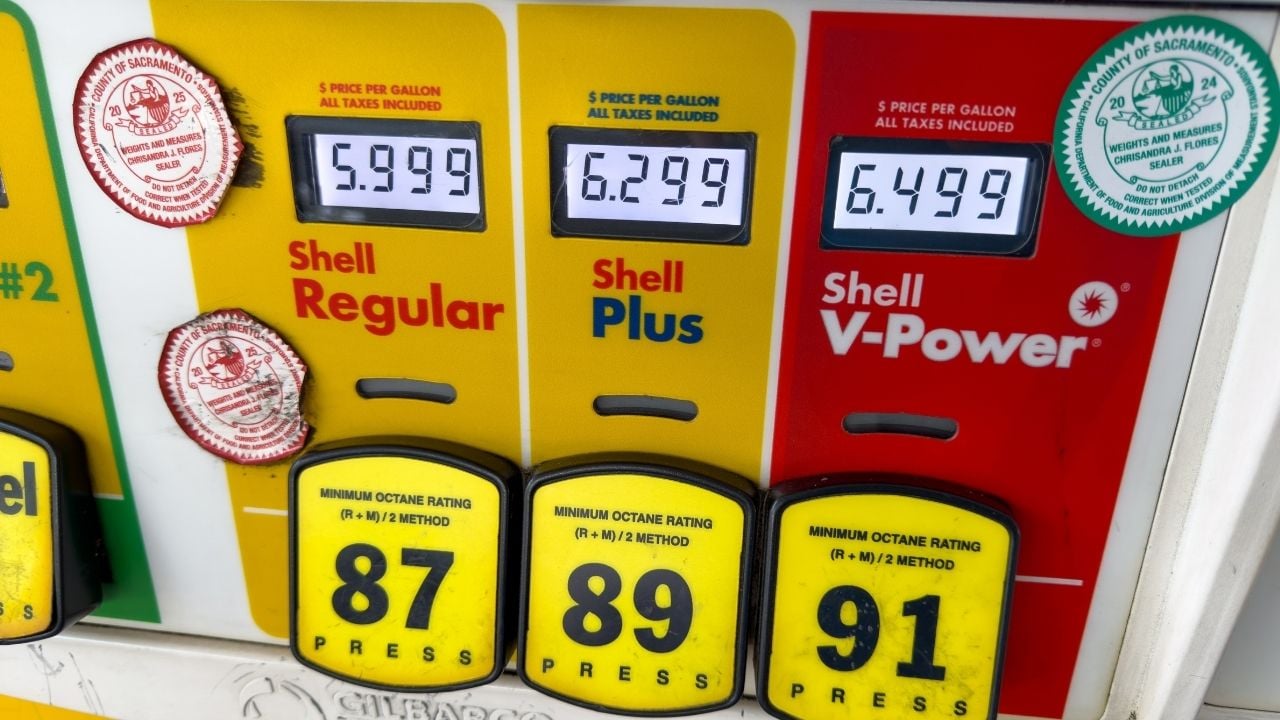
6 Fuel Price Assumptions That Cost Californians at the Wrong Chain

California’s gas tax runs 63.4 cents a gallon, the highest base rate of any state in the country.
That’s before a single chain adds its markup on top.
A rewards app or a loyalty discount can look like it closes that gap, when it barely dents it.
These are the fuel price assumptions that cost Californians at the wrong gas station chain.
1. ARCO’s Cash-Only Catch
ARCO often posts the lowest number on the block, and that’s exactly the assumption that trips drivers up.
The sign shows the cash price only.
Not the total.
Pay with a debit card at ARCO pumps in California, and the station adds a flat 35-cent fee to the transaction, confirmed on ARCO’s own site.
Credit cards can cost even more at pumps that accept them, since ARCO may add a surcharge on top of the card networks’ own fees.
On a small fill-up, that fee can erase ARCO’s entire price edge over the station across the street.
A driver who pays cash at the register, not the card reader at the pump, keeps that entire 35 cents instead of handing it to ARCO.
2. 76 and Chevron’s Hometown Myth
76 and Chevron carry a hometown feel that many California drivers use to justify a higher price at the pump.
Times changed.
Chevron moved its corporate headquarters from San Ramon to Houston in 2024, and it has been relocating California staff to Texas ever since.
76 is owned today by Phillips 66, also headquartered in Houston, after Union Oil Company of California sold the brand’s rights in 1997.
Neither brand sets its price by hometown loyalty, and the state’s own numbers show what that loyalty costs a driver who pays for it anyway.
Gas at a California Chevron station runs an average of 48 cents more per gallon than at an unbranded pump nearby, the California Energy Commission found, with 76 close behind among the state’s priciest branded pumps.
On a 15-gallon fill-up, that 48-cent gap adds up to more than $7 spent on loyalty to a company that’s called Texas home since 2024.
3. Same Sign, Different Price
Gas station chains like Shell, Mobil, and 76 look like one company from the sign out front.
An independent dealer usually owns the pumps.
Ownership beats the logo.
NACS, the trade group for the country’s convenience stores and fuel retailers, explains that a branded retailer may cut its price to stay competitive against whoever else sits nearby.
A dealer under that same brand a few miles away might hold a higher price to cover steeper rent or a slower corner.
Loyalty to a logo doesn’t buy a discount, and picking the right chain isn’t the finish line either.
The savings sit in the pump itself, not just the sign above it. A wrong location under the right brand costs a driver just as much as the wrong chain.
Psst! Think you can spot which of these gas-pump claims are myths? Flip each card and find out.
4. No-Name Pumps, Same Fuel
Independent stations without a brand on the sign lose business to drivers who assume the fuel must be inferior to earn that price.
That’s a bad guess.
California law requires every gallon of gasoline sold in the state, no matter which pump it comes from, to meet the same reformulated blend the California Air Resources Board set to cut smog-forming emissions.
The fuel underneath is the same fuel.
An unbranded station usually charges less because it skips the licensing fees a corporate logo carries, not because it’s cutting corners on the gasoline.
The savings come from the sign, not the tank.
5. Shell’s Only Game in Mono County
A remote stretch of California highway feels like just another fill-up.
Many drivers assume the price at the sole station in sight can’t stray too far from what they’d pay back in the nearest city.
That math falls apart.
Mono County, along Highway 395 in the Eastern Sierra, posted the highest average county gas price in the country for months in 2026.
The region’s only fuel stop, a Shell station in June Lake, charged more than $7 a gallon at one point that spring.
No competing pump sits for miles in either direction there, so the Shell sign isn’t holding a competitive price.
It’s the only price on the table.
A station with zero competition nearby has no reason to price fairly, and Mono County’s Shell pump didn’t.
6. The Limits of Rewards Apps
A chain’s own fuel rewards app feels like the obvious way to beat California’s prices, and many drivers sign up expecting relief.
Small relief, at best.
Chevron’s Techron Advantage card knocks 3 cents off a gallon to start, with the option to earn up to 10 cents more per gallon by spending several hundred dollars a month elsewhere on the card.
That’s money, just not much of it.
That 10 cents caps out fast. Chevron’s own program terms cap total Visa Spend Fuel Discounts at $300 in any calendar year, no matter how much a driver charges elsewhere on the card.
A station a few blocks away, carrying no rewards program at all, can already be priced lower than the discounted total at the loyalty-app pump.
A driver who maxes out that $300 ceiling is still buying gas at whatever price sits on the sign for the rest of the year, rewards app or not.
Price Floor Under Every Pump
California drivers already pay more at the pump than anyone else in the country, an average of $5.59 a gallon in late August 2026, and the state adds a bigger built-in cost to every gallon than any other state, no matter which chain’s sign hangs over the pump.
Every chain owes it.
A driver who crosses into Nevada or Arizona for a fill-up skips part of that built-in cost, which is why border-town pumps draw so much California traffic on weekends.
AAA’s own numbers put California’s statewide average about $1.08 higher per gallon than Arizona’s and about 80 cents higher than Nevada’s, as of late August 2026, according to AAA’s state-by-state tracker.
What California’s Extra Cost Covers
California’s excise tax on gasoline rose to 63.4 cents a gallon on July 1, 2026, the highest base rate in the nation, and it rides on top of the 18.4-cent federal excise tax every gallon in the country already carries.
An average 2.25% state sales tax stacks on top of that.
Two environmental programs add more after that: The Low Carbon Fuel Standard, worth about 17 cents a gallon, and the state’s cap-and-trade program, worth about 25 cents, according to the California Energy Commission.
A driver paying less at one chain isn’t skipping any of that stack.
Every station collects those same layers before setting its own markup on top.
9 California Car Registration Fees That Catch New Residents Off Guard
Fuel isn’t the only place California charges more than a new resident expects.
The state gives a new resident just 20 days to register a car after moving, and the penalty for missing that window rises fast the longer it drags on.
9 California Car Registration Fees That Catch New Residents Off Guard
8 Foods Californians Once Loved That Would Turn Stomachs Today

A California hostess in the 1950s planned her dinner party around what fit in a can and what held its shape on a serving tray.
Every guest cleaned their plate and asked for the recipe, and there wasn’t a fresh vegetable in sight.
8 Foods Californians Once Loved That Would Turn Stomachs Today
