
7 Rules That Decide Which California Neighbor Pays When a Shared Tree Falls

In 1872, California decided who owns a tree standing on a property line, and the rule in the state’s Civil Code hasn’t changed since.
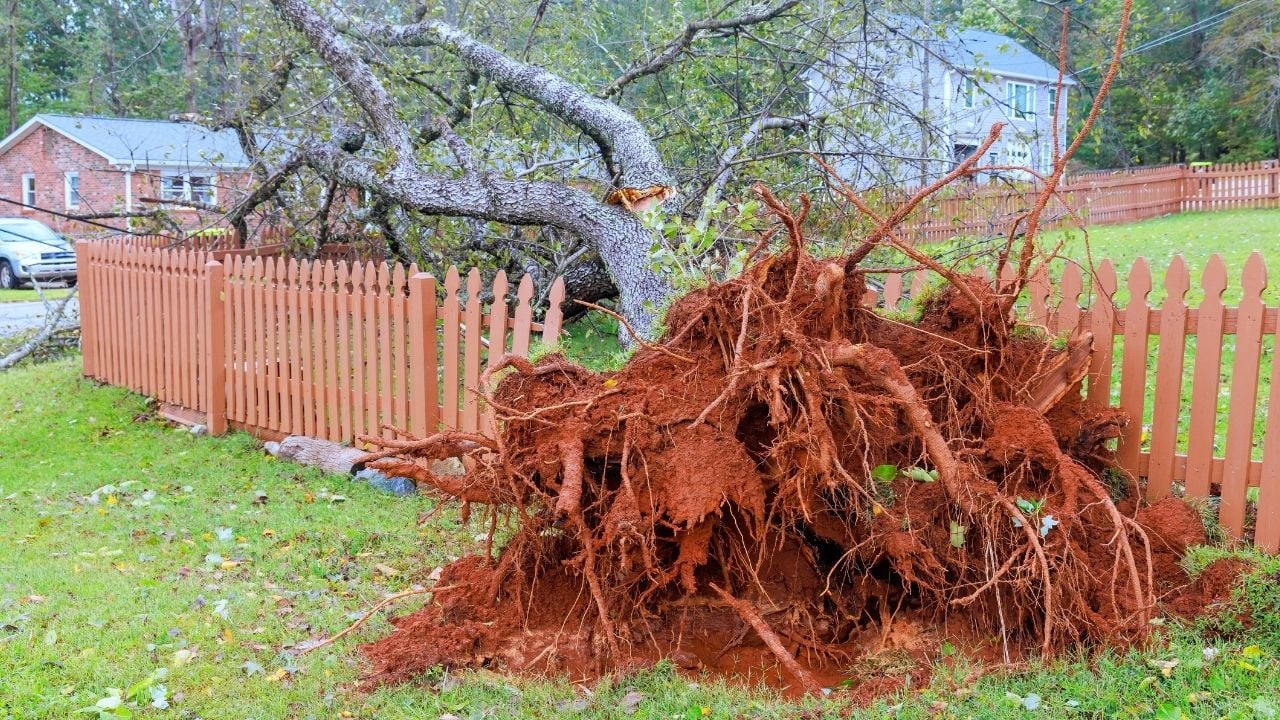
These are the rules that decide which neighbor pays when a shared tree falls.
Note: This is general information, not legal advice. Property and tree laws are subject to change.
1. The Trunk Test
California’s line-tree rule turns on one simple physical test: Where the trunk stands.
Civil Code 834 says a tree belongs to both neighbors in common whenever its trunk stands partly on each side of the boundary.
No crossing, no shared tree.
That one sentence, written in 1872, turns a tree from one owner’s private property into something two neighbors jointly hold, with jointly shared costs and jointly shared say-so over what happens to it.
2. Roots and Branches That Don’t Count
Roots or branches crossing the property line change nothing about ownership on their own, and California’s trunk test cuts both ways to prove it.
Civil Code 833 keeps a tree owned by whoever’s land holds the trunk, even when its roots stretch into the neighbor’s yard or its branches hang over the fence.
Overhang isn’t ownership.
A homeowner whose oak leans heavily into the yard next door still owns that tree outright, and the neighbor raking up all those leaves owns none of it, and none of the bill if it falls.
That same rule comes with self-help built in.
A homeowner annoyed by an overhanging limb can cut it back to the property line at their own expense and without asking first, as long as they don’t kill the tree or step onto the neighbor’s land to do it.
Their limb, their loppers, their bill.
3. No Acting Alone
A shared California line tree comes with a catch because neither owner gets to decide its fate solo.
Once a trunk crosses the boundary under the co-ownership rule, cutting the tree down, pruning it heavily, or otherwise injuring it takes the other owner’s consent, and courts have backed that up in boundary tree disputes.
One signature short is trespass.
A homeowner who removes a shared tree without asking first doesn’t just risk a bad relationship with the people next door.
They risk owing that neighbor money for a tree they only ever owned half of.
4. No Immunity From Nature
A tree’s owner used to catch a break simply because nothing but nature made it dangerous.
The California Supreme Court ended that in Sprecher v. Adamson, ruling that a landowner owes neighboring property the same reasonable care over a natural hazard, like a tree, as over anything built by hand.
No more free pass.
So a fallen tree’s owner isn’t automatically liable just because it grew on their side of the fence, and they aren’t automatically safe from a claim either.
The test became whether they acted the way a reasonable person would have.
5. The Known-Hazard Fault
Fault under California’s reasonable-care standard usually comes down to one question: Did the owner already know the tree was dangerous?
A property owner who ignored visible decay, a dead limb, or a documented lean before it fell is the classic fact pattern that establishes negligence, while an owner blindsided by a hidden defect has a defense.
Notice changes everything.
A neighbor who mentioned the cracked limb in passing last spring, and a photo showing it, can turn into the evidence that decides who pays months later.
What “Should Have Known” Means
California’s negligence standard for a hazardous tree covers more than a neighbor’s formal complaint.
Visible signs count on their own, like a large dead limb, bark peeling from dry wood, fungus at the base, or a lean that has clearly gotten worse over time.
An arborist report, a prior insurance claim on the same tree, or even a text message with a photo from months earlier can all establish that the owner had notice before the limb came down.
6. Splitting the Bill
Shared ownership of a California line tree doesn’t guarantee an even split when something goes wrong.
In Kallis v. Sones, a California appeals court upheld a full damages award to a homeowner over a wrongly cut co-owned tree, rejecting the argument that the payout should shrink to match the tree owner’s share of the trunk.
No fixed formula.
A judge weighing a boundary-tree dispute can factor in each owner’s share of the trunk, but nothing in California law requires splitting the bill that way, and a co-owner can end up covering costs well beyond half.
7. Skipping Consent’s Double Cost
California law adds a financial penalty on top of ordinary damages when someone wrongly touches a tree that wasn’t fully theirs.
Civil Code 3346 doubles the payout for an honest, good-faith mistake and triples it for anything willful, on top of whatever the tree itself was worth.
Ask first. It’s cheaper.
A neighbor who removes a leaning tree overnight to avoid an argument, without a call first, can end up paying two or three times more than if they had just asked.
Psst! How much do you know about California’s boundary tree rules? Take our myth-or-fact cards and see how many you get right.
What a Hedge Changes
A hedge planted along a California property line doesn’t automatically get the same shared-ownership treatment as a single boundary tree.
The trunk test in Civil Code 834 is written around one trunk crossing the line. A hedge is almost always a row of separate shrubs, each one rooted on one side of the boundary, so many hedges fall back under the sole-ownership rule in Civil Code 833 instead.
Different roots, different rule.
That distinction matters the moment your neighbor’s hedge overgrows, drops branches, or someone tears it out. Ownership follows wherever each individual plant is rooted, not which side of the yard it visually seems to belong to.
A property line survey settles the question fast if you and a neighbor disagree over a hedge’s exact planting spots, and it’s far cheaper than finding out the hard way whose shrub it was.
9 California Wildfire Insurance Rules Homeowners Learn Too Late
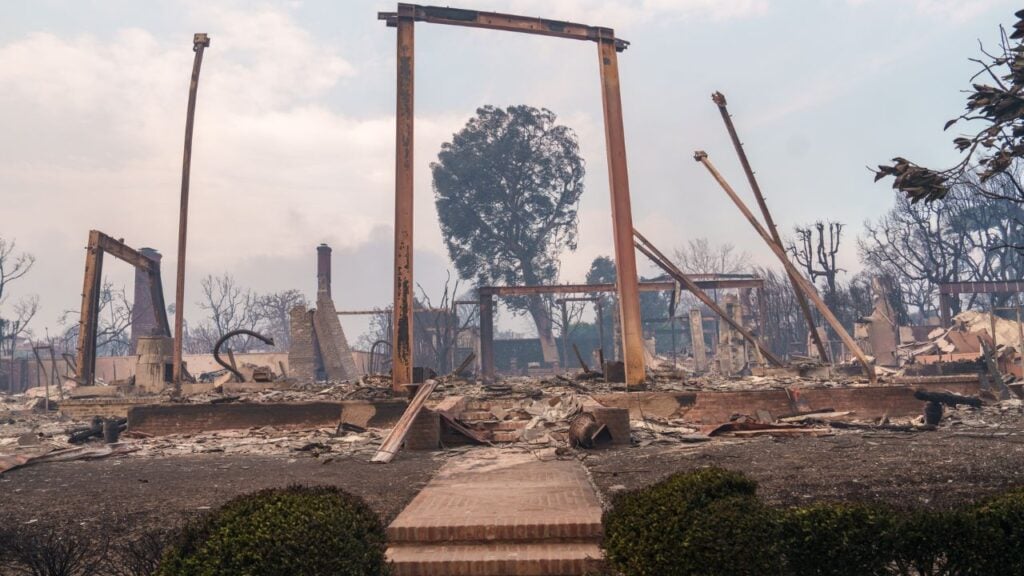
A homeowners policy in California doesn’t automatically mean full wildfire protection.
The state’s Fair Access to Insurance Requirements (FAIR) Plan, the coverage backstop many high-risk homeowners end up on, insures against fire and almost nothing else.
9 California Wildfire Insurance Rules Homeowners Learn Too Late
9 California Property Tax Loopholes Homeowners Don’t Know They Qualify For
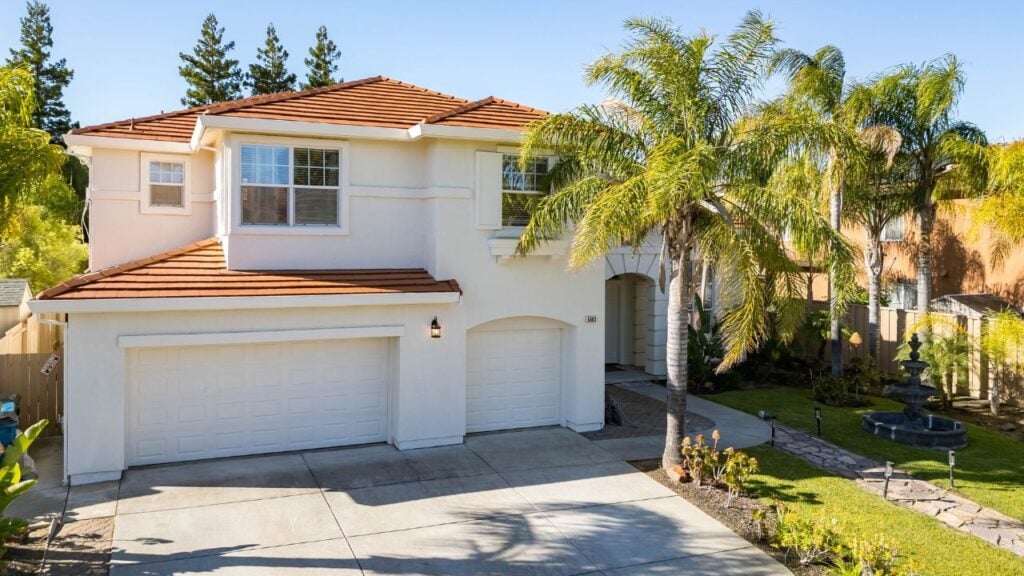
California lets a family pass down a home worth well over a million dollars without resetting the tax bill to today’s market value.
Just a set dollar amount of it stays protected, under a limit few homeowners have ever heard of.
9 California Property Tax Loopholes Homeowners Don’t Know They Qualify For
