
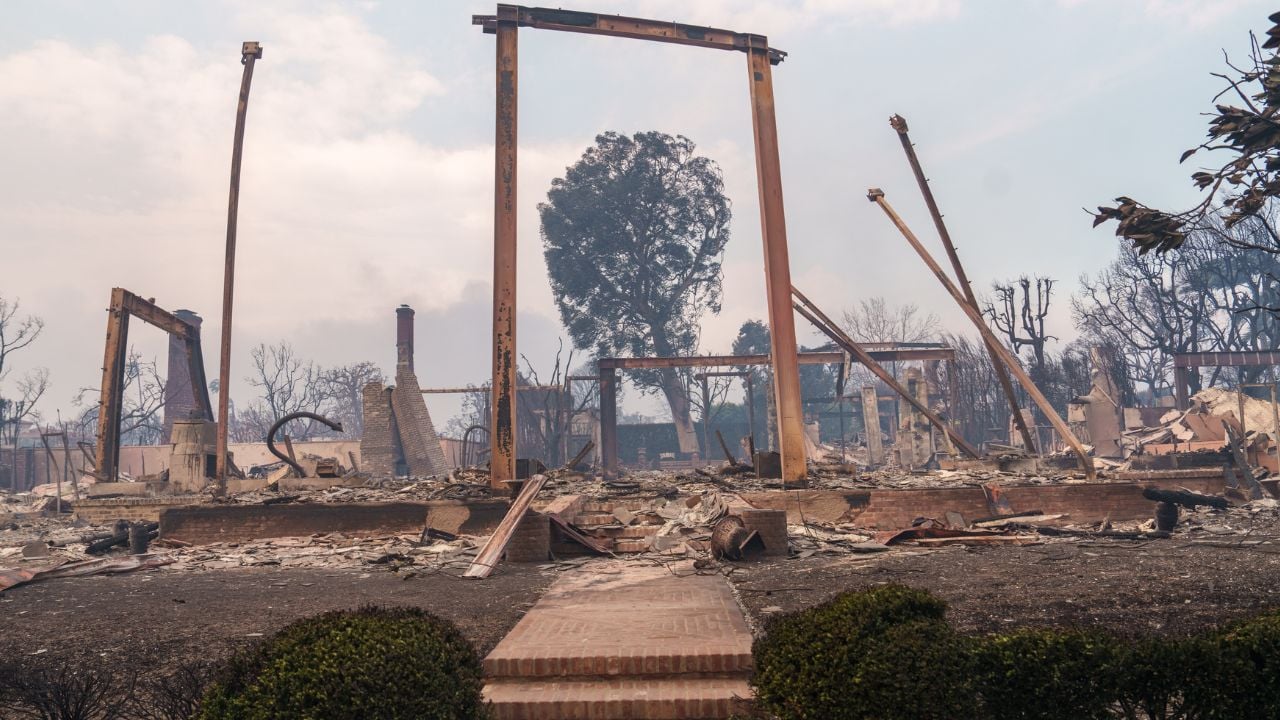
9 California Wildfire Insurance Rules Homeowners Learn Too Late

A homeowners policy in California doesn’t automatically mean full wildfire protection.
Far from it.
California’s FAIR Plan, the coverage backstop many high-risk homeowners end up on, insures against fire and almost nothing else.
These are the California wildfire insurance rules that often surprise homeowners mid-claim, mid-renewal, or mid-rebuild, when there’s no time left to prepare.
Note: This is general information, not insurance advice. Coverage and terms are subject to change, so check the specifics with your insurer or agent.
1. FAIR Plan Skips Almost Everything
The Fair Access to Insurance Requirements (FAIR) Plan looks like ordinary homeowners insurance from the outside, but it only covers a house against fire, lightning, smoke, and internal explosion.
Nothing else is automatic.
More than 668,000 FAIR Plan policies were active across California by December 2025, homeowner and commercial combined.
The FAIR Plan pays for wind and hail only as optional add-ons.
It never pays for theft, water damage, or a lawsuit if a guest gets hurt on your patio.
That’s where a difference-in-conditions (DIC) policy comes in: A second policy that wraps around the FAIR Plan and covers everything the FAIR Plan won’t touch.
Skip the DIC, and a stolen generator or a cracked water heater becomes a claim the FAIR Plan simply won’t pay.
2. Total-Loss Payouts Miss Your House
Senate Bill 495 now makes insurers pay California wildfire survivors 60% of their contents coverage automatically after a total loss, capped at $350,000.
You don’t have to list every lost item by hand to get it.
That’s fast money.
But the rule only reaches your belongings.
It says nothing about the dwelling itself, so the house you’re rebuilding still runs on your policy’s normal dwelling limit and the usual claims process.
The dwelling limit on your policy, not the 60% contents rule, decides what you get to rebuild the house.
The Math Behind California’s 60% Rule
California’s automatic contents payout runs on your policy’s contents limit, not your dwelling limit.
A homeowner carrying $200,000 in contents coverage collects an automatic $120,000 check.
A homeowner carrying $700,000 in contents coverage doesn’t get $420,000 because the $350,000 cap steps in first.
Anything above that cap still has to go through the normal itemized-claims process.
3. Non-Renewal Protection Expires Fast
A state of emergency has to be declared before California’s one-year shield against non-renewal even turns on, and it only reaches zip codes mapped inside or next to the fire’s perimeter.
No declaration, no shield.
One moratorium alone protected more than 147,000 policyholders across Kern, Santa Barbara, San Luis Obispo, and Ventura counties after the 2025 Gifford Fire.
Whether that protection reaches a home comes down to the mapped zip code, not how close the fire burned.
Miss it by one zip code, and none of the protection applies to you.
The one-year countdown starts on the date of that declaration, not the day smoke reaches your street or the day your renewal happens to fall due.
Homeowners near the edge of the mapped zip codes, or near the end of that year, carry the highest risk of the moratorium simply not applying to them.
4. Wildfire Models Set Your Price
Your renewal price can now trace back to a computer wildfire model many homeowners never see, not to a single claim you’ve ever filed.
California’s Sustainable Insurance Strategy lets larger insurers fold model-based wildfire risk into their rates and price a policy down to a single parcel.
In exchange, they commit to writing coverage across at least 85% of their statewide market share in the state’s most wildfire-distressed zip codes.
That’s the trade.
Homeowners who call to ask why the price moved are often told, for the first time, that a model ran their address through a wildfire risk score months before the bill arrived.
5. Hardening Discounts Require Proof
Ten mitigation steps qualify a California home for a state-mandated wildfire discount under a regulation called Safer From Wildfires, and the discount is never automatic.
You have to ask.
Those steps include a Class-A fire-rated roof, a five-foot ember-resistant zone around the foundation, metal mesh vents, enclosed eaves, and more.
Complete any one of them, and your insurer has to apply a discount, even before you’ve finished the rest of the list.
Nobody at the insurance company flags the work on your roofline.
The discount sits unclaimed until you’re the one who calls.
Psst! How wildfire-insurance-ready is your California home? Run through this checklist and see where you stand.
6. Brush Clearance Keeps Your Policy
Keeping the yard clear used to be optional advice for California homeowners in high-fire-risk areas.
Not anymore.
At least 100 feet of defensible space has to stay cleared around the house, and insurers have started treating that clearance as a condition of the policy.
Some insurers now send their own inspectors ahead of a renewal, checking for overgrown brush, dead trees, or wood piled against a fence line.
Fail that inspection, and the options narrow fast: A non-renewal, a policy that pays actual cash value on the roof instead of full replacement, or a push toward the FAIR Plan.
Skip the fall pass after clearing every spring: The gap shows up on the renewal notice, not before.
7. Hotel Clock Has a Floor
Your additional living expenses (ALE) coverage carries a floor many homeowners never think to check.
California requires insurers to keep paying it for at least 24 months from the date of the governor’s emergency declaration, with a possible 12-month extension when construction runs behind schedule for reasons outside your control.
Nobody extends it for you.
You have to request that extension yourself, in writing, with good cause, before the clock runs out, or the hotel bill and the rent both land back on you.
Renters coming off their own policy have it tighter still, with ALE ending once a comparable rental becomes available instead of running on a set calendar.
Miss that written request, and the hotel bill lands back on you around month 25.
8. Nobody Buys the Extra Cushion
Extended replacement cost of at least 50% above your dwelling limit: California requires every insurer to disclose in writing when they don’t offer it.
Almost nobody buys it.
A standard dwelling limit is based on today’s construction costs, and after a major California wildfire, lumber, labor, and permitting all spike at once as thousands of homes rebuild on the same timeline.
Extended replacement cost is the buffer that closes that gap, paying above your stated limit when the rebuild bid comes in higher.
Insure a home for $600,000, and skipping that buffer can still leave you thousands of dollars short of an actual $600,000 rebuild once the whole neighborhood is competing for the same contractors.
The disclosure form goes into a file homeowners rarely reopen until the day they need it.
9. One Cap Covers Everything
Rebuilding a home in Malibu, Beverly Hills, or the Lake Tahoe basin can blow past $3 million fast, yet that’s the hard ceiling on every FAIR Plan residential dwelling policy in California.
That’s the whole payout, not a starting point.
Michael Wara, who directs Stanford University’s climate and energy policy program, has pointed out that the cap sits at roughly four times the median California home value.
That sounds generous until rebuild costs on an expensive property regularly run past it.
It’s a widening gap.
A homeowner underinsured at that ceiling doesn’t find out until a full loss forces a rebuild bid, and the bid lands well above the check.
Filling that gap takes a separate excess policy stacked on top of the FAIR Plan, arranged before the fire, not after.
Two More Reforms, Two Different Outcomes
California lawmakers keep pushing for more wildfire insurance changes even after this year’s reforms took effect, and the two most recent attempts landed in very different places.
Senate Bill 1076 would have barred insurers from refusing or dropping coverage on a home that meets the state’s official wildfire-hardening and defensible-space standards, starting in 2028, with a five-year license suspension for insurers that refused.
The Senate Insurance Committee rejected it in April 2026, the fourth time a bill built around that same mandate has failed in Sacramento.
Four tries, four failures.
Assembly Bill 226 (AB 226), the FAIR Plan Stabilization Act, had the opposite outcome: Governor Newsom signed it in October 2025 as part of a five-bill package overhauling the FAIR Plan.
It authorizes the FAIR Plan to borrow through the California Infrastructure and Economic Development Bank, including a possible bond issuance, to raise cash fast after a wildfire bigger than any single insurer priced for.
10 Things California Employers Can’t Legally Ask You

A hiring manager at a Sacramento company starts to ask the question, then stops halfway through because California crossed it off the list months ago.
These are the questions a California employer can’t legally ask you, whether the interviewer knows it or not.
10 Things California Employers Can’t Legally Ask You
10 California Beachcombing Rules That Can Cost Visitors a Fine

A California beach citation can start as low as $1,000 and rise past $50,000, depending on what a ranger catches you doing.
These are the beachcombing rules that can turn a fun day at the coast into a citation.
10 California Beachcombing Rules That Can Cost Visitors a Fine
