
7 Summer Heat Mistakes That Make California Homes Hotter and More Expensive

Pacific Gas & Electric charges $0.5224 a kilowatt-hour between 4 and 9 p.m., against $0.3994 the rest of the day.
That rate holds until September 30.
Inland California doesn’t cool off on that schedule, and the habits that got a house through August cost the most in the two weeks nobody’s watching.
These are the summer heat mistakes that make California homes hotter and more expensive.
1. Leaving West-Facing Windows Uncovered Through the Afternoon
A California home with west-facing windows catches the sharpest sun of the day right as the afternoon turns toward evening.
By September, the sun sits lower in the sky, so that same afternoon light reaches deeper into a room than it did in July.
Nobody notices right away.
Then the air conditioner won’t quit.
Highly reflective blinds, closed all the way before that light hits, block close to 45% of the heat gain a bare window lets in, according to the Department of Energy. Ordinary blinds left half-open don’t come close to that number.
Skip that step, and the air conditioner spends the next few hours undoing what a five-second habit could have stopped.
That’s right as Pacific Gas & Electric and Southern California Edison charge their highest rate of the day for every kilowatt-hour it takes to catch up.
2. Oven or Dryer During Peak Hours
A homeowner who starts the dishwasher right after a 6 p.m. dinner has also just lit a second heat source in a kitchen the air conditioner is already straining to cool.
The oven and dishwasher both breathe warm, humid air straight into the kitchen.
Even a vented dryer warms the whole laundry room while it runs, and that heat has nowhere to go.
Energy Upgrade California, the state’s efficiency program, recommends using a timer to run the dishwasher, dryer, and oven at non-peak times, outside the 4 to 9 p.m. window, rather than during the afternoon rush.
A load run at 5 p.m. instead costs the day’s most expensive electricity to heat up a room the air conditioner is already working overtime to cool.
The Math Behind California’s Priciest Hour
Pacific Gas & Electric’s summer rate charges $0.5224 for every kilowatt-hour used between 4 and 9 p.m.
The same power used at any other time of day costs $0.3994, a gap of about 12 cents per kilowatt-hour.
A 3-kilowatt-hour dryer load timed for 5 p.m. costs around 37 cents more than the same load run at 10 p.m.
One load barely registers, but the rate stays this high through September 30 no matter when inland heat finally lets up.
3. Sealing the House Overnight
A California homeowner who keeps the windows shut and the blinds closed all night is trapping the day’s heat inside instead of letting it out.
Opening windows once the outside air drops below the indoor temperature lets the night air carry off the heat stored in the walls, furniture, and attic.
Skip that overnight flush, and the house carries that stored heat straight into the next afternoon.
The Department of Energy’s Building America program says a home is especially well suited to this kind of nightly cooldown.
The overnight low needs to fall under 67°F and swing more than 25°F below the day’s high.
That pattern is common across inland California’s dry, late-season climate.
A house that skips the flush starts the next afternoon already warmer than one that let the night air through.
The air conditioner then has to run longer just to reach the same setting.
4. Dirty Filters in Inland Heat
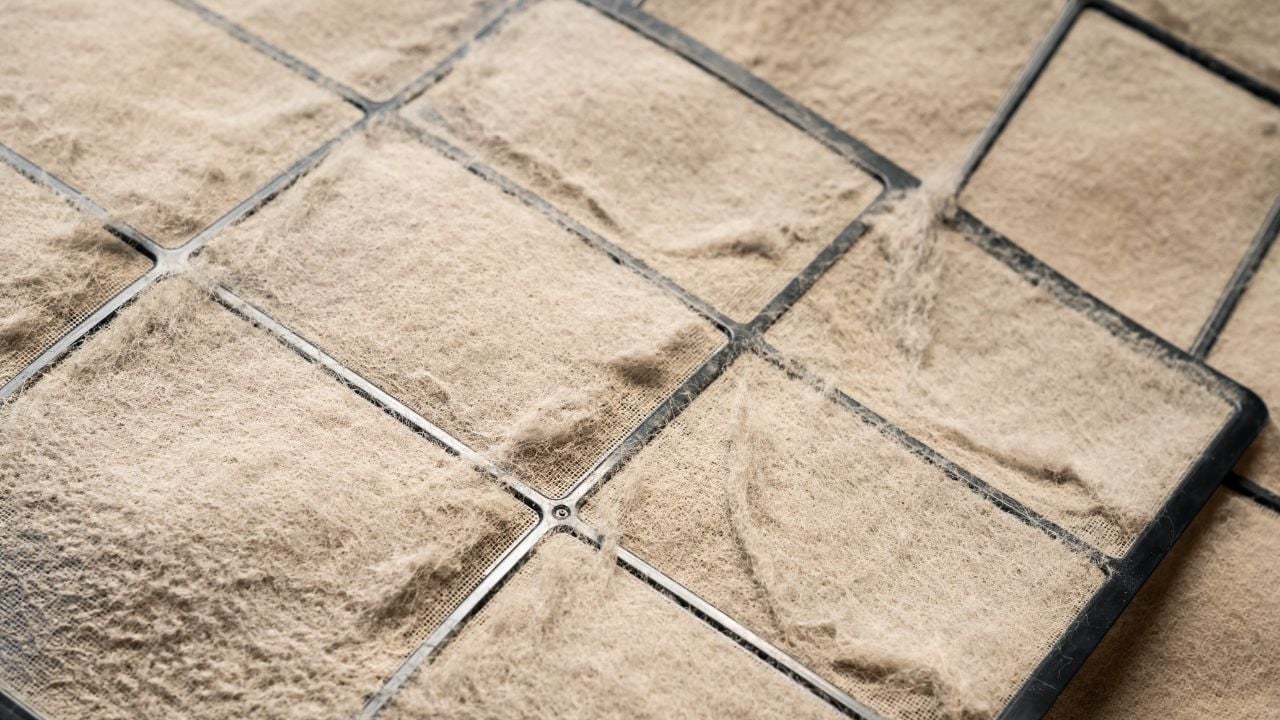
A California air conditioner that’s been breathing through the same clogged filter for months doesn’t just run longer, it can stop cooling the house altogether.
A dirty filter chokes off the airflow the evaporator coil needs, and restricted airflow is one of the most common reasons a coil ices over.
Once the coil freezes, the vents blow warm air, or barely any air at all, right through the hottest part of a September afternoon.
ENERGY STAR, the federal energy-efficiency program, recommends inspecting or changing that filter about once a month once the system starts running daily.
Skip it, and a homeowner ends up paying the year’s most expensive electricity for less cooling than a clean filter would have delivered.
5. Ignoring Leaky Ductwork That Pulls in Attic Air
California ductwork often runs straight through the attic, the hottest part of the house on a September afternoon.
ENERGY STAR says leaky ducts can cut a cooling system’s efficiency by as much as 20%.
A lot of that loss happens exactly where the duct passes through unconditioned attic space.
The air arrives half-cooled.
A leaky return can even pull superheated attic air into the system before the blower pushes it through the house.
Some of the air coming out of the vents was never fully cooled to begin with, and the system keeps running to make up the difference.
Psst! How heat-ready is your California home right now? Run through this checklist and see where you stand.
6. Leaving Attic Insulation and Vents Unchecked
A California attic with thin or gapped insulation acts like a lid sitting right above the ceiling, trapping heat instead of venting it.
ENERGY STAR, the federal energy-efficiency program, has a climate-zone table that calls for R-49 of attic insulation across most of California.
That covers the Central Valley, Los Angeles, the Bay Area, Sacramento, and San Diego.
R-60 is reserved for the state’s higher-elevation, colder pockets like the Sierra and Tahoe, and even R-49 is more than double what a lot of older California homes have.
Heat radiates straight through a thin layer and into the rooms below, so the ceiling itself runs warmer than the air the thermostat is reading.
The air conditioner ends up cooling a ceiling as much as a room.
A sun-baked attic keeps radiating stored heat into the house well after sundown, which is exactly when the day’s peak-price window is still running.
7. Skipping Weatherstripping on Doors and Windows
Every time someone in a California household opens the front door on a hot afternoon, worn weatherstripping around the frame lets outside air in.
That air keeps leaking in long after the door closes.
A quarter-inch gap around a door or window is enough to feel, especially through California’s hot, dry afternoons.
The U.S. Environmental Protection Agency (EPA) estimates that sealing air leaks and adding insulation together can cut heating and cooling costs by an average of 15%.
Skip the weatherstripping, and hot outside air keeps entering through the same door everyone uses all afternoon, so the air conditioner runs longer to make up for it each time.
Why Inland California Still Runs Hot Into October
Inland California holds onto its heat long after the coast cools off.
National Weather Service data for Fresno puts the normal high for early October at 81-85 degrees.
The weather stays the same.
Once October 1 arrives, though, Pacific Gas & Electric and Southern California Edison both drop into winter-season pricing.
The same afternoon habits that cost the most in September suddenly cost less.
A homeowner who lets old summer habits ride into early October still pays that top rate for every day before the switch happens.
Fresno’s normal high on October 1 itself is still 85 degrees, the same day the rate finally drops for the season.
8 California Lawn and Water Rules Homeowners Get Fined For

A homeowner can rack up a fine just for watering the lawn at the wrong time, not only for using too much of it.
Desert Water Agency can cite a Palm Springs homeowner for running a sprinkler within 48 hours of a rainstorm, and many other water districts enforce similarly strict rules.
8 California Lawn and Water Rules Homeowners Get Fined For
6 DMV Rules California Drivers Over 70 Wish Someone Had Warned Them About
California charges $46 just to renew a driver’s license, and that’s before a driver over 70 runs into the state’s extra requirements.
Some of those rules catch longtime license holders off guard the first time they show up at the counter.
6 DMV Rules California Drivers Over 70 Wish Someone Had Warned Them About
