
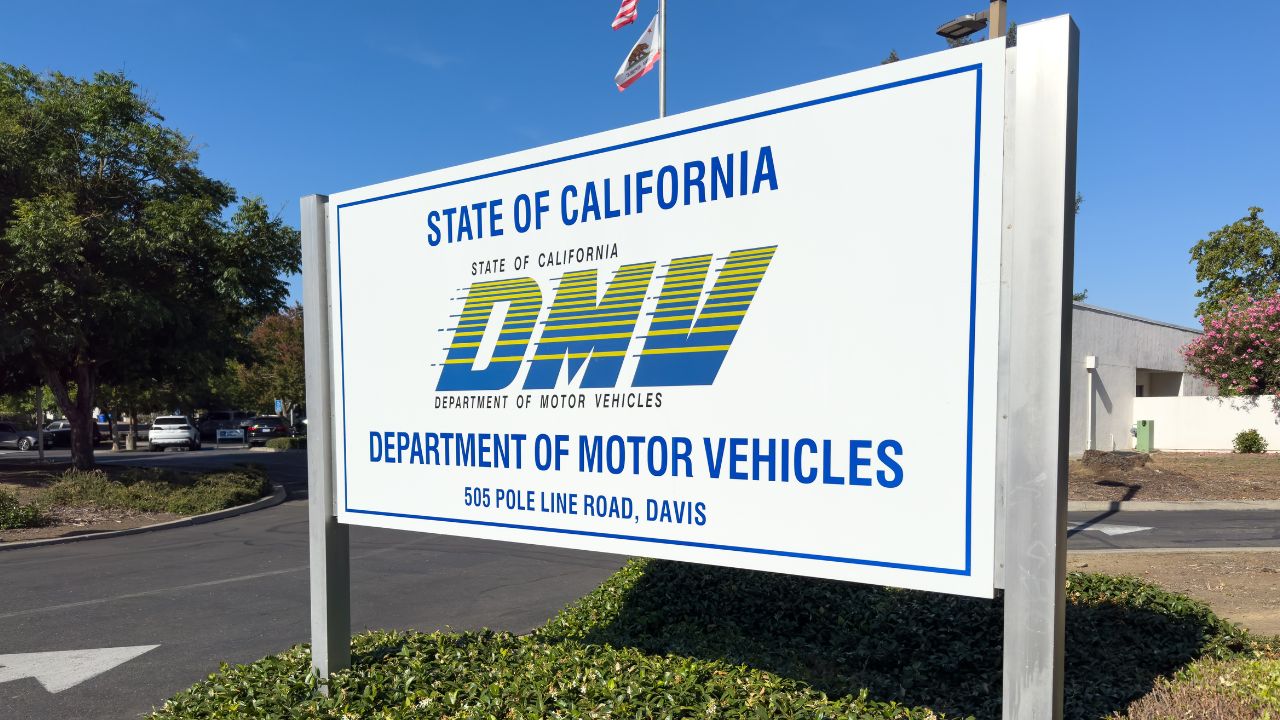
6 DMV Rules California Drivers Over 70 Wish Someone Had Warned Them About

California charges $46 to renew a driver’s license.
Turning 70 doesn’t touch that number, but it adds a caveat to the renewal that has nothing to do with the price tag.
These are the DMV rules a lot of California drivers wish they’d known before their 70th birthday.
Note: This is general information, not legal advice. Licensing rules and fees are subject to change, so confirm the current requirements with the California Department of Motor Vehicles.
1. No More Online Renewal
At California’s DMV, online renewal disappears the moment a driver turns 70.
Mail renewal is also off the table once that birthday hits.
A driver 70 or older has to show up at a DMV field office and renew in person, every single cycle.
It wasn’t always this strict.
A pandemic-era waiver let drivers 70 and older renew online or by mail through December 2022, and many seniors grew used to skipping the trip.
That option expired.
Anyone whose last renewal fell inside that window is walking into their first mandatory in-person visit in five years, and it catches many of them off guard.
2. Eye Exam Goes Live
California’s DMV doesn’t take a driver’s word for it anymore once that driver is standing at the counter at 70.
A driver renewing online before 70 can self-certify their vision and never sit in front of an eye chart.
The mandatory office visit at 70 ends that.
DMV staff run a live vision screening, and a driver has to meet two standards at once: 20/40 vision in both eyes together, and 20/40 in one eye with at least 20/70 in the other, with or without glasses.
Fall short, and the counter clerk doesn’t just wave a driver through.
No exceptions.
An eye doctor has to fill out a Report of Vision Examination before the DMV will move the renewal forward at all.
That’s a second appointment many drivers never had to schedule before.
3. Many Skip the Written Test
California’s written knowledge test used to catch every renewing senior at the counter, and many drivers over 70 still brace for it out of habit.
Since October 1, 2024, the DMV automatically waives that test for renewing drivers 70 and older who have a clean driving record.
No studying required.
The waiver isn’t unconditional, though.
Rack up two or more accidents in the past two years, three or more in the past three years, a driving under the influence (DUI) suspension in the past two years, or more than one violation point in the past two years, and the DMV pulls a driver right back into the testing room, regardless of age.
A rough couple of years behind the wheel undoes the break fast.
California Sets the Waiver’s Bar Low
California’s negligent-operator warning system runs on three separate clocks: 2 points within 12 months, 4 points within 24 months, or 6 points within 36 months, whichever a driver trips first.
The written-test waiver uses a stricter line of its own.
It disqualifies a renewing senior at the same two points the fastest clock uses, just spread across a 24-month window instead of 12.
That makes the waiver’s own bar the easier threshold to trip.
4. New Residents Get No Break
California’s written-test waiver only covers a driver renewing a license the state already issued.
A first-time California applicant who happens to be 70 or older doesn’t get the same pass.
Neither does a driver who just moved to California from another state at 70, no matter how clean that out-of-state record was.
Experience elsewhere doesn’t count.
The DMV’s own announcement on the waiver spells this out: First-time drivers and new arrivals still sit for the written test, age and clean history elsewhere aside.
A retiree who spent forty years driving in Ohio without a ticket walks into a California DMV office and takes the same test as a teenager.
Nobody warns them ahead of time.
Psst! How much do you know about California’s DMV rules for drivers over 70? Take our myth-or-fact challenge and see how many you can call correctly.
5. Glasses Rule Sticks
Turning 70 is the first time in years a driver has to prove their vision to California’s DMV in person instead of just checking a box online.
Every renewal before turning 70 let a driver self-certify their eyesight from a screen, no chart, no clerk, nothing added to the license unless the driver mentioned it.
The in-person test changes what lands on the record.
Show up wearing glasses or contacts and pass the eye chart with them on, and the DMV adds a corrective lenses restriction to the license right there.
That restriction isn’t a suggestion.
Once it’s printed on the license, driving without those glasses or contacts breaks the terms of that license, glasses forgotten at home or not.
A driver who tested bare-eyed years ago, then started wearing reading glasses since, can renew at 70 and pick up that restriction for the first time without realizing what the DMV just added to their record.
6. No Senior Price Break
California charges a flat $46 to renew a standard Class C driver’s license, and that number doesn’t move for age.
A 70-year-old pays exactly what a 25-year-old pays.
Age doesn’t matter here.
The DMV does offer one age-based freebie, just not a discount on this license fee.
Californians 62 and older can get a Senior Citizen ID card free of charge, but that’s a separate identification-only card, not a discount on the driver’s license.
The extra trip to the counter that turning 70 requires comes with no coupon attached.
More Eyes at the Counter
California’s mandatory office visit at 70 means a driver spends a few minutes in front of an actual DMV employee instead of clicking through a renewal website.
That’s more face time than the same driver had at 65, back when online renewal skipped the counter completely.
No new rule attaches.
What changes is opportunity: The channels the DMV already uses to hear about a driver’s safety, open to any age, finally have that driver standing in front of them instead of behind a screen.
Turning 70 doesn’t rewrite the rulebook here.
It just moves the same routine renewal into a room instead of a browser tab.
Age Alone Doesn’t Trigger a Retest
California never puts a driver behind the wheel with an examiner just because a birthday passed.
It’s never automatic.
A road test only comes up when there’s a documented reason to worry, a report from a police officer, a doctor, or someone close to the driver flagging trouble.
No such report, and a Californian can keep renewing well into their 90s without ever sitting a behind-the-wheel exam again.
The in-person visit, the vision test, the fee, all of that is fixed by age.
Whether a driver ever has to prove they can still handle a car stays tied to actual driving, not a number on a calendar.
A DMV review doesn’t skip straight to a decision.
California has to notify a driver in writing first, then give that driver 10 days to request a hearing if the notice arrives in person, or 14 days if it comes by mail, before any restriction takes hold.
10 California Beachcombing Rules That Can Cost Visitors a Fine

A California beach citation can start as low as $1,000 and rise well past $50,000, depending on what a ranger catches someone doing.
Many of the rules that trigger a citation have nothing to do with a lifeguard’s whistle.
10 California Beachcombing Rules That Can Cost Visitors a Fine
9 California Squatter Laws That Cost Homeowners Who Ignore Them
A family’s cabin near Lake Tahoe sits buried under snow every winter, and nobody checks on it until spring.
This April, the padlock on the door isn’t the one they left.
9 California Squatter Laws That Cost Homeowners Who Ignore Them
