

8 Auto-Renewal Rules That Decide Whether Californians Can Cancel Their Subscriptions

California prosecutors made a meal-kit company pay $7.5 million in 2025 for breaking the state’s subscription cancellation rules.
That case wasn’t unusual.
A subscription that’s easy to start and hard to end can be flatly illegal here, and the statute says exactly where that line falls.
These are the auto-renewal rules that decide whether Californians can cancel their subscriptions.
Note: This is general information, not legal advice. Auto-renewal rules and penalties are subject to change, so confirm the current requirements with the California Attorney General’s office.
1. Disclosure Before the Charge
A business that hides its renewal terms on a separate page has already broken California law before your card is ever charged.
California’s Automatic Renewal Law requires those terms to be clear and conspicuous before it ever collects your payment information.
The length of the renewal term, the price, how often it bills, and how to cancel all have to sit right where you’re about to say yes.
It’s not a footnote.
That timing matters again later if you ever dispute a charge, since the disclosure has to have existed before your first payment ever posted.
2. Affirmative Consent
Say a signup form arrives with the auto-renew box already checked.
Under California law, that pre-checked box never counts as consent, and neither does a set of terms a customer never had to scroll past.
The state requires a business to get your express affirmative consent to the auto-renewal terms before it ever charges a card.
You have to say yes.
A charge collected without valid consent was never a valid renewal in the first place.
Proving that is one of the fastest ways a Californian gets a charge like that reversed.
3. A Written Way Out
California’s law requires a business to send an acknowledgment after signup that repeats the renewal terms, states the cancellation policy, and explains exactly how to cancel.
No acknowledgment means no valid renewal.
A confirmation email that only confirms the signup, without repeating any of that information, fails the requirement, even when the charge itself goes through fine.
Keep that email.
It’s the paper trail a Californian needs if a business later claims the terms were disclosed all along.
California’s Fix for a Broken Renewal
California’s Automatic Renewal Law has a blunt penalty built in for a business that skips the consent or disclosure steps above.
Under Section 17603 of the Business and Professions Code, whatever that business sent you under a broken agreement counts as an unconditional gift.
You keep it.
You owe nothing for it, and you don’t have to ship anything back.
Picture a $180 annual subscription charged without valid consent.
Under this rule, that $180 charge turns into $180 worth of product or service you get to keep for free, and no debt collector can come after you for it.
4. Canceling the Way You Signed Up
Sign up for a subscription online in California, and the cancellation path has to stay online too.
The law requires a business to let customers cancel through the same medium they used to enroll, with an actual click, not a phone tree.
That requirement took effect in July 2025.
The law skips call centers.
A company that used to hide its cancel option behind a “call us” page for its online customers is breaking the law now, not just being annoying.
Psst! How much do you know about California’s subscription cancellation rules? Guess myth or fact on each claim below.
5. A Phone Line for Phone Signups
California businesses that enroll a customer by phone have to accept a cancellation call at that same number, answered promptly during normal business hours.
That’s not just voicemail.
If you signed up by talking to a person, the law expects a working line to be there when you call to undo it, not a dead end.
6. When Cancel Buttons Can’t Disappear Mid-Pitch
A California business can dangle a discount or a “don’t go” offer while a customer works through a cancellation flow, and the law doesn’t cap how many times it tries.
What Section 17602 of the Business and Professions Code caps instead is the cancel option.
It has to stay, in the statute’s words, “prominently located and continuously and proximately displayed” for as long as any offer sits on screen.
The cancel button never disappears.
A flow that swaps the cancel button for a chat window breaks the law.
The same is true of a flow that buries the button behind offer after offer before letting a customer finish, no matter how many pitches came first.
7. A Yearly Reminder for Long Plans
A subscription can run for years in California, and state law requires a reminder to show up at least once every twelve months for it.
That annual notice, for a business running an indefinite or continuously renewing plan, has to name the service, the charge, and a way to cancel.
That’s not just a mention.
A one-line renewal-reminder email with no cancel link or method attached doesn’t satisfy the requirement in this state.
8. Advance Warning for Price Hikes
A subscription price can jump without warning almost anywhere in the country, but not in California.
State law requires a business to tell you about a fee increase before the higher charge ever hits your card, inside an advance notice window built into the rule.
You get a warning first.
That window is your chance to cancel before you pay the new price, not after you’ve already noticed the bigger charge on a statement.
Where the Federal Rule Fell Short
California’s auto-renewal law is what governs Californians right now, after a federal appeals court vacated the Federal Trade Commission’s (FTC) “click-to-cancel” rule in July 2025.
The court didn’t rule that easy cancellation is a bad idea.
It struck down the rule because the FTC skipped a legally required cost-benefit review once the rule’s price tag passed $100 million.
That’s a paperwork failure, not a verdict on the merits.
Regulators haven’t backed off.
The FTC secured a $2.5 billion settlement from Amazon in September 2025 over how hard Prime was to leave.
It also keeps bringing cases under an older law, the Restore Online Shoppers’ Confidence Act (ROSCA), that survived last year’s vacatur untouched.
The agency hasn’t dropped the idea of a national click-to-cancel rule either.
In February 2026, the FTC restored a narrower, pre-2024 version of its rule to match the court’s decision.
The agency opened a fresh rulemaking the following month, asking the public whether a revived click-to-cancel rule should return.
At least 35 states and Washington, D.C. run some version of an automatic-renewal law.
Legal trackers that compare them point to California and New York as carrying the most restrictive rules on the books.
Millions Already Collected by Regulators
California prosecutors used this exact law against meal-kit company HelloFresh in August 2025, and the company paid $7.5 million to settle it.
Los Angeles and Santa Clara County prosecutors found that HelloFresh failed to clearly disclose its subscription terms and never got proper consent before charging.
It also didn’t give customers an easy way to cancel.
Money changed hands.
That $7.5 million included civil penalties, not a token fine buried in a press release nobody reads.
The breakdown: $6.38 million in civil penalties split among the prosecuting agencies, $120,000 to cover their investigation costs, and $1 million in restitution set aside for the California consumers HelloFresh signed up.
9 California Wildfire Insurance Rules Homeowners Learn Too Late
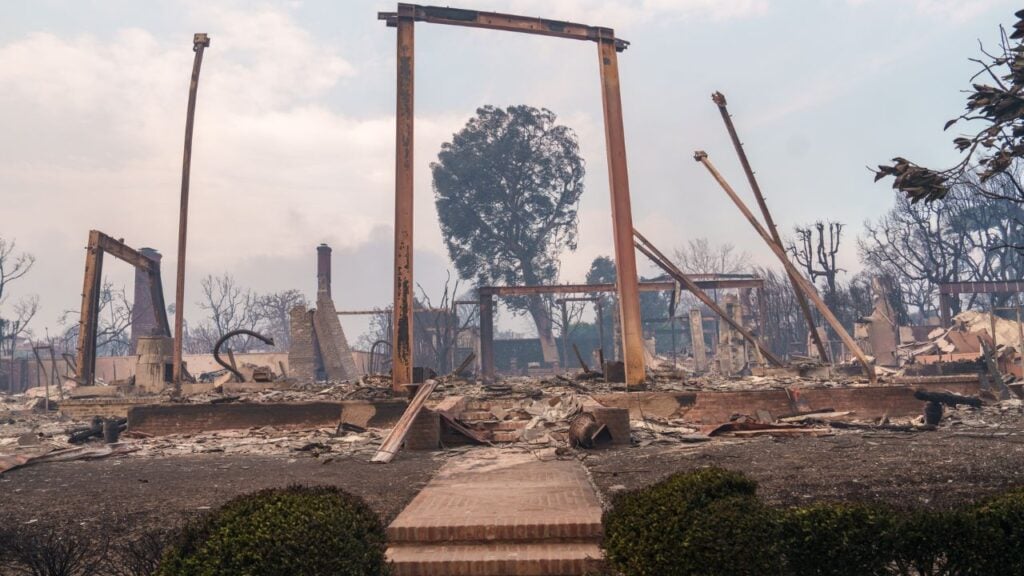
A homeowners policy in California doesn’t automatically mean full wildfire coverage.
The state’s Fair Access to Insurance Requirements (FAIR) Plan becomes the backstop many high-risk homeowners end up on, and it mostly covers fire, leaving other gaps to surface mid-claim.
9 California Wildfire Insurance Rules Homeowners Learn Too Late
8 California Lawn and Water Rules Homeowners Get Fined For

Desert Water Agency can fine a Palm Springs homeowner for running a sprinkler within 48 hours of a rainstorm.
Many homeowners never hear about a rule like that until a bill for it shows up.
