

5 Things You Have to Do After a Crash With an Uninsured Driver in Florida

Close to one in five drivers on Florida roads carry no auto insurance, per Triple-I’s review of Insurance Research Council data.
That’s one out of every five cars around you.
These are the things you have to do after a crash with an uninsured driver in Florida.
Note: This is general information, not legal or insurance advice. Deadlines, coverage limits, and reporting requirements are subject to change.
1. Documenting the Missing Insurance
An officer investigating your crash fills out Florida’s official crash report, and one section on that form asks each driver for an insurance company name and policy number.
When the other driver has none to give, that section should show it: Left blank, marked “none,” or noted as no proof produced at the scene.
That gap on the report is what your uninsured motorist claim leans on later, since insurers want documented proof the other driver had no coverage before they pay.
Florida requires a written report for any wreck that causes an injury, a death, or a tow.
The officer has to submit it within 10 days after finishing the investigation, not 10 days from the date of the crash.
The same 10-day rule covers a wreck involving an arrest for driving under the influence (DUI) or a commercial vehicle.
An uninsured driver who can’t show proof of coverage at the scene isn’t just facing an awkward conversation.
It’s a citation too.
Driving without the required insurance is a traffic infraction under Florida law, on top of whatever the driver owes you.
A driver who can’t produce proof by their court date risks having their registration and license suspended.
Get the responding officer’s name and the report number before you leave, and ask them to confirm the insurance section reflects what the other driver could or couldn’t show.
Request the finished report from the county clerk or the Florida Highway Patrol once it’s filed, since every insurer and every court that touches this crash will ask for it.
2. Meeting the 14-Day PIP Deadline
Your auto insurer pays your medical bills first after a Florida crash, no matter who caused it, since the state runs on a no-fault system.
That coverage is called personal injury protection (PIP), and it comes with a strict window.
Skip treatment, and the insurer can deny the claim outright.
Under Florida law, you have to get initial treatment within 14 days of the wreck for PIP to kick in at all.
Waiting to see if the soreness passes is a common way Florida drivers lose PIP money they were entitled to.
An uninsured driver carries none of that Florida-required coverage in the first place.
PIP alone carries the weight.
No other insurer stands behind the other driver, not in the near term.
Miss the 14-day window here, and there’s no other insurer’s claim to fall back on while you sort out the gap.
The Math Behind Florida’s PIP Cap
Florida’s PIP coverage tops out at $10,000, but the payout depends on a determination many people never hear about until the bill arrives.
A doctor has to find you have an “emergency medical condition,” a legal term for an injury serious enough to risk harm without quick treatment.
Get that determination, and PIP reimburses 80% of your bills up to the full $10,000.
Miss it, and reimbursement drops to a $2,500 ceiling instead.
On a $6,000 medical bill, that determination is the difference between roughly $4,800 back and $2,500 back.
3. Filing Your Uninsured Motorist Claim
Florida doesn’t require drivers to carry bodily injury liability coverage, only PIP and property damage liability.
So an uninsured driver usually has nothing set aside to pay for your pain, your lost wages, or a bill PIP didn’t fully cover.
Uninsured motorist coverage (UM) is Florida’s answer to that gap.
Insurers have to include it on every policy, but a driver can decline it in writing.
Check your declarations page before you assume you have it.
Florida requires a signed written rejection to go without UM coverage, so most policies carry it by default.
Notify your insurer of a UM claim as soon as you know the other driver has no coverage.
Don’t wait.
Your UM carrier can request the police report, your medical records, and proof the other driver was uninsured before paying anything.
Gathering that paperwork yourself speeds the whole process up.
Psst! How much do you know about Florida’s driving laws? Take our quiz and see how many you can get right.
Quiz
Florida Traffic Law IQ
Answer these questions on Florida’s driving and insurance laws. We bet you can’t get them all right. Prove us wrong?
In what year did buckling up become a “primary offense” in Florida, meaning an officer can pull you over for a seatbelt violation alone?
4. Tracking the Two-Year Deadline
The deadline to file a negligence lawsuit over a Florida car crash sits at two years.
That clock doesn't pause because the other driver has no insurer to negotiate with.
The deadline used to run four years.
Lawmakers shortened it to two years for crashes after March 24, 2023, and Florida hasn't reversed that change since.
When an insurance company is on the hook, its adjusters usually keep the file moving toward a deadline they track for you.
An uninsured driver has no adjuster pushing anything forward.
Nobody tracks it but you.
5. Deciding Whether to Sue the Driver
Florida still lets you sue an uninsured driver personally for whatever PIP and UM don't cover, even though collecting from an individual is harder than collecting from an insurer.
Where that lawsuit lands depends on the dollar amount.
Florida's small claims court handles disputes up to $8,000, without the cost or delay of hiring a lawyer for a formal circuit case.
Claims above that move into county or circuit court instead, which is where a larger injury claim against an uninsured driver usually has to go.
A judgment is still only worth what the driver can pay.
That's the catch.
Before you file anything, ask whether the driver has a job, a house, or other assets a court could reach.
A judgment against someone with nothing to collect from is a piece of paper and not much else.
Why Uninsured Drivers Are Common
The Insurance Research Council's 2023 data puts Florida's uninsured-driver rate close to one in five, among the highest in the country, according to Triple-I's review of that data.
Part of that comes down to what Florida requires.
The state only mandates PIP and property damage liability, never bodily injury liability.
Nothing else is required.
That means a driver can legally register a car in Florida while carrying nothing that would pay for someone else's injuries.
Some drivers let a policy lapse over a missed payment and keep driving anyway, betting they won't get caught before they catch up.
Florida lawmakers have floated repealing the state's no-fault system entirely in recent sessions, including bills filed for the 2026 session.
Both died in committee in March 2026 without a floor vote, so the PIP rules and deadlines above still apply.
8 Things Florida Drivers Should Know About the License Plate Cameras Going Up Across the State
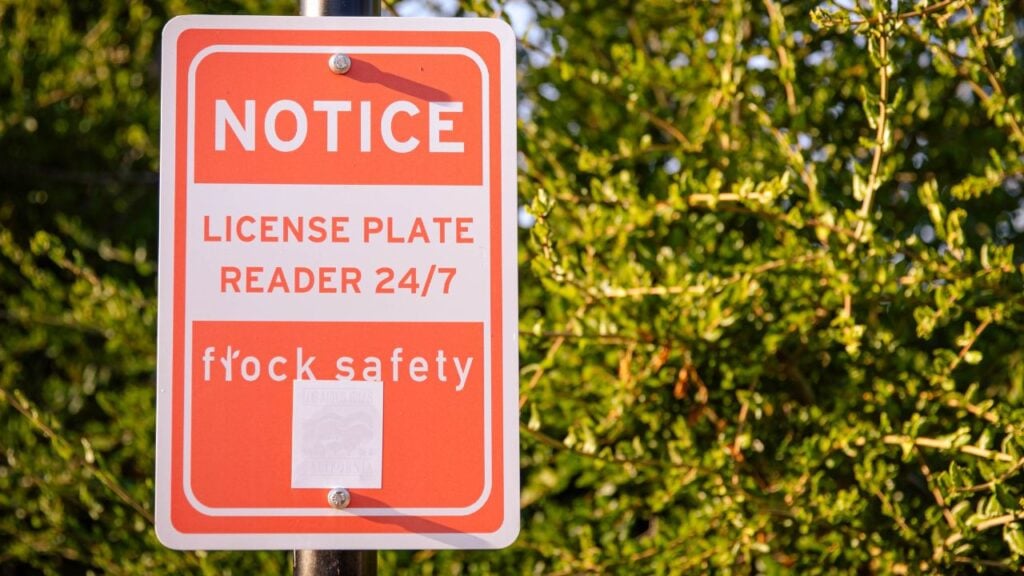
A camera mounted over a Florida intersection isn't there to catch a fender bender in progress.
It's building a record that can matter well beyond a speeding ticket.
8 Things Florida Drivers Should Know About the License Plate Cameras Going Up Across the State
9 Bad Driving Habits That Give Away a Florida Transplant
Merging onto I-95 for the first time tends to out a new arrival within about a mile.
Longtime Florida drivers can spot the tell before the newcomer even finds the exit.
