

10 Things Chesapeake Bay Virginians Miss Once They Move Inland

A hawk works a cattle pasture somewhere past Farmville, and nobody in the yard looks up.
On the Chesapeake, that shape overhead is almost always an osprey.
The Bay region holds close to a quarter of every nesting pair in the continental United States. But inland skies stay empty.
These are the things Chesapeake Bay Virginians miss once they move inland.
1. Steamed Crabs off the Boat
Chesapeake Bay blue crabs go from a waterman’s pot to a picnic table on the Northern Neck the same afternoon, not after a truck ride.
Virginia’s 2026 winter dredge survey put the Bay’s crab population at 349 million, up sharply from the year before.
A crab boil in the Shenandoah Valley or the Southside means a cooler of frozen claws shipped in from somewhere else.
Old Bay still shakes the same over a newspaper-covered table.
It just isn’t cracking a crab that was pulled from Mobjack Bay that morning.
2. Deadrise Idling at the Dock
The Chesapeake Bay deadrise became Virginia’s official state boat in 1988, a low, wide wooden workboat built to take the Bay’s short, choppy waves.
Watermen from Deltaville to Reedville still build and run them, and no two look quite alike.
Ask a Deltaville waterman about his boat, and he’ll talk builders and years before price ever comes up.
What replaces a workboat once the shoreline’s gone?
A bass boat idling on a reservoir, and that’s the extent of the comparison.
A bass boat never smells like diesel and low tide at six in the morning.
3. Living by the Tide, Not the Clock
The Rappahannock River, a Chesapeake Bay tributary, still rises and falls on the Northern Neck long before it reaches an inland clock-watcher’s schedule.
Virginia’s wildlife agency marks the head of tide at Fredericksburg, nearly 100 miles upriver from the Bay.
Crabbing, fishing, and even when to walk the dog all bend around whether the water’s coming in or going out.
Nobody checks a wristwatch first.
Inland, a river just runs one direction, and the day runs on whatever the clock on the wall says.
Why the Chesapeake Bay’s Tide Still Reaches Fredericksburg
The Rappahannock River, a Chesapeake Bay tributary, runs fresh, not salty, by the time it reaches Fredericksburg.
The water still rises and falls there twice a day anyway.
A whole river channel moves with the moon’s pull, not just the salt inside it.
That pull pushes the tide all the way to the fall line, the rocky ledge where the coastal plain ends and the current can’t climb any farther.
4. Osprey on Every Channel Marker
Osprey nests top nearly every channel marker and duck blind along the Chesapeake Bay from spring through late summer.
The Bay region holds an estimated quarter of every osprey nesting pair in the continental United States, out of a world population under 100,000 birds.
Nowhere else comes close.
A red-tailed hawk or a turkey vulture might work a farm field instead, and neither dives feet-first into the water for dinner.
Chesapeake Bay Virginians grow up narrating the difference without thinking about it.
Inland neighbors just hear “big bird.”
5. Narrow Window for Soft Crabs
Soft-shell crabs demand a Chesapeake Bay waterman catch a “peeler” crab right as it starts shedding its old shell.
Tangier Island alone accounts for roughly 13 percent of the Bay’s blue crab harvest, much of it worked through floating shedding tanks.
Miss the window, and the shell hardens back up within hours.
It’s just a hard crab.
A soft crab that reaches an inland kitchen at all arrives frozen.
Thawing costs it the crunch that makes the whole thing worth ordering.
6. Reedville’s Fleet Heading Out Before Dawn
Reedville’s menhaden fleet still pushes off the Northern Neck’s docks before sunrise, headed out to work the Chesapeake Bay’s biggest catch by weight.
The National Oceanic and Atmospheric Administration’s most recent landings data (2022 figures, published in 2024) ranks Reedville as the nation’s fourth-largest fishing port by volume, built almost entirely on menhaden.
The fish plant’s smell drifts for miles on a still morning.
Longtime Northern Neck families call it the smell of money, and they mean it fondly.
Many towns inland have factories.
But none of them run on a fishing fleet, and none of them smell anything like Reedville at 6 a.m.
7. Long Pull Across the Bay Bridge-Tunnel
The Chesapeake Bay Bridge-Tunnel runs 23 miles across the mouth of the Bay.
It opened in 1964 and dips underwater twice so ships can pass overhead.
Engineers named it an engineering wonder of the modern world back in 1965, and more than 80 million vehicles have made the crossing since.
Driving straight into open water, then suddenly underneath it, delivers a thrill nothing else on a Virginia highway matches.
Nothing inland replicates it.
A bridge over a reservoir gets you across some water, and that’s the whole trick.
8. Oysters Straight From the Rappahannock
Rappahannock Oyster Co. traces back to a family lease on a Chesapeake Bay tributary near Topping, and cousins Ryan and Travis Croxton revived it in 2001.
They floated their oysters in cages just off the bottom instead of leaving them in the mud.
That floating-cage approach caught on with growers up and down the Bay.
A broader aquaculture rebound followed and lifted Virginia back to the top of East Coast oyster landings.
A few hundred yards separate the cages from the table at some Rappahannock restaurants.
Inland raw bars fly their oysters in on ice, and a flight, however short, changes the taste.
Chesapeake Bay Virginians notice the difference the first bite inland.
9. Swans Landing on the Marsh
Tundra swans drop onto the Chesapeake Bay’s Northern Neck marshes every year in late fall, fresh off a flight from the Arctic.
They winter in the Bay’s shallow, brackish creeks until early spring, when the whole flock lifts off for the trip north again.
Then they’re gone again.
The call carries for a mile over flat water.
An inland pond might host a few resident Canada geese year-round, and that’s a different sound entirely from a marsh full of wintering swans.
Psst! How much do you know about the Chesapeake Bay’s deeper history? Take our quiz and see how many you can get right.
Quiz
Chesapeake Bay IQ
Answer these questions on the Chesapeake Bay’s deep past and deeper trivia. We bet you can’t get them all right. Prove us wrong?
Linguist Blair Rudes traced the word “Chesapeake” back to what original meaning?
10. Smell That Never Fully Leaves
Low tide on a Chesapeake Bay marsh puts out a smell inland Virginia simply doesn't have.
Exposed mud and marsh grass release sulfur as they break down in the sun.
The result is sharp, a little rotten, and completely unmistakable to anyone who grew up around it.
Newcomers wrinkle their noses.
People who grew up on a Northern Neck creek call the same smell home.
They don't bother explaining why to anyone who wasn't raised on it.
A candle labeled "sea breeze" doesn't come close, and neither does a walk past any inland farm pond.
Many Chesapeake Bay Virginians roll a car window down before they even check directions, just to catch a whiff of home.
7 Virginia Laws Still on the Books That Sound Made Up

Virginia hasn't done a full rewrite of its legal code since 1950.
That's a 76-year gap, and a handful of strange old lines never got a second look in the meantime.
7 Virginia Laws Still on the Books That Sound Made Up
9 Virginia Backroads Locals Take to Skip the Interstate
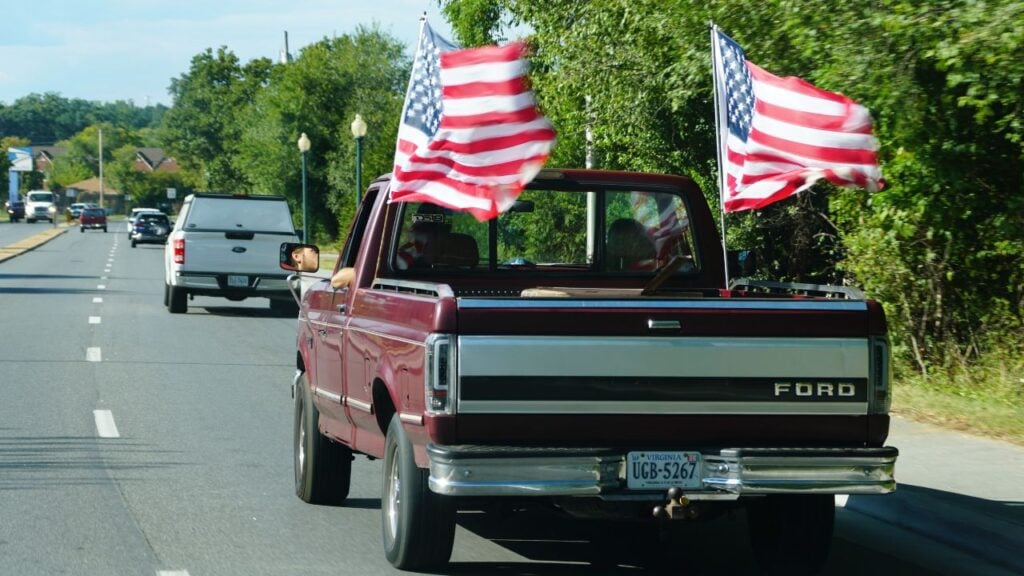
Richmond drivers lost 40 hours to rush-hour traffic in 2025, nine more than the year before.
Some Virginians never spend a single one of those hours sitting in it.
