

8 North Dakota Sayings That Leave Out-of-Towners Completely Lost

By 1910, North Dakota had nearly 46,000 Norwegian-born residents alongside roughly 52,000 German speakers.
Neither language ever fully won.
What came out the other side is a vocabulary that sounds like English, until somebody uses it on you.
These are the North Dakota sayings that leave out-of-towners completely lost.
1. “Uff Da”
Norwegian immigrants carried “uff da” into North Dakota generations ago, and the phrase never left.
North Dakotans now reach for it the way other places reach for a curse word.
A stubbed toe gets it.
So does a stuck pickup, a fumbled pass on Bison game day, or a grocery bill that ran higher than expected.
The phrase carries dismay, surprise, or relief, and a North Dakotan reads the mood from tone alone.
Outsiders who hear it for the first time assume they caught someone mid-hiccup.
They didn’t.
North Dakotans of Scandinavian heritage still lean on the phrase as an all-purpose reaction, Fargo’s newspaper has reported, and nobody bothers translating it for visitors.
Ask what it means, and a North Dakotan just says it again, slower.
2. “Ish”
A newcomer hears a North Dakotan say “ish” and assumes it’s a hedge, something between yes and no.
It isn’t.
North Dakotans blurt out “ish” the second something turns their stomach.
Stepping on something squishy in the dark earns it.
So does finding a spider in a boot.
The word traces back to a Norwegian phrase for disgust that Scandinavian settlers carried into the Upper Midwest.
Nothing about “ish” leaves room for a maybe.
It’s a verdict, delivered flat.
3. “Snirt”
North Dakotans call the grimy streaks of windblown snow along a plowed road “snirt,” and the word tells you exactly what you’re looking at.
Snow plus dirt equals snirt.
The term dates back further than expected.
During the North Dakota blizzard of March 1966, wind carried so much dirt into the snow that the mixture was dubbed “snirt.”
The National Weather Service recorded it on the spot.
Six decades later, the word still shows up in North Dakota weather chatter every spring thaw.
A visitor hears “snirt season is here” and pictures nothing concrete.
North Dakotans picture their driveway.
4. “Gumbo”
North Dakota’s Red River Valley produces a sticky clay mud that residents call “gumbo,” and it has nothing to do with a Louisiana kitchen.
Rain hits that clay-heavy soil, and it turns waxy enough to suck a boot clean off.
North Dakota’s state history curriculum warns residents against driving on rain-soaked gumbo roads for exactly that reason.
Locals inherited the word from the earliest European settlers who broke this ground more than a century ago.
Say “gumbo” to a Louisiana transplant, and they’ll ask what’s in it.
Nothing.
Just clay, water, and bad timing.
Two Waves of Settlers Built North Dakota’s Dialect
North Dakota’s sayings split into two heritage camps that landed within a few decades of each other.
Norwegian and other Scandinavian immigrants settled the Red River Valley starting in the 1870s, then pushed into the state’s northwestern counties.
Words like “uff da” and “ish” trace straight back to that wave.
German-speaking settlers arrived just as fast, and many came by way of farming colonies along Russia’s Black Sea coast rather than straight from Germany.
By 1910, North Dakota counted nearly 46,000 Norwegian-born residents alongside roughly 52,000 German speakers, a split close enough that neither language ever fully won out.
5. “Hotdish”
North Dakotans call a casserole a “hotdish,” full stop, and asking for the casserole dish at a potluck gets you a blank look.
Every hotdish follows the same basic formula: A starch, a meat, a canned vegetable, and a can of cream soup holding it together.
Tater tot hotdish shows up at funerals, potlucks, and church basements across the state.
The dish grew out of Depression-era budgets, when farm families stretched whatever came from the farm or the garden into a meal that fed a crowd.
A Bismarck TV station has reported the same thing every North Dakota grandmother already knew.
Nobody in North Dakota calls it a casserole.
Not once.
Order “the casserole” at a church potluck, and someone will gently correct you.
6. “Coming With?”
North Dakotans ask “you coming with?” and leave off the rest of the sentence entirely, which throws outsiders every time.
A visitor waits for the rest of the sentence.
Nothing follows.
North Dakotans stop it right there, on purpose.
Linguists trace the construction to German and Norwegian sentence patterns that early settlers spoke at home, patterns that never fully translated into standard English.
A dialect survey of North Dakota residents found that nearly three in four use that same dropped-object invitation as a complete question, no object needed.
Say the same thing outside the Upper Midwest, and people will wait for you to finish.
North Dakotans already did.
7. “Kuchen”
The word “kuchen” simply means “cake” in German, but North Dakota bakeries use it for exactly one dessert.
It’s a fruit-and-custard bake pressed into a yeasted crust, nothing like a layer cake.
German-speaking settlers carried the recipe, and the name, to North Dakota generations ago.
Order a slice expecting frosting, and custard shows up instead.
Say the word out loud, and locals land on “koo-ken,” not “coo-chen,” according to a Minot TV station.
Get the pronunciation wrong at a bakery counter in Bismarck or New Salem, and the person behind the counter knows instantly that you’re not from around there.
It happens constantly.
North Dakotans grew up correcting the pronunciation before they could spell the word themselves.
Psst! How much do you know about North Dakota’s sayings and identity? Flip each card below and find out.
8. “Knoephla”
Diners across North Dakota order “knoephla” soup off nearly every menu, and the word alone stops out-of-towners cold.
Every time.
Say the word out loud, and it sounds nothing like it looks written down: Locals commonly land on “nef-la.”
The soup itself is simple: Potatoes, cream, and small dumplings simmered together.
German-speaking settlers who farmed their way from Russia’s Black Sea colonies settled North Dakota’s south central counties of Emmons, Logan, and McIntosh, according to the State Historical Society.
They brought the recipe with them.
North Dakota’s state history curriculum still calls knoephla soup a staple in the communities those families built.
The dumplings are pinched by hand from a stiff dough, never dropped from a spoon.
That detail is what separates a proper bowl of knoephla from any other potato soup on a North Dakota menu.
9 Cracker Barrel Traditions That Have Disappeared
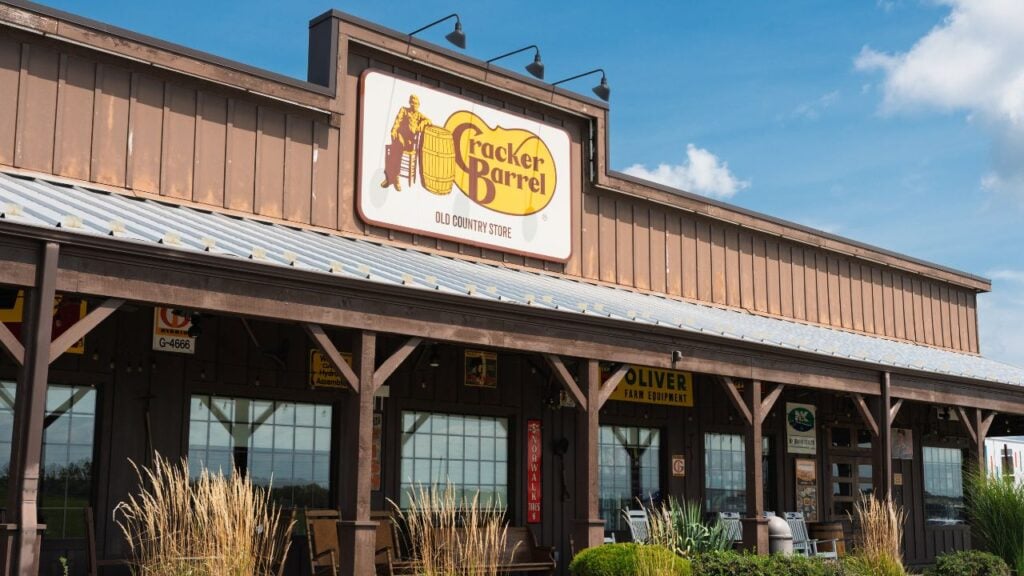
Cracker Barrel’s stock dropped by $94 million in a single trading day last August, all because the chain swapped its old logo for a slimmer design.
The company brought the old logo back within days, but that wasn’t the only change that has disappeared from stores over the years without a word of warning.
