
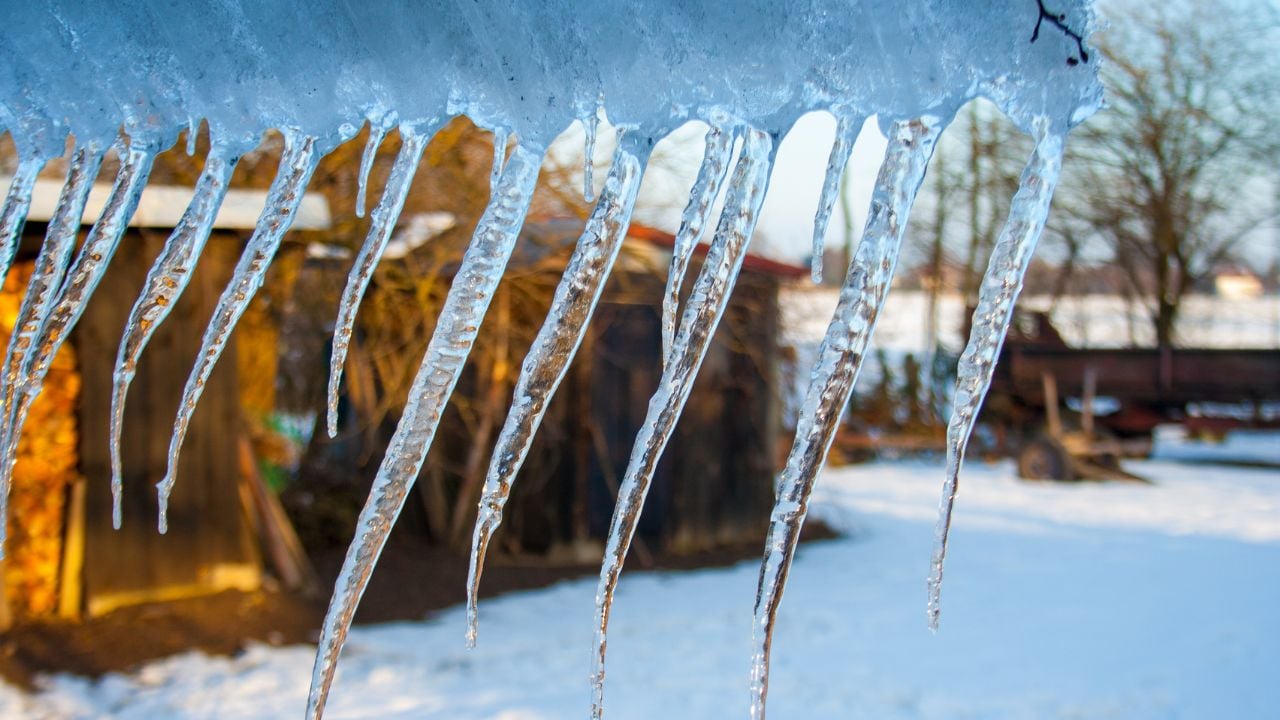
5 Snow Removal Mistakes New Montana Homeowners Make Their First Winter

A bag of ice melt on a Montana hardware store shelf doesn’t say what temperature it stops working at.
Weeks later, the first real cold snap settles the question, and that’s one of several things nobody warns a first-winter homeowner about.
These are the snow removal mistakes new Montana residents make during their first winter.
Note: This is general information, not legal advice. Snow removal ordinances vary by city and are subject to change.
1. Missing Bozeman’s 24-Hour Clock
Bozeman starts a countdown the moment snow stops falling, and many new homeowners never hear about it until they’re already late.
City code gives Bozeman residents 24 hours to remove all the snow and ice from a sidewalk once it stops falling.
Bozeman’s business districts run on a tighter clock than that.
Sidewalks there must be cleared by 9 a.m. the next business day, by noon the next non-business day, or within four business hours of the snowfall, whichever is shortest.
That four-hour option can leave a business with far less time than the 24 hours a homeowner gets everywhere else in the city.
Miss the deadline, and Bozeman’s code compliance office can send a contractor to clear the walk instead.
The bill goes to the property owner, on top of a civil penalty.
There’s no warning first.
Reasonable Time Looks Different Across Montana
Missoula handles a missed sidewalk differently than a straight fine, and Montana’s cities don’t all agree on what counts as fair warning.
A first complaint about an uncleared Missoula sidewalk brings a mailed Notice of Violation, and a second complaint brings a final warning before the city calls a contractor.
Only the third complaint in one calendar year skips the letters and sends a bill straight to the property owner.
Kalispell runs on a different clock: Residents outside downtown get 72 hours to clear a walk, but that shrinks to the same day inside the city’s downtown business district.
2. Dumping Snow Where the Code Forbids It
Great Falls draws a hard line on where shoveled snow is allowed to land.
Nothing about a driveway or a sidewalk warns a new homeowner that the destination of a shovelful of snow is regulated at all.
City code 12.11.050 bans piling snow removed from a sidewalk or driveway onto the adjoining street, alley, or a neighbor’s separately owned property.
That means the easiest move, tossing a shovel of snow into the road or over the fence line, is itself the violation.
Bozeman lists that same habit, snow pushed onto the roadway from private property, right alongside violations like unpermitted firewood piles and construction debris.
Kalispell spells it out just as plainly: Pushing snow from private property onto a city sidewalk, street, or boulevard is against the law.
All three cities agree.
3. Chipping at an Ice Dam
Montana’s chinook winds can swing a roof from a hard freeze into a genuine thaw within hours.
That whiplash peaked at Loma, Montana, in January 1972, when the temperature jumped 103 degrees in a single day.
The National Oceanic and Atmospheric Administration still recognizes that swing as the national record.
Ice dams form when heat leaking out of the house melts snow on the upper roof, and that water refreezes into a ridge at the cold eaves.
Water backs up behind that ridge and works under the shingles, into the attic insulation.
A new homeowner’s instinct is to attack that ridge with whatever tool is closest: A metal shovel, a hatchet, or an ice chipper.
State agencies in other snow-belt states warn against exactly that move.
Minnesota’s Department of Commerce tells homeowners not to remove roof ice with chippers, warning that the tool can damage shingles, gutters, and other building components.
A roof rake, the long-handled tool made for exactly this job, pulls snow off the lower roof edge from the ground instead.
That keeps a blade away from the shingles entirely.
The ridge keeps re-forming winter after winter until the house stops leaking heat into the attic, the root cause Montana State University Extension points to instead of the ice.
The rake beats the hatchet.
4. Reaching for the Wrong Deicer
Montana’s Department of Transportation treats plain rock salt as a fair-weather tool, not a cold-snap one.
Sodium chloride, the bag many new homeowners grab first, only works above about 15 degrees Fahrenheit on a road surface, per the state’s guidance.
Montana routinely drops well past that mark overnight, especially once a cold snap moves in.
It just stops working.
Magnesium chloride works colder, down to about 10 degrees, and plain sand keeps working no matter how far the temperature falls.
A sidewalk in Montana’s cold snaps needs one of those two, not another jug of the cheapest bag at the hardware store.
5. Assuming the Plow Clears Your Driveway
Kalispell’s snow crews aren’t allowed to touch private property, and that includes the wall of packed snow they leave behind.
City policy states plainly that it’s forbidden for a Kalispell plow to clear snow or ice off private property.
That berm across the end of a driveway, the one a plow leaves after clearing the street, is the homeowner’s problem to solve.
Missoula runs the same way: Crews won’t go back to clear away a berm blocking a driveway, a mailbox, or a parked car.
A car left at the curb overnight can end up in the same spot.
Kalispell’s crews expect snow to pile up around a parked vehicle as the plow passes, and clearing that afterward is on the owner too.
The street is the city’s job.
The driveway apron never was.
Psst! How snow-ready is your Montana home before the first snow of the season? Run through this checklist and see where you stand.
Your Roof’s Hidden Snow Math
Montana law already assumes a fight with snow load before a single flake falls on a new house.
State building rules set a floor of 30 pounds per square foot for a home’s design roof snow load, no matter how mild a winter looks on paper.
That floor is a minimum only.
It rises fast.
A home in a high mountain valley can be engineered for well more than that number, while a house east of the divide often gets by on far less.
None of that shows up on a listing sheet, so many new owners never learn their roof’s number until a contractor pulls the county’s file.
A licensed engineer may be able to justify a lower design number, but only if the local building department agrees the design supports it.
13 Things Montanans Say That Make It Sound Like They’re Trying Too Hard

Every Montanan knows someone who can’t just answer a simple question without turning it into a performance.
These are the phrases that give away the effort before the punchline even lands.
13 Things Montanans Say That Make It Sound Like They’re Trying Too Hard
23 Common Subscription Traps That Quietly Eat Away at Montanans’ Paychecks

A forgotten free trial or two doesn’t feel like much, until the total on the bill says otherwise.
These are the subscriptions draining Montanans’ paychecks every single month.
23 Common Subscription Traps That Quietly Eat Away at Montanans’ Paychecks
