
5 Things Clarksville, Missouri Does Every Flood Season That Surprise Tourists

Clarksville spent 187 days underwater during the Great Flood of 1993, by National Weather Service records.
That’s more than six months, in a town of about 400 people.
These are the things Clarksville does every flood season that surprise tourists.
1. Built From Water
Clarksville fights the Mississippi River with water these days, not sand.
Every time a crest threatens the historic brick storefronts on Riverside Drive, a small crew pries open flaps set into the sidewalk along the river.
Steel posts drop into rails buried in the ground below.
Hollow aluminum planks slide in next.
Crews fill those planks with river water until they’re heavy enough to hold the river back.
Not a sandbag in sight.
The wall rises anywhere from three feet to a full ten feet, depending on the forecast crest.
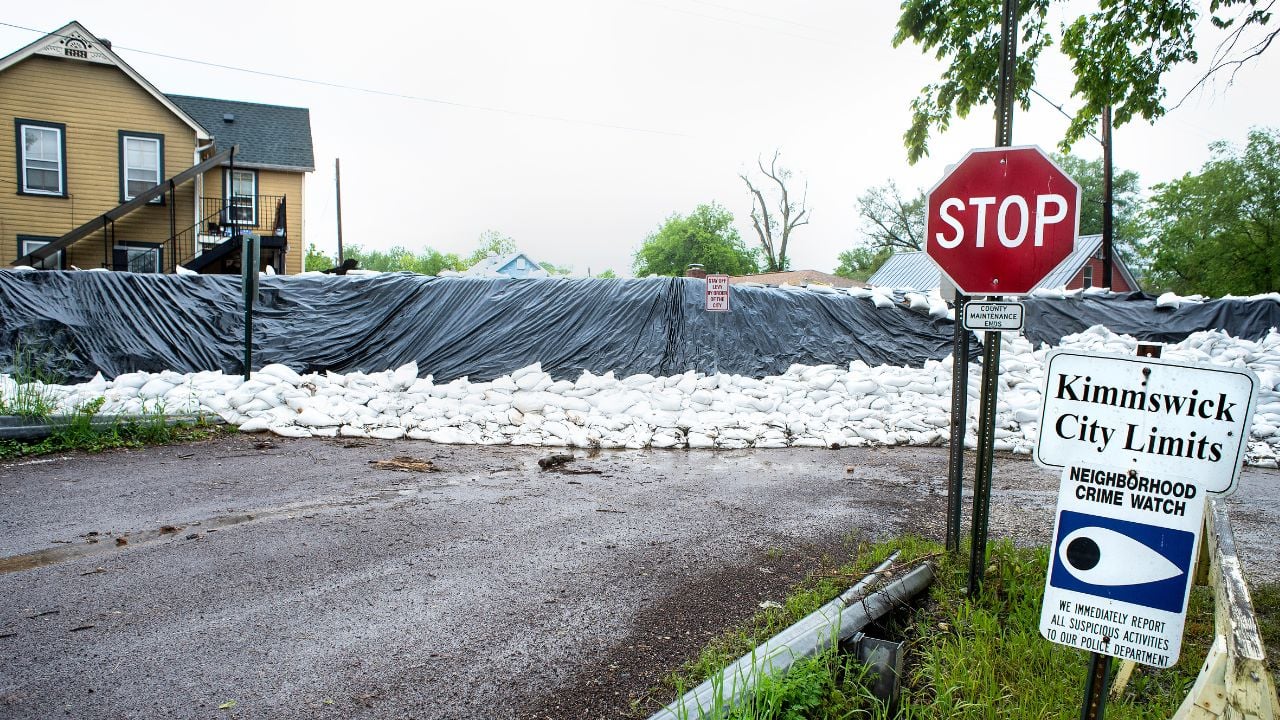
Every flood before the new wall forced Clarksville to build an eight-foot wall from roughly 3 million sandbags and 250,000 tons of sand, according to Mayor Jo Anne Smiley.
2. Pumping the Rain Back Out
Clarksville’s new wall solves one problem and creates another.
The wall keeps the Mississippi out.
That same wall traps the town’s rain in, too.
Storm runoff and creek water still have to go somewhere once the river is walled off.
Gravity stopped doing the job.
So Clarksville pumps that rain back out, lifting it over the top of the same wall near the post office.
Without the pumps, a heavy spring storm could flood downtown from the inside while the river sits safely on the other side of a ten-foot wall.
Tourists rarely picture a flood wall needing pumps just to handle ordinary weather.
3. One Number, Not the Forecast
Clarksville doesn’t leave the wall’s height to guesswork or a general weather forecast.
Officials watch one number instead.
It’s the river stage at the National Weather Service’s gauge by Lock and Dam 24.
Flood stage there sits at about 25 feet.
For years, water crossing roughly 31 feet meant the river had reached downtown streets.
Six feet decide everything.
That single gauge reading tells the crew when to open the flaps and how far to raise the panels.
Guessing low leaves water in the wrong places.
Guessing high wastes a full day of labor.
What Clarksville’s Two Numbers Mean
Flood stage at Clarksville marks the point where the Mississippi leaves its banks, not the point where downtown floods.
The six-foot gap between 25 and 31 feet explains a lot.
The river can sit at flood stage for days on the farmland outside Clarksville before a single drop reaches Main Street.
4. Locals, Not Soldiers
Clarksville used to need help from the whole state to fight a flood.
In 2008, roughly 200 soldiers from the Missouri National Guard spent days building sandbag levees and running pumps along the river.
That’s an entire company of soldiers for one small town.
Today, the same stretch of river goes up with a crew of about a dozen people.
The fire chief, the town’s emergency management head, Pike County’s FEMA officer, and a handful of workmen make up that crew.
They put the wall up in a single day.
No convoy rolls in anymore.
Clarksville manages this river alone now.
5. Taking the Wall Back Down
Once the crest passes, Clarksville takes its wall right back down again.
Crews pull the aluminum planks back out, drain them, and lower the steel posts back into their underground rails.
The sidewalk closes back over the top, flush and empty, like nothing was ever there.
That’s the whole point.
Tourists see the same open river view that postcards have shown for decades, right up until the crew needs the wall again.
Small Town, Big Price Tag
Clarksville has about 400 people.
Its new flood wall cost about $14 million.
That’s steep.
The federal government’s Economic Development Administration put up $1.7 million of that in 2022.
Missouri matched it with $10 million more.
The Mississippi shut Clarksville down for 187 days during the Great Flood of 1993.
That stretch is a big reason officials finally built something sturdier than sandbags.
Missouri’s governor cut the ribbon on the finished wall in July 2025.
Psst! How much do you know about the rivers that built Missouri? Take our quiz and see how many you can get right.
Quiz
Big River Trivia
Answer these questions on the rivers that shaped Missouri and the nation. We bet you can’t get them all right. Prove us wrong?
What is the longest river in North America?
The Rest of the Year
Clarksville spends much of the year not fighting a flood at all.
Bald eagles draw crowds to the river every winter.
Eagles rule the riverfront instead.
A St. Louis-based bird-conservation group has called the stretch near Lock and Dam 24 one of the best eagle-watching spots in the country.
Clarksville's Eagle Days festival runs every January, with spotting scopes and naturalists set up along the riverfront.
Antique shops and artisan studios fill the same downtown blocks the wall protects.
Those storefronts reopen within days of a crest passing, since the wall comes down almost as fast as it goes up.
9 Things Missourians Are Tired of Explaining to Everyone Who Moves In
St. Louis pizza runs on a cheese blend engineered back in 1947, and it melts nothing like the mozzarella many newcomers expect.
Missouri keeps a whole list of quirks like that one, the kind lifelong residents are tired of explaining to everyone who just moved in.
9 Things Missourians Are Tired of Explaining to Everyone Who Moves In
8 Hy-Vee Bakery Buys Missouri Shoppers Grab Every Week
A once-a-year birthday cake isn't the only reason shoppers make a beeline for Hy-Vee's bakery case.
Hy-Vee has been part of Missouri's story since 1938, when fifteen Iowa and Missouri stores first incorporated together, and the bakery habit stuck.
