
6 Things a West Virginia Mountain Town Only Does After Dark

A West Virginia driver’s odds of hitting a deer sit at 1 in 40 this year, against 1 in 139 for the average American driver, per State Farm.
The state has led the country in that for more than a decade.
A mountain town after dark isn’t a quieter version of itself, and the deer are only part of why.
These are the things a West Virginia mountain town only does after dark.
1. Fog in the Hollows
West Virginia’s river valleys grow their weather once the sun drops behind the ridgeline.
The ground gives up the day’s heat.
Cold air slides down off the peaks and pools in the low ground.
Forecasters with the National Weather Service office in Charleston describe the pattern in plain terms: Valley fog develops in the state’s hollows almost every night through the early morning hours.
It clears by mid-morning.
Headlights turn to a dull glow.
A curve that’s easy to read at noon disappears into the mist by 11 p.m., and the fog can sit thick in one hollow while the ridge above it stays clear.
Daytime drivers on the same road never see it.
2. Deer Ownership of the Roads
West Virginia has led the country in deer-vehicle collisions for more than a decade.
The odds of a collision sit at 1 in 40 this year, according to State Farm.
The rut runs from October through December.
Bucks start crossing roads they’d normally avoid.
About 40% of the state’s deer-vehicle collisions happen in those three months, according to West Virginia’s Division of Natural Resources.
The risk peaks during early morning and evening hours, when deer move most.
Deer don’t read a clock.
A driver who leaves work at 5:30 in July has an hour of daylight left.
That same drive in December starts in the dark, right as the herds move.
By daylight, those same herds stay off the roads and out of the way.
What “1 in 40” Means
West Virginia’s 1-in-40 figure only means something next to the national number.
State Farm puts the average U.S. driver’s odds at 1 in 139, so a West Virginia driver faces roughly three and a half times the national risk.
Neither number is a guess.
State Farm builds both figures from its insurance claims, an estimated 1.7 million animal-collision claims nationwide between July 2024 and June 2025 alone.
3. Weston’s Nightly Fire Siren
Within the city of Weston, one siren sounds every night at exactly 10 p.m. as a curfew reminder.
Not for a fire.
West Virginia leans on volunteers for its fire protection more than almost anywhere else.
90% of the state’s fire departments are staffed entirely by volunteers, according to West Virginia University Extension’s Fire Service program.
In Lewis County, those departments call in a crew with an old-fashioned siren instead.
Each one cycles for 30 seconds, and it goes silent overnight between 10 p.m. and 7 a.m.
The curfew siren keeps sounding through those same overnight hours.
4. Dark-Sky State Parks
Pocahontas County is home to three state-run sites that carry an International Dark Sky Place designation.
In 2021, DarkSky International certified Watoga State Park, Calvin Price State Forest, and Droop Mountain Battlefield State Park.
It was the first such designation anywhere in West Virginia.
First in the state.
Watoga runs the Dark Sky programming for all three parks.
Cabin guests and campers can visit the park’s designated night-sky viewpoints any time.
Nothing works before dark.
5. Green Bank’s Night-Sky Telescopes
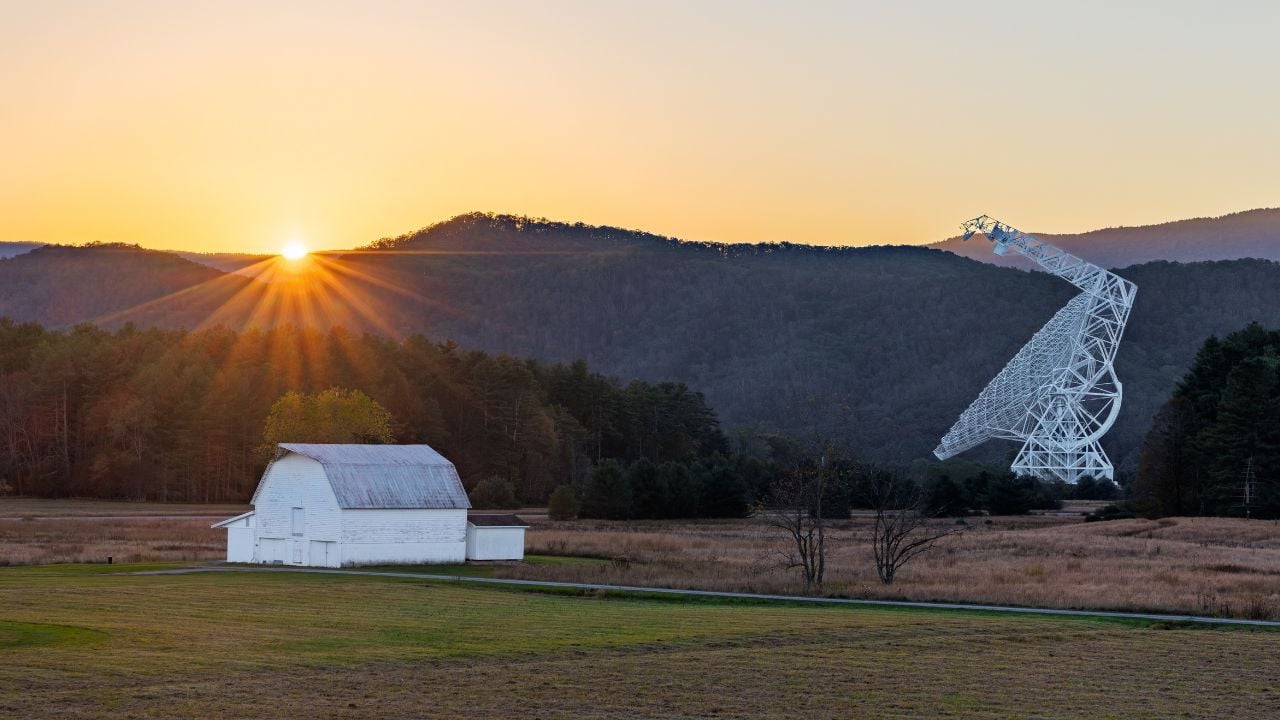
Green Bank Observatory sits inside the same dark stretch of Pocahontas County.
It opens its telescopes to the public once a month.
The free Star Party starts 30 to 45 minutes after sunset.
Observatory staff help visitors line up constellations through the same optical telescopes used for public viewing.
Two hours under the sky.
Cloud cover cancels the event outright, since there’s nothing to point a telescope at through an overcast sky.
The observatory posts a cancellation call by 5 p.m. on the day of the event.
6. Watoga’s Synchronized Fireflies
West Virginia’s Watoga State Park hosts fireflies that start blinking on a beat by early summer, flashing together instead of at random.
DarkSky International counts Watoga among just four U.S. locations that host public viewing of the phenomenon.
Four places, total.
A porch light or a car’s headlights can throw the whole display off, which is part of why the park’s dark-sky status matters to more than the astronomers.
By daylight, they’re just bugs in the leaf litter.
Psst! How much do you know about West Virginia after dark? Take our quiz and see how many you can get right.
Quiz
West Virginia After Dark
Answer these questions on West Virginia’s mountains, sky, and legends. We bet you can’t get them all right. Prove us wrong?
The first Mothman sighting happened in Point Pleasant on what date?
Why the Signal Stays Weak
West Virginia's darkest skies exist partly because the radios nearby have to stay weak.
Pocahontas and Pendleton counties sit inside a federally restricted radio zone, a roughly 13,000-square-mile stretch of West Virginia and Virginia.
Transmissions inside it stay deliberately low-power so they don't drown out sensitive research equipment nearby.
Radio, TV, and wireless signals inside it have to run at reduced strength.
No exceptions after dark.
West Virginia's mountains do some of that work on their own, since the ridgelines naturally block stray frequencies the way they block streetlight glow.
The same low-power rule that keeps cell service weak is also why Green Bank's telescopes can pick up faint radio signals from deep space in the first place.
Living Inside the Restricted Zone
West Virginia's low-power rule doesn't clock out at sunrise, either.
No time off.
Local officials in both counties have pushed the Federal Communications Commission for more flexibility in recent years, arguing the same low-power rules make it harder to run modern emergency radios.
Residents closest to the observatory live with Wi-Fi routers, microwave ovens, and other everyday electronics that stay restricted or heavily limited, day and night.
A technician carrying a spectrum analyzer, not a police officer, is who shows up if a signal leaks anyway.
8 West Virginia Land Boundary Disputes Rural Homeowners Get Wrong
West Virginia only needs ten years, sometimes five, before someone else's use of a property can legally turn into their land.
State lawmakers tried to kill that rule in 2025, and the bill died in committee, so the old clock still runs on rural properties across the state.
8 West Virginia Land Boundary Disputes Rural Homeowners Get Wrong
9 West Virginia Habits Nobody Realizes Are a West Virginia Thing Until They Move

Many West Virginia lunch boxes have carried the same thing since 1927: a pepperoni roll, wrapped in wax paper, no fork required.
Cross the state line, and the words "pepperoni roll" draw a blank look instead of a nod.
9 West Virginia Habits Nobody Realizes Are a West Virginia Thing Until They Move
