
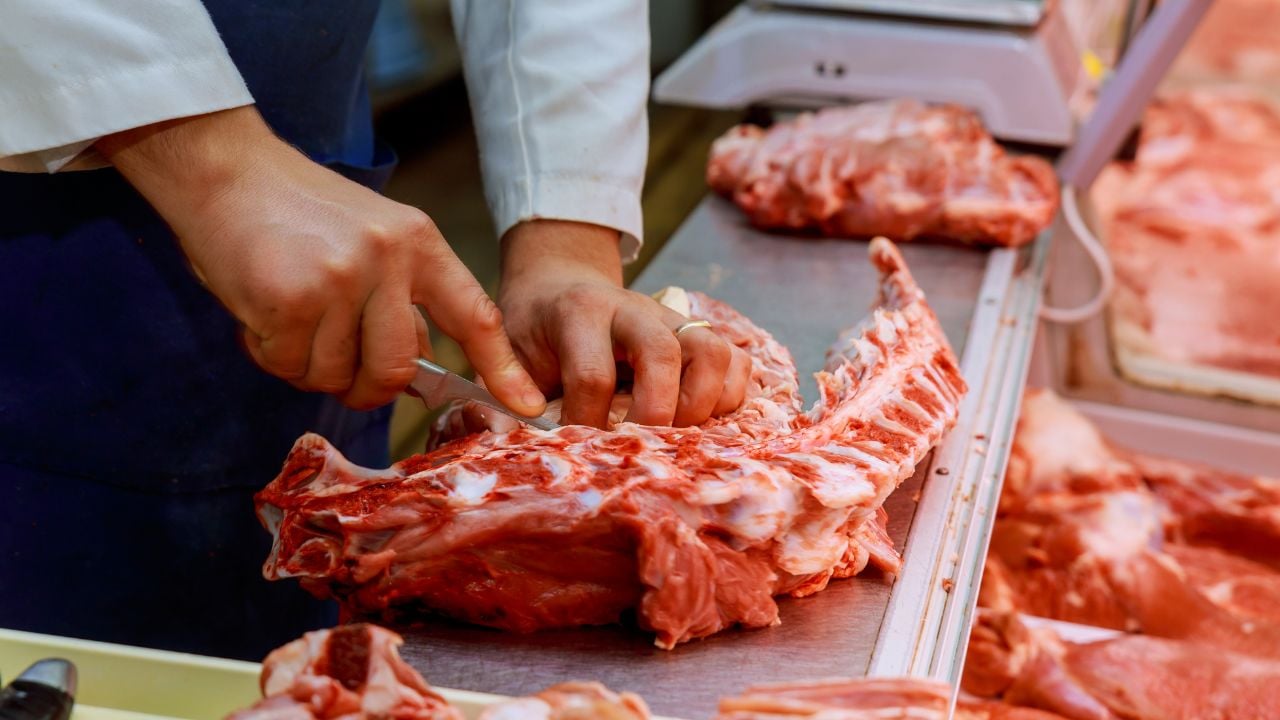
9 Publix Meat Counter Facts South Carolinians Should Know Before Buying

South Carolina has over 70 Publix stores, and the chain opened its first one in the state in 1993.
Every one of them has a meat department with a cutter behind the counter.
Publix publishes more about that department than many shoppers ever read, and the U.S. Department of Agriculture publishes the rest.
These are the facts you should know about meat and Publix before buying.
1. Asking for an Exact Thickness
Publix stocks its meat case with whatever thickness a cutter packaged that morning.
That isn’t the only thickness available.
Publix’s meat page says its meat cutters are happy to custom cut, trim, or repackage a selection. The condition is that a shopper doesn’t see exactly what they want in the case.
The company’s worked example is an extra-thick New York strip, which it says it’ll custom cut in the Meat department.
Publix’s beef product pages carry the same offer in different words. They tell shoppers to let the department know how they like it, and say Publix will customize the cut the way a shopper asks for it. That line sits on the T-bone, the chuck roast and the standing rib roast alike.
Ask before it’s wrapped.
2. Asking for the Fat Trimmed the Way You Want It
Trim is one of the three words Publix uses. Its meat page lists custom cut, trim, or repackage as the things its cutters will do.
A thick fat cap suits a grill. A closer trim suits a pan. The counter handles either one.
Publix doesn’t publish a price for the work, and it doesn’t publish that the work is free. Its in-store pickup FAQ warns that some special instructions may result in additional charges.
Ask what it costs.
3. Asking for a Smaller Package
Publix says choosing a cut is easy given its range of packages and portion sizes. It also says the cutters will repackage a selection when a shopper doesn’t see exactly what they want.
The company’s service page puts it a second way. Publix says it’ll custom-package a selection if it needs to.
A household of one doesn’t have to buy the family tray. Two pork chops beat six that spoil.
Ask for less.
4. Reading the Grade Shield on a Publix Steak
Publix names the grade in the product name. Its steaks and roasts sell as Publix USDA Choice Beef.
The U.S. Department of Agriculture decides what that word means. Its Agricultural Marketing Service says Prime is produced from young, well-fed beef cattle and carries at least slightly abundant marbling.
Choice is high quality but has less marbling than Prime, with at least a small amount of it. Select is very uniform in quality and normally leaner than the higher grades, with at least a slight amount of marbling.
Marbling is the fat running through the lean.
The marketing service says Utility, Cutter and Canner grades are seldom, if ever, sold at retail, and go into ground beef and processed products instead.
Three grades reach the case.
5. Why the Ground Beef Says Inspected and the Steak Says Choice
Publix’s ground beef doesn’t carry a grade at all. Its ground chuck and ground sirloin sell as Publix Beef, USDA Inspected.
Those are two different marks.
The Agricultural Marketing Service grades meat, poultry and eggs on a voluntary, fee-for-service basis. The shield means the agency officially graded the product and that the product met all the requirements of the designated quality standard.
An unshielded tray of ground chuck was still inspected. Nobody paid to grade it.
That’s a purchasing decision, not a safety one.
6. What Never Frozen and Ground Fresh Daily Cover
Publix makes freshness claims on some meat and not on others. Its meat page says the meats are offered fresh in stores every day.
The pork line goes further. Publix pork product pages say the pork is always fresh and never frozen.
The names carry it too. One ground product sells as Publix Pork Market Ground, Ground Fresh Daily. One rib product sells as Publix Pork Loin Back Ribs, Fresh, Never Frozen.
The chicken gets different wording again. Publix describes its whole young chicken as Publix 100% natural, never-frozen chicken.
Publix publishes no matching never-frozen line for its beef.
The wording changes by animal.
7. What GreenWise Means at the Meat Case
GreenWise is a Publix standard, not a government one. Publix says GreenWise meats and poultry are raised without antibiotics or added hormones.
The GreenWise meats page names chicken, beef, pork, lamb and turkey, and says GreenWise meats are raised without antibiotics, ever. Publix says its GreenWise chicken and beef are fed a 100% vegetarian diet.
The footnote is doing the heavy lifting. Publix’s asterisk says federal regulations prohibit the use of added hormones in pork and poultry.
So the no-added-hormones line on a GreenWise chicken describes federal law, not a Publix standard. The no-antibiotics line is the part Publix is promising.
Read the asterisk.
8. What the Package Won’t Say About Where the Beef Was Born
Country-of-origin labeling isn’t uniform across the meat case. The U.S. Department of Agriculture stopped enforcing country-of-origin requirements for muscle cut and ground beef and pork on Dec. 18, 2015.
Mandatory labeling still covers muscle cut and ground chicken, lamb and goat. It also covers wild and farm-raised fish and shellfish, fresh and frozen fruits and vegetables, peanuts, pecans, macadamia nuts and ginseng.
Beef doesn’t have to say.
A Product of USA label is a separate thing, and the department calls it voluntary. The final rule limits the claim to meat, poultry and egg products from animals born, raised, slaughtered and processed in the United States.
That rule took effect May 17, 2024, and its compliance date was Jan. 1, 2026.
9. Reading the Date on the Package
The date stamped on a meat tray isn’t a safety date.
The U.S. Department of Agriculture’s Food Safety and Inspection Service breaks the labels down. A sell-by date tells the store how long to display the product for sale for inventory management.
The service says that isn’t a safety date.
A use-by date is the last date recommended for use of the product while at peak quality. The service says that isn’t a safety date either, except on infant formula.
Best if used by refers to flavor or quality. The service says it’s not a purchase or safety date. Outside infant formula, product dating isn’t required by federal regulations.
Time and temperature do the work instead.
Storage time beats the stamp.
How Long the Fridge Buys You
The department’s cold food storage chart gives fresh beef and pork steaks, chops and roasts 3 to 5 days in a refrigerator at 40 degrees Fahrenheit or below. Ground meat gets 1 to 2 days. Whole chicken or turkey gets 1 to 2 days, and the pieces get the same.
Those numbers don’t move when the tray’s printed date does.
Psst! How much do you know about the meat and poultry business behind your grocery trips? Take our quiz and see how many you can get right.
Quiz
South Carolina Meat IQ
Answer these questions on Publix history and South Carolina’s meat and poultry business. We bet you can’t get them all right. Prove us wrong?
South Carolina ranks where nationally in turkey production?
The Roast That Has to Be Ordered Ahead
Some of the meat department's work happens before a shopper ever reaches the case.
Publix sells its holiday beef roast under the name Standing Rib Roast, Publix USDA Choice Beef Boned and Tied for Easy Carving. The pork counterpart is Publix Pork Loin Center Rib Roast, Boned and Tied for Easy Carving.
Publix's Christmas order-ahead page flags holiday items as requiring advance ordering. It doesn't publish a lead time for a meat special order.
So ask the store.
The Publix Guarantee covers what comes home either way. Publix says that if a purchase doesn't give complete satisfaction for any reason, the full purchase price will be cheerfully refunded immediately upon request.
That covers the whole store.
South Carolina has 74 Publix locations backing that promise today.
9 Things South Carolinians Assume Every American Grew Up Doing
South Carolina kids learn early to call the giant flying bug in the carport a palmetto bug, never a cockroach.
Say that word somewhere else in the country, and a blank stare comes back.
9 Things South Carolinians Assume Every American Grew Up Doing
9 South Carolina Beach Driving Rules Tourists Get Wrong Every Year

A pickup truck rolls down a beach access ramp in Myrtle Beach, and a lifeguard waves it straight through.
The rental car idling right behind it doesn't get the same treatment because one of them holds a town permit and the other doesn't.
9 South Carolina Beach Driving Rules Tourists Get Wrong Every Year
