
7 Old Alabama Expressions Younger Alabamians Rarely Use Anymore

Every generation leaves its mark on the way Alabama sounds.
Some once-familiar expressions now survive mainly in family stories, old conversations, and the occasional sentence that makes a young listener stop and stare.
These are the old Alabama expressions younger Alabamians rarely use anymore.
1. Buggy
Many Alabamians still call a grocery cart a buggy.
A dialect survey that collects answers from every state found just over 40% of Alabama respondents still reach for “buggy” instead of “cart” or “grocery cart.”
It won’t stay that way for long.
More than half of Alabama already leans toward some form of “cart,” the shift the survey caught underway.
Buggy is increasingly rare to hear from shoppers under about forty.
Older Alabama shoppers still send someone to grab a buggy on the way in.
Say it to a younger shopper, and cart is usually what comes back.
2. Airish
Alabama’s word for a chilly, breezy day is “airish,” and it’s been fading for a while.
The Dictionary of American Regional English traces “airish” back to a 1757 Virginia diary and lists the word as chiefly Southern ever since.
Its most recent Alabama sighting came from a 2017 weather note calling a cold snap “airish weather.”
It hasn’t shown up since.
Younger Alabamians grow up hearing “chilly” or “a cold snap” instead.
These days, “airish” turns up mostly in older Alabama speech.
3. Might Could
Alabama speech still stacks two modal verbs into one phrase instead of picking a single helping verb, in constructions like “might could” and “used to could.”
A statewide dialect survey found just under 46% of Alabama respondents still use it that way.
That’s a minority now.
The construction leans hardest on older, rural Alabama speech.
It’s increasingly rare to hear from someone under about forty.
A grandmother might still tell you she “might could” make it to church on time.
A teenager is more likely to just say “maybe.”
The Grammar Behind “Might Could”
Alabama speech doesn’t just add color words to English. It bends the grammar, too, and “might could” is one example.
Linguists call constructions like “might could,” “used to could,” and “might should ought to” double modals, since they stack two helping verbs instead of picking one.
It isn’t broken English.
Double modals follow consistent patterns, the same way any dialect’s grammar does, even though schools don’t teach them.
The pattern isn’t only Alabama’s, either. Linguists have traced it in a loose belt running from Texas up toward Pennsylvania, with the Gulf South at its center.
4. Pocketbook
Many Alabama grandmothers carried a “pocketbook,” not a purse, for generations.
An Alabama-raised newspaper columnist built a whole piece around the word after a friend’s Facebook post left the younger generation confused.
The confusion made sense.
Younger Alabamians raised on phones and debit cards have likely never carried what one Alabama columnist called a “pocketbook.”
She described it as a handbag matched to a pair of shoes and a set of earbobs, finished with a coordinating chunky necklace.
The columnist remembered her grandmother’s closet, lined with pocketbooks in every color and a matching pair of shoes stacked for each one.
5. Poke
Alabamians once called a paper sack a “poke,” the word behind the old saying “a pig in a poke.”
The saying warned buyers not to purchase something sight unseen, since a poke hid whatever was inside until they got it home.
The word itself is documented as a longstanding Southern term for a bag.
The same statewide dialect survey found barely one Alabama respondent in 200 still reaches for it today.
That’s close to gone.
Younger shoppers who’ve never heard “poke” just call it a bag.
6. Ill
Alabama speech once used “ill” to mean bad-tempered, not sick.
Call a dog “ill” in that older sense, and it was a warning about its temper, not its health.
That wasn’t exactly a compliment.
Southern dialect researchers label the usage chiefly Southern, with written citations dating back to 1860.
More citations turned up in the 1880s, so the record spans both sides of the Civil War, not just the years after it.
Ask a younger Alabamian what an “ill” dog means today, and sick is nearly always the answer.
7. Earbobs
Alabama women once called their earrings “earbobs,” especially the clip-on kind that needed a tiny screw to stay put.
Merriam-Webster traces the word back to 1648, centuries before it became a fixture of Alabama grandmothers’ jewelry boxes.
The same Alabama columnist who wrote about “pocketbook” put “earbobs” in her glossary of grandmother words that confuse younger relatives today.
Pierced ears mostly ended the need for the screw-back kind, and the word went with it.
Younger Alabamians just say earrings.
Why These Words Are Fading
Alabama’s dialect keeps showing up as a subject of academic study, not just a punchline.
A linguist trained at Auburn University spent months in the early 2000s recording speech patterns across several Southeast Alabama counties.
That fieldwork fed years of research into how the state’s word choices differ county by county.
That same researcher later hosted a public television series tracing Alabama speech from Elba to Mobile.
That researcher’s fieldwork points to the forces behind it: Newcomers moving into the same Southeast Alabama counties and national media reaching those towns.
Alabama schools also teach one standard way to talk instead of the county-by-county version she recorded.
It won’t happen overnight, though.
The same survey that measured “buggy” at just over 40% is tracking that decline in hard numbers, not just an impression.
Psst! How much do you know about Alabama’s history? Take our quiz and see how many you can get right.
Quiz
Alabama History IQ
Answer these questions on Alabama’s history and landmarks. We bet you can’t get them all right. Prove us wrong?
Which Alabama city held the first organized Mardi Gras celebration in America, years before New Orleans held one?
Words Still in Use
Alabama hasn't let go of every regional word on this list.
The same statewide survey found close to 62% of Alabama respondents still call any sweetened soft drink a "coke," whether it's a cola, a root beer, or a lemon-lime soda.
"Y'all" does even better, with close to 73% of Alabama respondents naming it their word for addressing a group of people.
Neither one is rare.
Neither word sounds old-fashioned to a teenager ordering a "coke" at a gas station or texting "y'all" to a group chat.
A teenager still orders a "coke" without meaning cola, and still calls a group of friends "y'all" without a second thought.
8 Things Alabama Shoppers Order Wrong at the Piggly Wiggly Meat Counter
Alabama's more than 100 Piggly Wiggly stores don't share one owner, so a meat counter order that works fine in one town can fall apart at the next.
These are the ordering habits that trip up shoppers before the butcher even rings them up.
8 Things Alabama Shoppers Order Wrong at the Piggly Wiggly Meat Counter
8 Road Trip Mistakes Alabama Drivers Still Make Every Summer
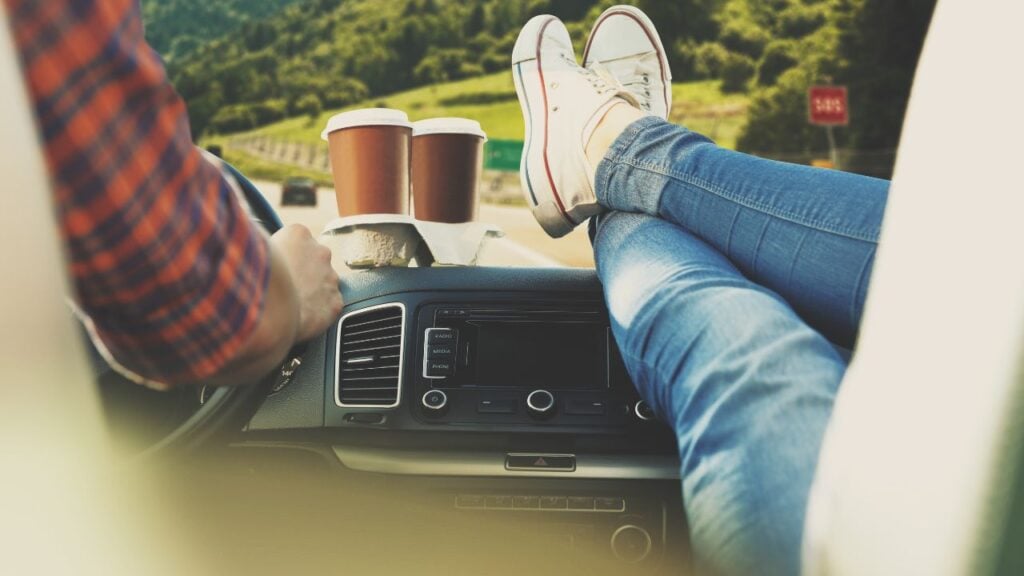
Drivers who take the same road trip every summer tend to fall into the same handful of habits, year after year.
These are the mistakes that keep costing drivers time, money, or both, once they're already on the road.
8 Road Trip Mistakes Alabama Drivers Still Make Every Summer
