
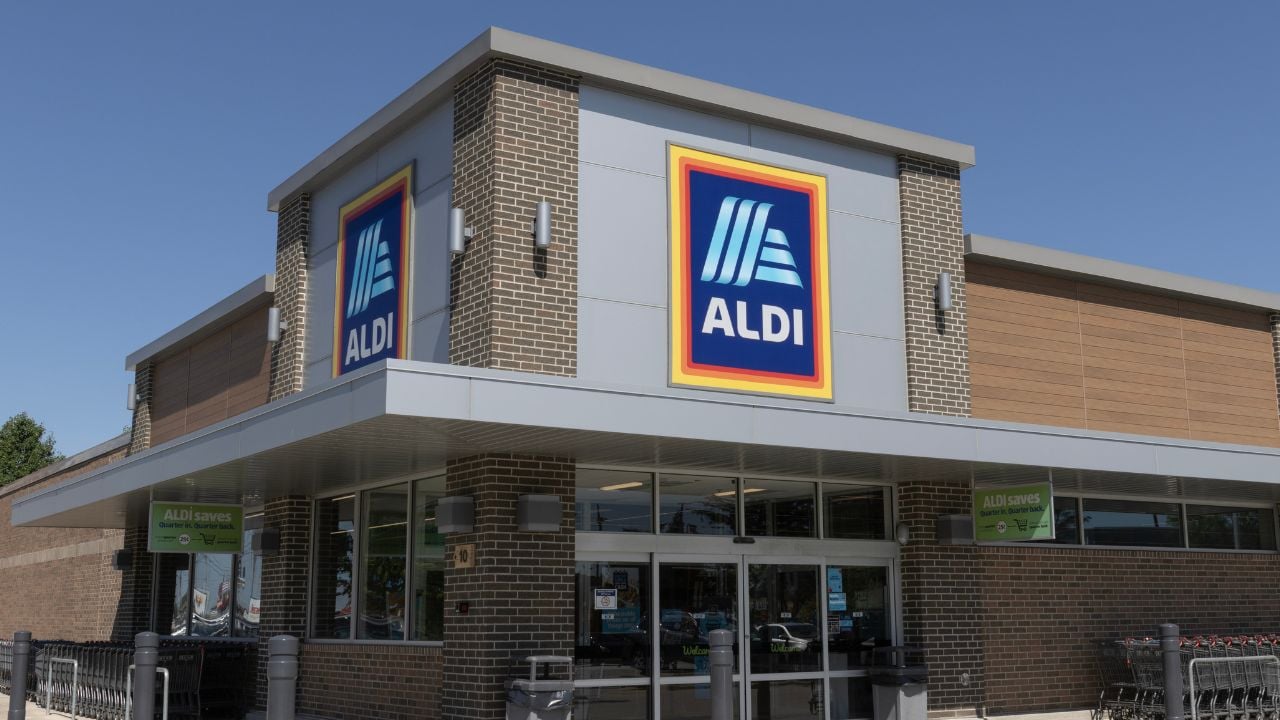
8 Aldi Systems Employees Wish Illinoisans Understood

Aldi’s U.S. headquarters sits in Batavia, an hour west of Chicago, and the savings get engineered from there.
Almost everything a shopper finds odd about the store is a decision somebody made on purpose.
These are the Aldi systems employees wish Illinoisans understood.
1. Restocking Straight From the Box
Aldi workers don’t break down a delivery box by box onto bare shelves the way a traditional supermarket does.
They slice the shipping case open with a box cutter and set the whole thing on the shelf, flaps and all.
Not a shortcut.
It’s the plan, and stopping to fully unpack every case onto a display would slow the whole aisle down.
Employees wish Illinoisans understood the boxes stacked in the aisle are the display, not a mess nobody got around to clearing.
Aldi designs its packaging for exactly this, cut lines and all, so the case becomes the shelf the moment it’s opened.
2. Quarter Cart System
Aldi doesn’t staff a dedicated cart attendant position.
A quarter unlocks a cart from its corral, and pushing the cart back locks the quarter into place until the next shopper needs it.
Nobody’s shortchanging you.
The deposit isn’t a fee, it’s a refund waiting to happen.
That likely lets Aldi run leaner on staffing, one employee working a register instead of chasing carts across the lot between customers.
What irks Aldi’s checkout crew isn’t the quarter.
It’s a cart that never makes it back to the corral, leaving the next shopper without one.
3. Checkout Built for Speed
Aldi trains cashiers to scan fast, and it tracks how well they do it.
The seat isn’t a break.
Cashiers sit at the register because it lets them move items through faster than standing at a moving belt does, and Aldi built the whole lane around that seat.
You bag your groceries too, on purpose.
Skipping the bagging step is what lets Aldi run a checkout lane with one worker instead of two.
Aldi cashiers wish Illinoisans understood a fast scan isn’t rudeness.
The whole register is built around that speed.
Why Aldi’s Barcodes Look Oversized
Aldi prints many of its private-label barcodes larger than a typical grocery item carries, often with more than one code on a package.
A bigger, repeated code gives a cashier more chances to catch it on the first pass instead of turning the package over to hunt for it.
Even a few saved seconds per item can add up across a full cart.
It’s one of several small design choices behind an Aldi line that moves faster than a checkout that looks just as long somewhere else.
4. Twice as Nice Guarantee
Aldi backs a bad product with more than a swap for a new one.
The Twice as Nice Guarantee refunds the purchase price and replaces the item, both at once, for anything that doesn’t meet Aldi’s quality bar.
No trade-off required.
Aldi employees say the confusion usually runs the other way: Shoppers assume a return means choosing between a refund and a replacement.
It’s both, for a genuine quality problem.
The guarantee doesn’t cover alcohol, non-food purchases, or national name brands, since those categories follow the manufacturer’s return rules instead.
Psst! How much do you know about Aldi behind the scenes? Flip each card to find out.
5. The ALDI Finds Clock
Aldi runs a second, faster-moving shelf inside every store, a rotating deals program the company calls ALDI Finds.
Shoppers report new Finds often land on Wednesdays at some stores and Sundays at others, depending on the location.
Then it’s gone.
Once a Find sells out, Aldi typically doesn’t restock that exact item, though a popular seasonal pick can return around the same time the following year.
Aldi isn’t hiding anything in the back.
Asking a stocker to check the back for a sold-out Find usually isn’t a brush-off, since a one-time delivery often leaves nothing left to check.
6. No Coupons, Full Stop
Aldi skips manufacturer coupons entirely, on every product in the store.
Not an oversight.
Aldi negotiates its prices directly with suppliers and prices close to 90% of the shelf under its private-label brands.
There’s rarely a manufacturer coupon left to redeem in the first place.
Layering a coupon on top of an already negotiated low price would eat into margins the whole pricing model depends on.
Employees wish Illinoisans understood that handing over a coupon at an Aldi register isn’t refused out of stubbornness.
It’s a system built around skipping that step altogether.
7. One Employee, Many Jobs
Aldi cross-trains nearly every worker on the floor to do more than one job.
The employee who rings up your order in the morning might be stocking the dairy case an hour later, or running the whole front end alone.
Some retail outlets estimate a typical Aldi store runs with roughly 15 to 20 workers, well under a typical supermarket’s staff.
Fewer people.
That’s the trade Aldi makes to hold its prices down.
A short line moving slowly, or an aisle mid-restock, isn’t short-staffing gone wrong.
It’s the staffing plan working as designed.
8. Store Built Small on Purpose
Aldi stocks roughly 1,400 items in a typical store, compared with 30,000 to 50,000 at a conventional supermarket.
That isn’t a smaller version of the same store.
It’s a different one, built around a fraction of the choices.
Less to manage.
A narrower selection means fewer trucks unloading, fewer pallets to break down, and fewer decisions for a small crew to make before the doors open.
Aldi’s headquarters, the place that decided how narrow that selection should be, sits in Batavia, Illinois, about an hour west of Chicago.
In Illinois, employees wish shoppers understood a narrow selection is the plan working, not a shipment running short that week.
The people who make that call work close to home.
9 Illinois Home Selling Mistakes That Kill a Deal at the Last Minute

Nearly 14% of pending home sales in the Chicago area fell apart before closing this year, and it wasn’t a slow market to blame.
Those were accepted offers unraveling in the final stretch, and it usually came down to one preventable misstep a seller made too late to fix.
9 Illinois Home Selling Mistakes That Kill a Deal at the Last Minute
21 Things Illinois Folks Grew Up With That Today’s Kids Wouldn’t Understand

Music once came on cassette tapes, directions came from a folded map, and calling a friend meant risking whoever else picked up the phone first.
Illinoisans who grew up before the 2000s lived at a slower pace than today’s kids would recognize.
Much of it holds up better than the instant version that replaced it.
21 Things Illinois Folks Grew Up With That Today’s Kids Wouldn’t Understand
