
6 Kansas Foods That Out-of-Staters Try Cautiously

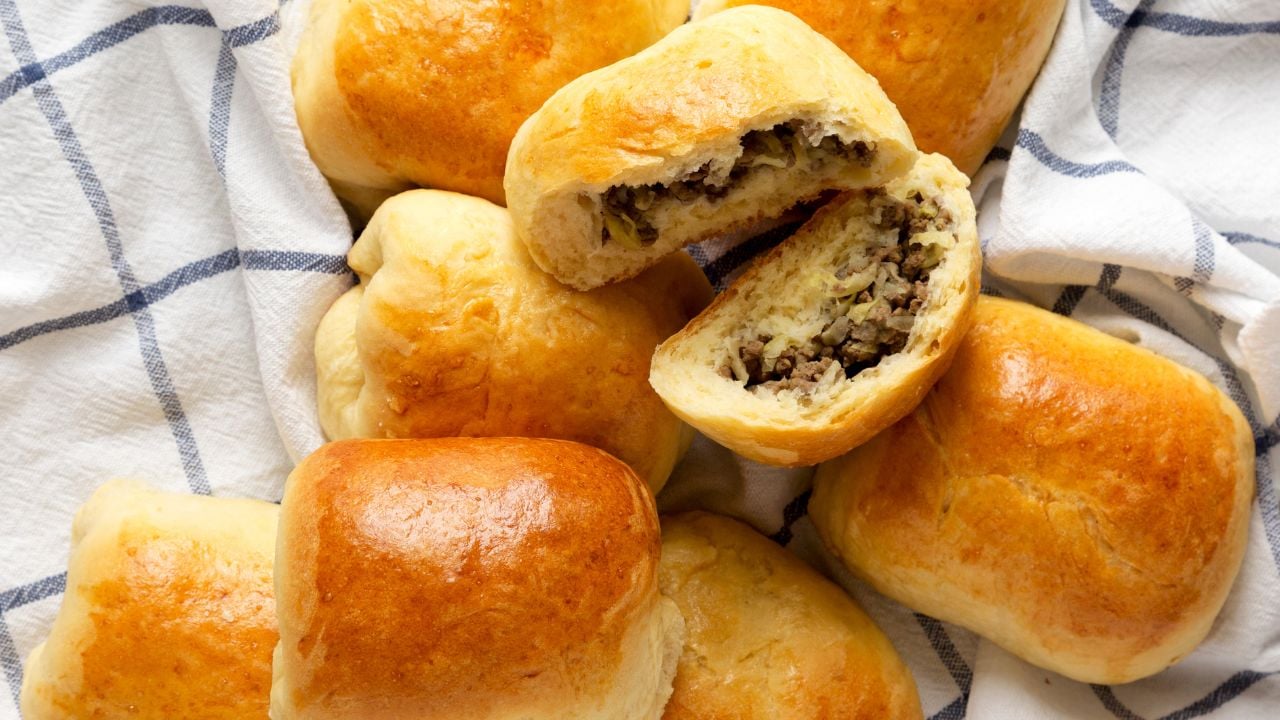
German-Russian Mennonites carried a bread roll stuffed with beef and cabbage into central Kansas when they settled Marion, Harvey, and McPherson counties starting in 1874.
It gets called a taco at the state fair every year.
It’s nothing like what the average American expects a taco to taste like.
These are the Kansas foods that out-of-staters try cautiously.
1. Z-Man Sandwich
The Z-Man sandwich comes out of a working gas station in Kansas City, Kansas, piled with smoked brisket, melted provolone and a stack of crispy onion rings.
Jeff and Joy Stehney built the sandwich at their 47th and Mission around 1997, back when the restaurant still went by the name Oklahoma Joe’s.
Onion rings inside a barbecue sandwich reads like a menu mistake until the first bite proves otherwise.
Crunch, then smoke.
An out-of-stater orders a brisket sandwich expecting bread, meat and sauce, then finds a stack of fried onion rings wedged between the cheese and the top bun.
Joe’s Kansas City Bar-B-Que still runs the gas station today, along with two more restaurants, and all three sit in Kansas.
2. Bierocks
Bierocks look like an ordinary yeast roll to anyone outside Kansas, until the first bite proves otherwise.
German-Russian Mennonites brought it with them to Marion, Harvey and McPherson counties starting in 1874.
Inside the dough sits a filling of ground beef, cabbage and onion, baked instead of fried.
An out-of-stater expects an ordinary yeast roll and bites into a full dinner instead, no fork required.
Meat, disguised as bread.
Families with German-Russian roots still serve them at gatherings today, plain or stuffed with jalapeño and cheese for anyone who wants a kick.
Bierock or Runza? Not the Same Sandwich
Kansas bierocks and Nebraska’s Runza are cousins, not the same order.
Runza is a trademarked name that belongs to a Nebraska restaurant chain, and its version usually comes out rectangular and sometimes carries cheese.
A Kansas bierock keeps the round shape and the plain beef-and-cabbage filling that German-Russian Mennonite families have made since the 1870s.
3. Kolaches
Kolaches put Wilson, Kansas on the map as the Czech Capital of Kansas.
The town runs an annual kolache-eating contest at its After Harvest festival, and the pastries never carry a scrap of meat.
That surprises visitors who grew up on the sausage-and-cheese kolaches sold at gas stations across the rest of the country.
Those don’t count as kolaches in Wilson.
A true kolache stays sweet, filled with fruit or sweetened cottage cheese.
Wilson bakers call the sausage-and-cheese version a “klobasnek” instead.
Wrong pastry, wrong state.
4. Verenika With Ham Gravy
Verenika looks like dessert on a Kansas plate, but it eats like dinner.
Central Kansas Mennonite cooks fill a dumpling with sweetened cottage cheese, then bury it under a savory cream-and-ham gravy.
Kansas Mennonites make close to 20,000 of them every year for the Kansas Mennonite Relief Sale alone.
That’s one sale, one weekend, one dish.
An out-of-stater expects a cheese dumpling to taste sweet all the way through, and the gravy changes the plan halfway through the first bite.
Dessert, drowned in gravy.
5. Potato Sausage
The name potato sausage means exactly that in Lindsborg, Kansas, a town that still calls itself Little Sweden USA.
Swedish settlers built the recipe around potatoes, onion and just enough pork to hold it together, and the ratio runs backward from what the word “sausage” promises.
The dish still shows up at the town’s Svensk Hyllningsfest smorgasbord, a Swedish heritage festival Lindsborg holds every other year.
A shop in town still makes it fresh year-round for anyone who doesn’t want to wait for the festival.
Mostly potato, barely sausage.
An out-of-stater orders it expecting a typical link and gets a seasoned potato patty in a casing instead.
6. Zwieback
Zwieback shows up at Kansas Mennonite tables as one small bun baked stacked on top of a bigger one, pinched together in the middle.
Families carried the recipe out of Russia and into Kansas, and Bethel College in North Newton hosted a 2013 lecture series on zwieback’s place in Mennonite history.
The shape isn’t an accident.
Bakers press a thumb into the center so the smaller bun stays put through baking, and the double-decker shape became the whole point.
Two buns, one bite.
An out-of-stater picks one up expecting a plain dinner roll and spots a second bun fused to the top.
Many check the bag to see if the bakery made a mistake.
Where These Traditions Began
Kansas food history runs straight back to 1874, when German-Russian Mennonite families settled Marion, Harvey, McPherson and several neighboring counties and brought their recipes with them.
The same wave of immigrants carried seed wheat from Russia, and Kansas grew into the country’s leading wheat producer because of it.
A separate group of Volga German Catholic families settled Ellis County around the same decade, building communities around Hays, Victoria and the surrounding farm towns.
Different counties, different tables.
Every one of those settlements landed in the same few decades, which is why central and western Kansas still taste like several different countries at once.
Psst! How much do you know about Kansas food and farming? Take our quiz and see how many you can get right.
Quiz
Kansas Food & Farm IQ
Answer these questions on Kansas wheat, fast food and fair history. We bet you can’t get them all right. Prove us wrong?
Which pizza chain got its start at the corner of Bluff and Kellogg in Wichita, Kansas, in 1958?
Still Served at Fairs
Kansas fairs are where many of these foods meet an out-of-stater for the first time.
The Kansas State Fair wrapped its ten-day run in Hutchinson on Sept. 20 this year.
Several booths on the midway sold two or three of these dishes side by side.
The Kansas Mennonite Relief Sale, Wilson's Czech festival and Lindsborg's Hyllningsfest run the same setup on a smaller scale.
Nobody warns you first.
America Loved These! 25 Foods That Suddenly Vanished From Stores

Every state has a food it lost and never got over.
This one rounds up the snacks, cereals and drive-thru items that vanished from shelves without warning.
America Loved These! 25 Foods That Suddenly Vanished From Stores
