
7 Pennsylvania Foods and Drinks With Origins Pennsylvanians Get Completely Wrong

A Philadelphia soup supposedly kept George Washington’s starving army alive through the Valley Forge winter of 1777.
But historians have something to say about that.
These are the Pennsylvania foods and drinks with origins Pennsylvanians get completely wrong.
1. Root Beer
Charles Hires gets the credit for inventing root beer in Pennsylvania, a claim his marketing has repeated for more than a century.
He sold it out of his Philadelphia drugstore starting in the 1870s, and by 1876 he handed out free glasses at the Centennial Exhibition to launch it nationwide.
Hires wasn’t first, though.
Manufacturers in the city were already advertising root beer as early as 1842, more than three decades before Hires bottled his version.
Root tea brewed from roots and bark went back further still, shared across European and Native American traditions long before anyone put it in a bottle.
What Hires did was package it.
Hires did it well, selling a 25-cent powder that made five gallons at home and marketing the whole thing as a temperance drink for a country nervous about alcohol.
That marketing campaign is why history remembers Hires’s name today, while the Philadelphia manufacturers advertising root beer decades earlier stayed anonymous.
2. Pepper Pot Soup
Pennsylvania’s pepper pot soup carries a Revolutionary War legend, the claim that Continental Army cooks invented it to save George Washington’s starving troops.
The story says cooks threw together tripe, ox feet, and pantry scraps at Valley Forge during the brutal winter of 1777.
Washington’s army had just lost the Battle of Germantown when that supposedly happened.
That legend resurged nationwide during the country’s 1976 bicentennial celebrations and has stuck around since.
Historians researching the dish call the Valley Forge story incorrect.
It wasn’t close.
Pepper pot soup was already established in Philadelphia decades before Washington’s army ever camped at Valley Forge.
Enslaved Africans most likely brought the dish, built on the Caribbean stew callaloo, from the West Indies to Philadelphia in the mid-1700s.
The earliest known American recipe for it ran in a Philadelphia cookbook called The New Art of Cookery in 1792.
Black women dominated the pepper pot trade for decades afterward, ladling it from street kettles across the city.
Many people still credit Valley Forge and Washington’s army for the dish, even though Philadelphia’s street vendors had already built its reputation decades earlier.
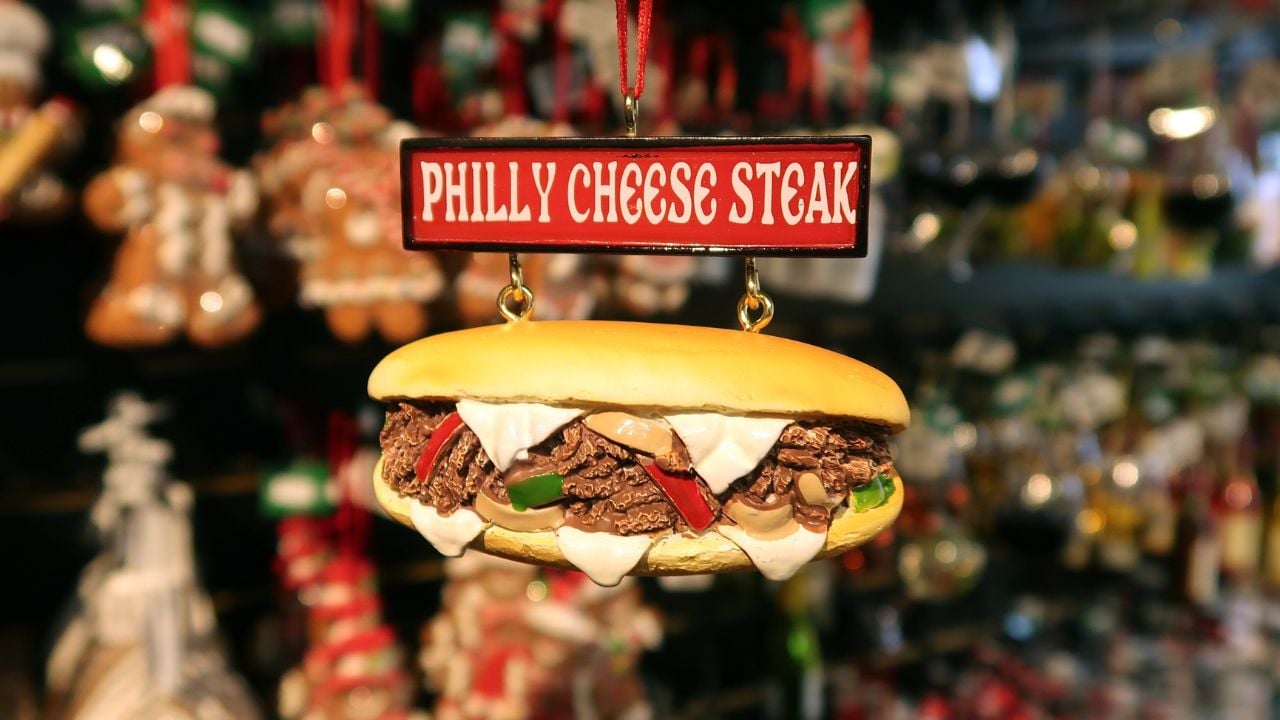
3. Philly Cheesesteak
Pat Olivieri started the Philly cheesesteak, one of Pennsylvania’s best-known foods, in 1930 at a hot dog cart he ran on Ninth Street in South Philadelphia.
The sandwich that made him famous had a problem.
It had no cheese.
Olivieri put chopped beef and onions on an Italian roll because he was out of hot dogs.
A cab driver who smelled it demanded a sandwich instead of his usual order.
People assume cheese was part of the deal from day one.
It wasn’t.
Family accounts differ on exactly when cheese joined the sandwich.
One version credits Pat’s manager, Joe Lorenza, with melting provolone over the beef about a decade later.
Another traces it to Pat Olivieri himself, who reportedly started adding Cheez Whiz once Kraft introduced it in 1952, more than two decades after the cart opened.
Philly cheesesteak fans still argue Cheez Whiz versus provolone, but every version of the story agrees the sandwich went years without any cheese at all.
4. Whoopie Pie
Pennsylvania Dutch bakeries sell the whoopie pie as a homegrown invention.
The story goes that Amish cooks stretched leftover cake batter into a treat, and kids called out in delight when they spotted a whoopie pie in the lunch pail.
Nobody has ever produced a recipe, an ad, or a bakery receipt to back that story up.
Maine bakery boosters make a competing claim too, insisting a Lewiston bakery sold the first whoopie pie in 1925.
That claim doesn’t hold up.
The bakery’s early records burned in a fire, so there’s nothing left to check.
A 1931 newspaper ad for a nickel “Berwick whoopie pie” is the earliest solid paper trail anyone has found, and that ad ran in Massachusetts.
Researchers still haven’t found anything predating that 1931 Massachusetts ad, from Pennsylvania or anywhere else.
5. Shoofly Pie
Shoofly pie, a Pennsylvania Dutch dessert, gets its name from one popular explanation.
It’s so sweet with molasses that flies swarm it, and someone has to shoo them away before it cools.
That’s the story every Lancaster County bakery repeats.
It’s also unverified.
A historic marker from the William G. Pomeroy Foundation states plainly that the name’s origin was never documented and is considered legend, not fact.
The earliest known mention of the pie by name shows up in an 1881 Wilkes-Barre newspaper, decades before anyone wrote down where the name came from.
Pennsylvania Dutch bakers didn’t invent the fly story.
They just kept repeating it long enough for it to sound official.
6. Soft Pretzels
Boosters in Lititz, Pennsylvania call the town the birthplace of the pretzel, and a historical marker there backs up that reputation.
It’s not wrong, exactly.
There’s just one word missing.
The missing word is commercial.
Julius Sturgis opened the first commercial pretzel bakery in the United States in 1861, after a homeless traveler reportedly traded him a pretzel recipe for a meal.
The pretzel itself carries a German or Alsatian pedigree that crossed the Atlantic centuries before Sturgis started twisting dough in Lancaster County.
Sturgis gets the credit for launching Pennsylvania’s pretzel business.
European bakers had been twisting dough into that same shape for generations before he opened his doors.
Psst! How much do you know about Pennsylvania’s food history? Flip each card and see how many you get right.
7. Peeps
Peeps started as a Bethlehem, Pennsylvania invention in the popular imagination, dreamed up whole by the candy company Just Born.
Just Born didn’t dream up the marshmallow chick.
The company bought it.
In 1953, Just Born acquired the Rodda Candy Company of Lancaster, Pennsylvania, which was already hand-piping small three-dimensional marshmallow chicks one at a time.
Making a single chick that way reportedly took about 27 hours from start to finish.
Bob Born, whose father founded Just Born, mechanized the process after the deal closed and cut that 27-hour job down to six minutes.
That machine is why Bethlehem’s name ended up on the wrapper; the marshmallow recipe underneath is still Lancaster’s.
Just Born is still headquartered in Bethlehem today, decades past that 1953 purchase.
Bite into a Peep this spring, and you’re still tasting a recipe that traces back to a Lancaster candy company many people have never heard of.
9 Small-Town Pennsylvania Traditions That Out-of-Staters Rarely Understand
Pennsylvania keeps a whole set of small-town habits running that nobody outside the state ever quite figures out.
Move in from somewhere else, and you’ll spend a full year just learning the rules nobody wrote down.
9 Small-Town Pennsylvania Traditions That Out-of-Staters Rarely Understand
5 Wegmans Deals Pennsylvania Shoppers Build Their Whole Week Around
Shoppers plan their whole grocery list around a handful of Wegmans deals that show up like clockwork.
If you miss the week a deal drops, you’re paying full price for something regulars never do.
5 Wegmans Deals Pennsylvania Shoppers Build Their Whole Week Around
