

7 Farm Lease Terms That Cost Iowa Landowners Every Renewal

Two-thirds of Iowa’s farmland belongs to owners 65 or older, according to Iowa State University’s Farmland Ownership and Tenure Survey.
Very little of it gets farmed by the person on the deed.
These are the farm lease terms that cost Iowa landowners every renewal.
Note: This is general information, not legal advice. Farm lease terms and required timelines are subject to change.
1. Automatic Renewal Clause
Iowa farm leases carry one clause that renews itself whether the landowner wants it to or not.
Under Chapter 562 of the Iowa Code, a farm tenancy automatically renews for another year on the same terms unless someone serves written termination notice before September 1.
If the landowner misses it, they’re locked into that same rent and those same terms for another crop year.
That’s a full year lost to a missed calendar date.
The notice also has to go out the right way, and regular mail doesn’t count even if the tenant gets it and reads it before the deadline.
How an Iowa Farm Lease Notice Has to Be Sent
A farm lease termination notice in Iowa only counts three ways.
The landowner or tenant can hand deliver it and get a signed acceptance, or have a sheriff or process server serve it with an affidavit on file.
The third option is certified mail sent before September 1.
Certified mail is the only mail option that works, and the postmark has to land before the deadline, not the delivery.
2. Rent That Doesn’t Move
A typical Iowa cash-rent lease sets one flat dollar figure per acre and says nothing about adjusting it later.
Iowa’s statewide average landed at $270 an acre for 2026, essentially flat from the year before, according to Iowa State University Extension and Outreach’s cash rent survey.
As of Iowa State University’s 2022 Farmland Ownership and Tenure Survey, 72% of the state’s leased farmland ran on fixed cash rent.
The rest split revenue or flexed with price and yield instead.
The number only moves when somebody renegotiates it.
Two-thirds of Iowa’s farmland belongs to owners 65 or older, and many locked in that rent figure years before prices moved this much.
3. Crop-Share Cost Split
A crop-share lease splits the harvest, but it also splits the bill for growing it.
Iowa State University Extension and Outreach describes the common split as an even 50-50 share of both the revenue and the cost of seed, fertilizer, and chemicals.
That split needs a number attached, not an assumption.
It’s a term the lease has to spell out, and both sides have to renegotiate it as fertilizer and chemical prices shift from one planting season to the next.
A landowner who leaves an old split in place while input costs rise ends up fronting a bigger share of the bill for the same slice of the crop.
4. Flex-Lease Formula Choice
A flexible cash lease sets a starting rent, then adjusts it once the crop is in.
The formula it uses decides how much of a good year the landowner sees.
Farm Progress, reporting on Iowa State University Extension and Outreach’s Ag Decision Maker program, documents four common flex-lease formulas for Iowa cropland.
A base-plus-bonus formula sets a base rent, then adds a bonus once revenue clears a set point.
A price-indexed formula ties rent to the season’s crop price instead.
A yield-indexed formula ties rent to the tenant’s actual yield.
A percent-of-gross formula sets rent as a straight share of gross revenue.
Each formula shifts risk differently.
A base-plus-bonus lease lands closest to a crop-share split.
A pure yield-indexed formula protects the bulk of the landowner’s downside, but caps how much of a bumper year they collect.
Picking the wrong formula at renewal, or defaulting back to the same formula out of habit, can hand the tenant much of a good year’s upside.
5. Maintenance and Repair Clause
Iowa’s short-form cash lease template splits routine repairs down the middle, and a landowner who skips that clause ends up covering costs a written lease would have shared.
Iowa State University Extension and Outreach’s lease template splits new fence labor 50-50 between landowner and tenant.
The landowner also supplies materials for minor repairs and covers the full cost of clearing fence rows.
Nothing in Iowa law requires that split without the clause.
A lease that stays silent on repairs defaults to whatever the two sides argue about when something breaks, not to any standard the state sets.
That gap resets every renewal, since Iowa’s auto-renewal rule carries forward silence just as easily as it carries forward a clause that’s spelled out.
6. Tile Drainage Costs
Iowa farm leases rarely spell out who pays when a field needs new drainage tile.
A Farm Progress panel of Iowa State University Extension economists and other agricultural professionals lays out tile drainage costs as a point of negotiation between landowner and tenant.
No standard lease clause covers them.
One option the panel lays out has the landowner covering the tiling bill alone, since drainage work raises the land’s value long after the lease ends.
A shared cost changes that math.
When a tenant fronts part of the cost instead, the payback usually runs through a longer lease term or a rent credit that shrinks year by year.
A landowner who never puts that payback schedule in writing has no way to prove what’s owed by the next renewal.
7. Default and Late-Payment Clause
An Iowa farm lease that stays silent on late payment leaves the landowner guessing what happens the day rent doesn’t show up.
Many written Iowa leases spell out a default clause.
The party in breach receives written notice and a set number of days to fix the problem before the lease ends.
Termination still takes action even with that clause in place.
Iowa law treats termination for nonpayment as a step the landowner has to take, not one that happens without them.
Skip the notice-and-cure language, and a landowner facing unpaid rent falls back on Iowa’s formal eviction process instead.
That process runs through a three-day notice to quit, then a forcible entry and detainer filing under Iowa Code Chapter 648 if the tenant doesn’t leave.
That’s weeks of lost rent a written clause could have shortened.
Psst! Here’s what changes, and what doesn’t, when an Iowa lease rolls over without renegotiating. Sort the table below by rent structure or risk.
Perfecting a Landlord’s Lien
Iowa law hands every landowner a lien on the growing crop the moment a farm lease begins, whether or not the lease says a word about it.
That automatic lien only outranks a bank’s or supplier’s earlier claim once the landowner perfects it.
Perfecting it means filing a Uniform Commercial Code (UCC-1) financing statement with the Iowa Secretary of State.
The filing window runs when the tenant takes possession, or within 20 days after, for a $20 fee that names the filing’s purpose as perfecting a landlord’s lien.
A landowner who skips that filing still holds a lien on paper, just not one that beats a bank’s security interest filed earlier.
Twenty days after the tenant moves in is a short window against a full season of rent, and it runs whether or not the landowner remembers the deadline.
8 Austin Freecycling Options That Don’t Require Climbing Into a Dumpster
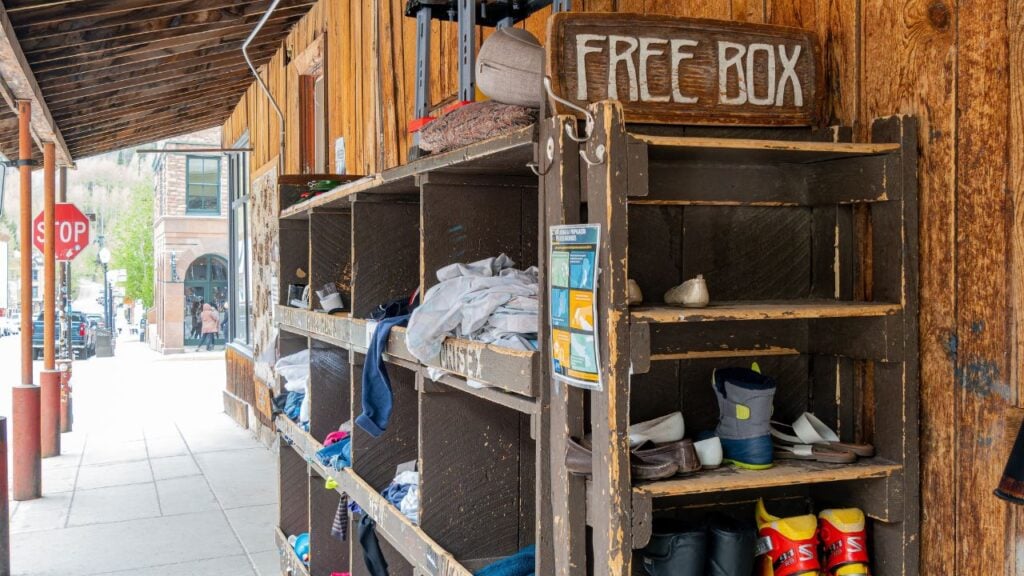
Austin set a goal back in 2009 to divert 90% of its trash from landfills and incinerators, and giving things away helps meet it.
These are freecycling options that skip the dumpster, from neighborhood swap groups to a citywide reuse program built into the city’s waste plan.
8 Austin Freecycling Options That Don’t Require Climbing Into a Dumpster
