
5 Foods That Were Actually Invented in Connecticut

Fred DeLuca was seventeen when a family friend handed him $1,000 and told him to open a sandwich shop in Bridgeport.
That shop sold 312 sandwiches on its first day and became Subway three years later.
Connecticut has older claims than that one.
These are the foods that were invented in Connecticut.
1. Hamburger
The hamburger got its start at Louis’ Lunch, which Louis Lassen opened on New Haven’s Meadow Street in 1895.
Family history says a rushed order there around 1900 produced the first hamburger, ground steak trimmings pressed between two slices of toast.
U.S. Rep. Rosa DeLauro, who represents New Haven in Congress, entered the story into the Congressional Record in 2000, marking the hamburger’s 100th year.
Cheese, tomato, or onion are the only toppings the counter allows, and the grills themselves date to the turn of the century.
Louis’ Lunch has never allowed ketchup on the burger.
What Backs Connecticut’s Hamburger Claim
Connecticut’s hamburger claim carries more paperwork than its rivals do.
Hamburg, New York, and Seymour, Wisconsin, also claim the sandwich.
Neither rival city’s claim carries a Congressional Record entry the way Connecticut’s does.
Congress and the Library of Congress put New Haven’s claim on the record in 2000, the same year Louis’ Lunch marked its 105th year in business.
Texas passed similar legislation for Athens, Texas, in 2007, seven years after Connecticut’s entry.
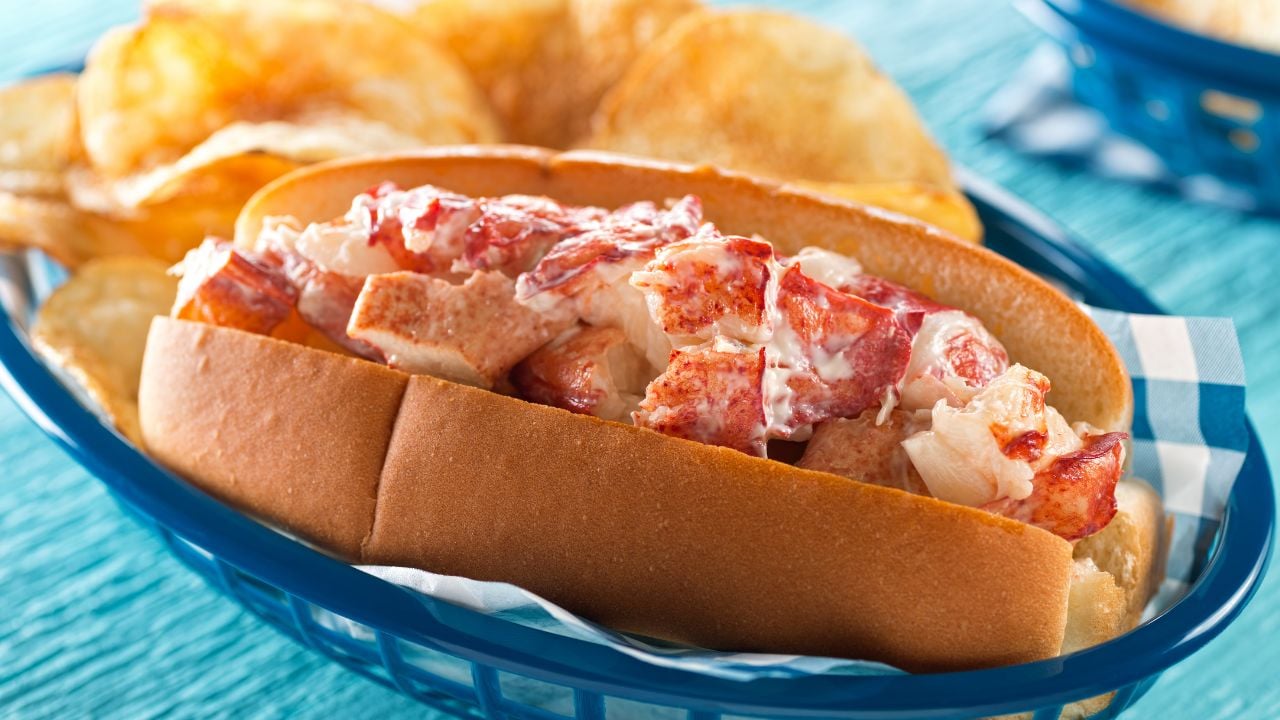
2. Hot Buttered Lobster Roll
Connecticut’s hot buttered lobster roll traces to Perry’s Restaurant in Milford, served there as early as 1929, according to food historians Jane and Michael Stern.
The sandwich came hot and dressed in butter, not the cold, mayonnaise-based version many people across the country expect today.
Connecticut’s version skips both the mayonnaise and the chill.
Earlier lobster salad sandwiches existed by the 1800s, food historian Sandy Oliver has said, though those came cold and long before Perry’s added heat and butter.
Food writers still argue about the finer details.
Perry’s 1929 date is the date often repeated, with a name and a place attached.
Connecticut’s version still shows up on menus from Milford to the shoreline towns nearby.
3. Mounds and Almond Joy
Mounds and Almond Joy both trace back to Peter Paul, a candy company six Armenian immigrants founded in New Haven in 1919, led by Peter Paul Halajian.
Peter Paul introduced the Mounds bar in New Haven in 1921, a year before the company moved its factory to nearby Naugatuck.
Almond Joy came later.
Almond Joy debuted in 1948, adding a milk-chocolate shell and toasted almonds that Mounds never carried.
Hershey paid $300 million in 1988 for Peter Paul and Cadbury’s other U.S. candy brands together.
The Naugatuck plant that once made both bars closed in 2007.
Hershey still sells both bars nationwide today, decades removed from the small New Haven company that dreamed them up.
Psst! How much do you know about Connecticut’s other inventions? Take our quiz and see how many you can get right.
Quiz
Nutmeg State Trivia
Answer these questions about Connecticut’s other food and cultural firsts. See how many you can get right.
The word “Frisbee” traces back to a Connecticut business. What did that business make?
4. New Haven Apizza
New Haven apizza traces to Frank Pepe, who opened his pizzeria on Wooster Street in 1925 and cooked pies in a coal-fired brick oven from the start.
That method gave New Haven a distinct pizza style, known locally as "apizza," with a thin, charred crust unlike New York's.
Locals never call it pizza.
Pepe's added its white clam pie by the mid-1960s, now the dish many people associate with the pizzeria.
Pepe's has since grown to 17 locations across seven states, and coal-fired ovens still cook the dough at every one.
Frank Pepe's chain didn't open a Boston-area location until 2015, nearly ninety years after that first coal-fired oven lit up in New Haven.
5. Steamed Cheeseburger
Connecticut's steamed cheeseburger traces to Jack's Lunch in Middletown, where patties went into a copper steam box sometime in the 1920s or 1930s, according to George Motz's Hamburger America.
Cheddar cheese melted over the steamed patty for an extra nickel, per that same account.
Steam, not a grill, cooks the meat.
Flames never touch the patty at all.
Ted's Restaurant in Meriden, opened by Ted Duberek in 1959, carried that method into the style Connecticut still associates with the steamed cheeseburger.
Ted's has served steamed cheeseburgers in Meriden for more than sixty years now, with locations that now stretch across central Connecticut, including Wallingford, Middletown, and Cromwell.
The style rarely turns up much beyond that stretch of the state.
Durham Fair's Different Record
The Durham Fair started small in 1916, when organizers voted to hold a fair that drew about 2,000 people to a single day on the Durham town green.
Admission cost 25 cents for adults that first year.
Volunteers ran the show from the very beginning, not paid staff.
Today it runs four days on more than 45 acres.
Attendance can top 200,000 when the weather cooperates.
The fair has closed only a few times since 1916, for the 1938 hurricane, three years during World War II, and the 2020 pandemic.
Durham Fair organizers still call it one of the largest volunteer-run fairs in North America, the same claim behind this year's 106th run.
Subway's $1,000 Loan
Subway's origin traces to a $1,000 loan Fred DeLuca took out at seventeen.
DeLuca had asked family friend Peter Buck, a nuclear physicist, how to pay for college in 1965.
Buck's answer was to open a sandwich shop in Bridgeport, backed by that loan and a handshake.
The sandwich itself wasn't invented in Connecticut the way the hamburger or the lobster roll were.
Subway the company was founded here, and that's a different kind of first.
That first shop sold 312 sandwiches on day one.
One sandwich counter carried the whole idea forward.
The shop didn't become Subway until 1968.
It took until 1974 to reach sixteen locations, all still in Connecticut.
Franchising outside the state came only after that.
Bridgeport's original storefront is long gone.
8 Austin Freecycling Options That Don't Require Climbing Into a Dumpster
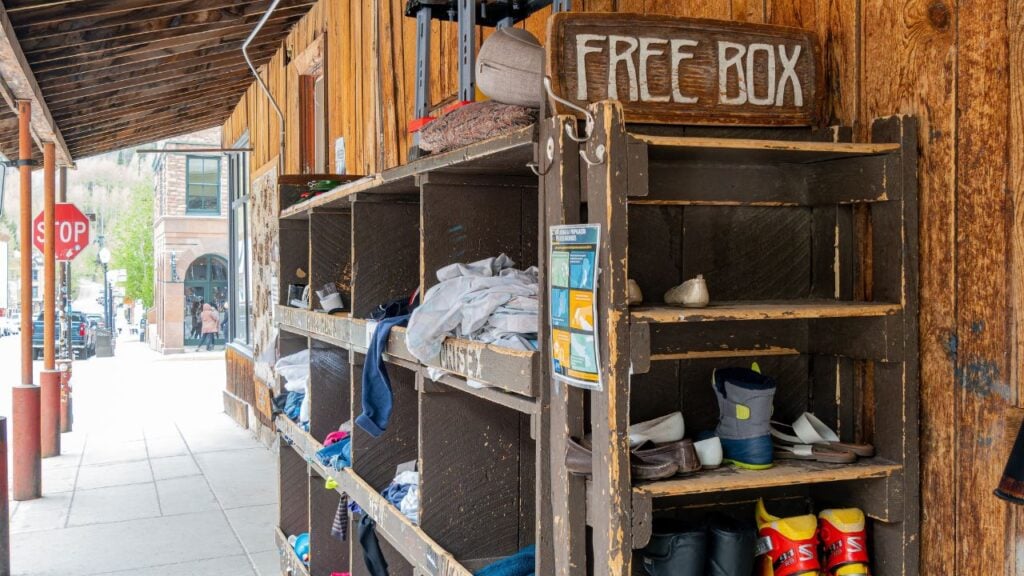
Austin set a goal back in 2009 to keep 90 percent of its trash out of landfills and incinerators.
A handful of local networks make it simple to hand off furniture, appliances, and other household items before they ever reach the curb.
8 Austin Freecycling Options That Don't Require Climbing Into a Dumpster
