
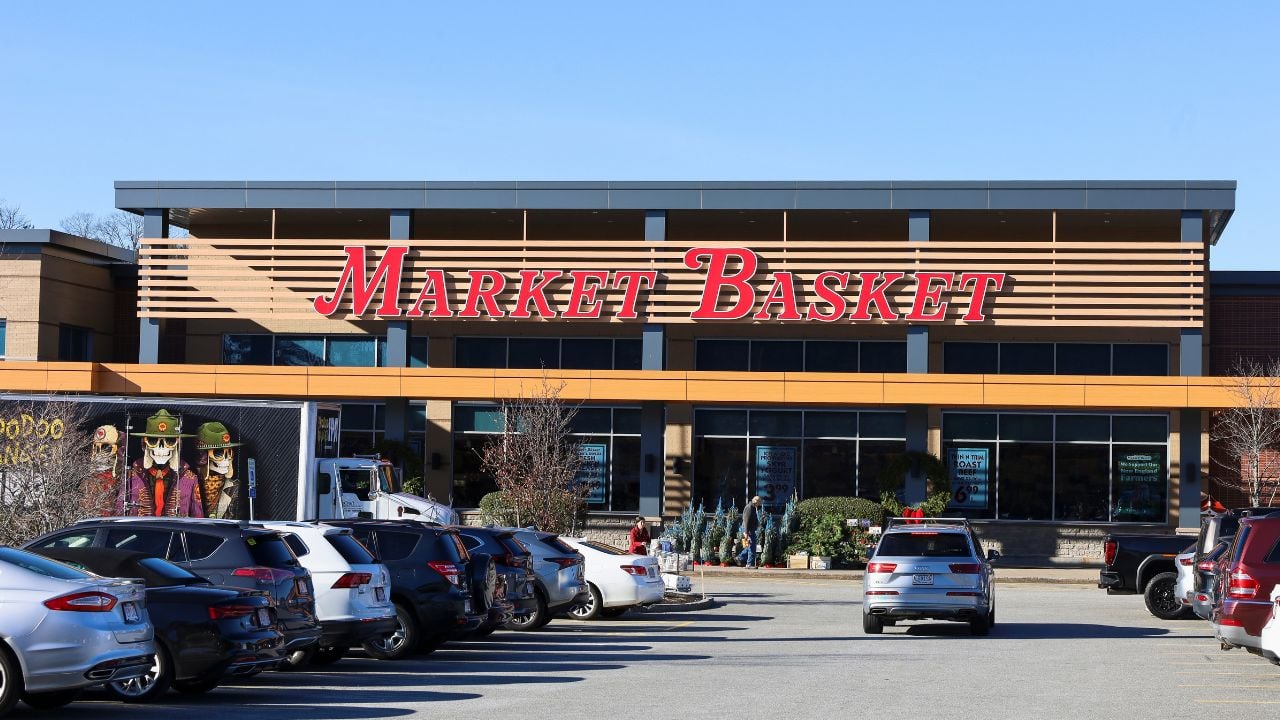
8 Market Basket Secrets Employees Wish Bay Staters Knew

Market Basket puts money into a retirement account for associates who never applied for one, reportedly around 15% of yearly pay, according to a 2014 Boston.com report.
Part-timers qualify at 1,000 hours a year.
These are the Market Basket secrets employees wish Bay Staters knew.
1. No Online Ordering
Market Basket’s website still won’t sell you a single grocery item, even as many competitors built out full online ordering years ago.
There’s no cart to fill.
The site lists the weekly flyer, store hours, and job postings, but no button anywhere for delivery or curbside pickup.
Every order still starts the same way it did decades ago, with a shopper pushing a cart down the aisle in person.
2. Years on the Name Tag
On every Market Basket associate’s name tag sits something extra: The exact number of years they’ve worked there.
It’s there under the name.
Grocery retail runs on turnover, with many workers gone within a year or two of being hired.
Boston.com’s Wicked Pedia column found those numbers running unusually high for an industry known for turnover, tags marking a decade or more of service on nearly every shift.
3. Retirement Plan Nobody Applies For
Market Basket funds a profit-sharing retirement account for every eligible associate, full time or part time.
It never asks them to put a dime of their paycheck in.
None of it comes from them.
A 2014 Boston.com report put the company’s contribution at reportedly around 15 percent of an associate’s yearly pay, a figure Market Basket hasn’t updated publicly since.
Part-time associates qualify too, once they clock 1,000 hours in a year, a little under 20 hours a week.
It adds up fast.
A retirement account funded like that is unusual in an industry known for high turnover and thin benefits.
The Math Behind Market Basket’s Reported 15 Percent
That reported 15 percent rate, if it still holds today, turns into concrete numbers fast for an associate who sticks around a few years.
Say a cashier earns $35,000 a year: A reported 15 percent contribution would add about $5,250 to that account, paid for by the company.
A part-time associate who logs the minimum 1,000 hours at $18 an hour earns $18,000 that year.
That same reported rate would add roughly $2,700 to that account, again with nothing deducted from a paycheck to pay for it.
4. The Cart-Pushing Start
Market Basket promotes only from within, all the way up to the executive suite.
No side door.
A business-school case study on the company found one detail worth repeating.
Even hires with a graduate business degree are told they can join, as long as they’re willing to start by pushing carts or bagging groceries.
The company has an internal phrase for it: Your boss did your job.
Every manager on the floor worked the job before running it.
That’s a rare policy in retail, where corporate hires often parachute straight into management.
It’s also why the bagger who remembers your order by heart might be running the store in a few years.
5. Bonus Check Nobody Has to Request
Market Basket hands every associate a company-funded bonus check around the holidays, on top of a regular paycheck.
Nobody applies for it.
By 2014, the Boston TV station CBS Boston reported the December bonus had gone out to associates for a quarter century running, even the year the company nearly collapsed.
The company kept it going anyway.
The check goes out the same way to a part-time bagger as it does to a full-time department manager.
6. One Owner Behind Many Plazas
Behind many Market Basket stores sits a company few shoppers have ever heard of, the chain’s in-house real estate developer, (DSM Realty).
It’s a Market Basket division.
DSM Realty plans, builds, and leases the shopping centers built around many Market Basket stores.
That means the nail salon, the sub shop, and the bank branch next door often answer to Market Basket too.
The real estate arm manages more than 10 million square feet of space across dozens of shopping centers in four states, leased out to more than 350 other businesses.
7. From Bagger to President
Market Basket named a new president in 2026.
He started at the company the same way thousands of teenagers do.
Chuck Casassa began bagging groceries in 1976, at age 14.
He moved through front-end manager, merchandiser, and assistant manager before making store manager in 1987.
That’s fifty years total.
By this spring, that same bagger was running the whole company.
Psst! How much do you know about Market Basket’s history? Take our quiz and see how many you can get right.
Quiz
Market Basket History IQ
Answer these questions on Market Basket’s Lowell roots, its slogans, and its old records. We bet you can’t get them all right. Prove us wrong?
About how much did the Demoulas brothers pay to buy the family’s Lowell grocery store in 1954?
8. Pricing Without Wall Street
No corporate debt sits on Market Basket's books, and it has never sold a single share to the public.
The Demoulas family still owns the company outright.
Day-to-day operations now fall to Chuck Casassa, the career employee who started bagging groceries in 1976 and became company president in 2026.
Nobody answers to Wall Street.
The company would rather sell a case of an item at a thin margin than mark it up for a few extra cents each.
A 2025 Boston Globe comparison priced the same ten grocery items at Market Basket for $38.28, the lowest total of five Massachusetts chains it checked.
Wegmans rang up the same list at $40.01, Stop & Shop at $44.40, Star Market at $45.20, and Whole Foods hit $50.00 for the identical cart.
That $11.72 gap between Market Basket and Whole Foods shows up on the receipt every single week.
5 Market Basket Deli Counter Mistakes Massachusetts Shoppers Keep Making
A quick trip to the Market Basket deli counter shouldn't turn into the longest stop of the whole visit.
Shoppers keep waiting for orders they could speed up, skip past options worth asking for, or show up right as a special window closes.
5 Market Basket Deli Counter Mistakes Massachusetts Shoppers Keep Making
9 Things People From Massachusetts Miss Most After They Leave

Moving away from Massachusetts doesn't erase the habits a Bay State childhood builds in, and Marathon Monday is usually the first one people notice missing.
Somewhere else, that third Monday in April is just another workday, and so are a dozen other small things nobody warns a former Bay Stater they'll end up missing.
9 Things People From Massachusetts Miss Most After They Leave
