
9 Things That Get Worse for Marylanders the Second They Cross Into Virginia

Merge onto the Governor Harry W. Nice Memorial Bridge in Charles County, and the Maryland Transportation Authority only tolls traffic heading one direction across the Potomac.
The other direction crosses for free.
That toll is only one of the things that change once Marylanders reach the Virginia side.
These are the things that get worse for Marylanders the second they cross into Virginia.
Note: This is general information, not legal or tax advice. Traffic laws, toll rates, tax rates and alcohol regulations are subject to change.
1. Speeding as a Crime
Marylanders who nudge 10 or 15 over the limit at home are used to a ticket and points, not a trip to court.
Virginia changes the math as soon as a driver crosses the line.
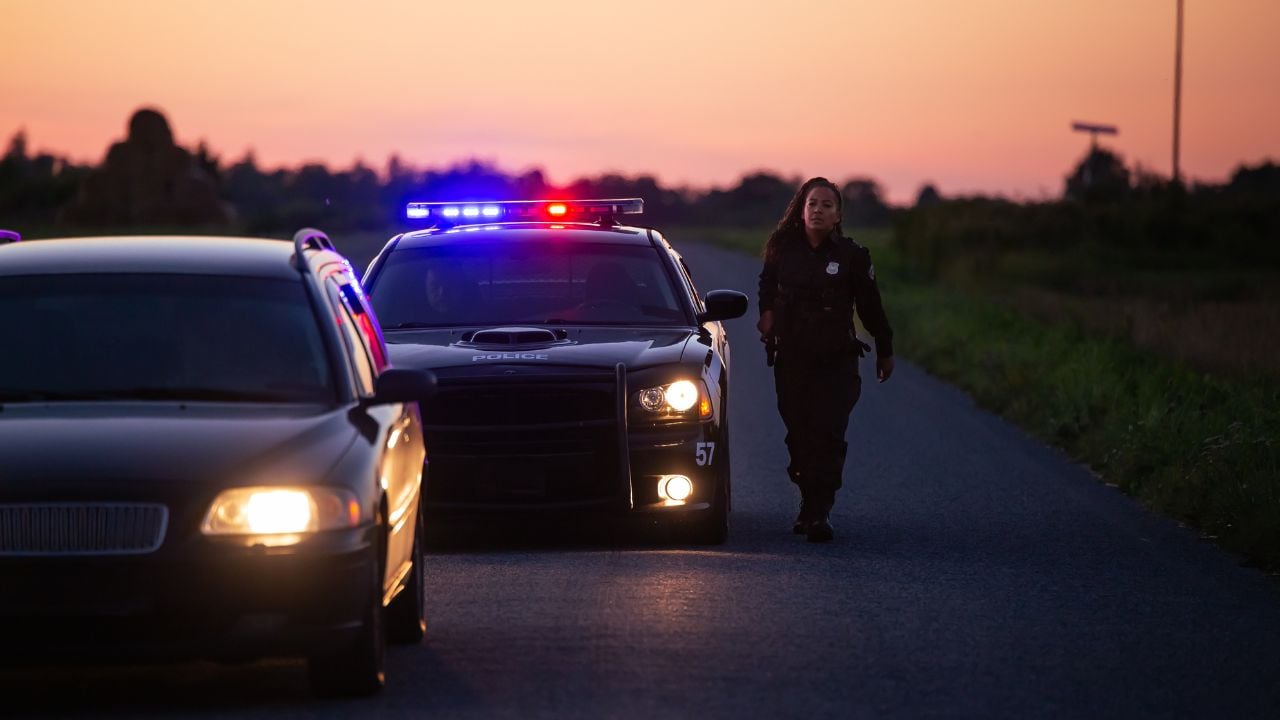
Under Virginia law, driving 20 mph or more over the posted limit, or any speed past 85 mph, counts as reckless driving.
That’s a Class 1 misdemeanor, and it can carry up to a year in jail and a $2,500 fine.
Ouch.
Maryland treats the same speed as a fine and points on a license.
Virginia calls it a crime.
2. Unbuyable Legal Weed
Maryland has sold recreational marijuana at licensed dispensaries since July 2023.
The state’s adult-use market topped $700 million in its first year.
Cross into Virginia, and there’s no legal place to buy it.
Virginia legalized possession back in 2021, but every attempt to set up a legal retail market has stalled.
Gov. Spanberger vetoed the latest retail bill in May 2026, the same fate the last several versions met.
Still nothing.
Marylanders can carry a small amount across the line without breaking the law.
Buying more after crossing the line is a different story.
3. No More Radar Detector
A radar detector riding on a Maryland dashboard is perfectly legal.
Maryland allows them in ordinary passenger vehicles, no exceptions for the dash-mounted kind many drivers use.
Virginia doesn’t.
State law makes it illegal to drive a car equipped with a radar detector, powered on or not.
Officers can pull a driver over for the device alone, no speeding required.
4. Harder Liquor Purchases
Many parts of Maryland run on private liquor stores, open long hours and scattered through every strip mall.
Montgomery County is the exception, selling wine and spirits only through government-run stores it operates.
Virginia works differently.
Virginia is a full control state for spirits, meaning hard liquor is sold only through government-run ABC (Alcoholic Beverage Control) stores, never grocery or convenience stores.
Beer and wine still show up on regular shelves.
A bottle of bourbon means finding an ABC store first.
5. A Second Dinner Tax
In Northern Virginia, Fairfax County now adds a tax that doesn’t exist anywhere in Maryland.
Starting January 1, 2026, the county charges a 4% food and beverage tax on top of Virginia’s 6% sales tax.
That’s 10% on a meal, stacked from two different governments.
Two taxes, one meal.
A restaurant check in Maryland carries only the state’s flat 6% sales tax, nothing else.
Alexandria runs a similar tax at 5%, for a total of 11%.
The Math on a $60 Dinner in Fairfax County
A $60 dinner in Fairfax County comes to $66 once both taxes hit the check, compared with $63.60 for the same bill under Maryland’s flat 6% sales tax.
That’s a $2.40 gap on one meal, and it grows with the size of the tab.
6. The End of Right on Red
In Northern Virginia, right on red is disappearing one intersection at a time.
Arlington County has posted “No Turn on Red” signs at 155 intersections as part of its Vision Zero safety push.
Alexandria is doing the same at more intersections.
New signs, no warning.
Drivers treat right on red after a full stop as the default, everywhere except a handful of marked intersections.
A driver who doesn’t clock the sign in time can turn straight into a ticket.
7. No More Tax-Free Groceries
Many Maryland supermarket runs are tax-free, since state law exempts food bought for home consumption from the 6% sales tax.
Virginia charges something on every one of those same groceries.
Food for home consumption carries a 1% sales tax statewide in Virginia, a small charge that doesn’t exist on the Maryland side of the register.
A full cart feels it.
Maryland’s exemption still stops cold at the state line.
8. The Rising Toll Meter
On Northern Virginia’s I-95, I-395 and I-495 Express Lanes, the toll price moves with the traffic instead of holding still.
The toll rises as the lanes fill up.
Virginia’s I-66 Express Lanes hit a one-way record of $44 in 2017, a spike tied to a crash that sent traffic surging off a jammed nearby highway.
Prices on the Express Lanes can still rise well into double digits during ordinary heavy congestion.
The toll follows the traffic.
Maryland’s toll roads charge a set price, the same whether traffic is crawling or wide open.
Maryland hasn’t built anything like it on its side of the Beltway yet.
Psst! How much do you know about the line between Maryland and Virginia? Take our quiz and see how many you can get right.
Quiz
Maryland-Virginia Border IQ
Answer these questions on the Potomac River line, old fights, and Maryland-Virginia history. We bet you can’t get them all right. Prove us wrong?
Assateague Island’s wild horses are split into two herds by a fence at the state line. Who manages the herd on the Virginia side?
9. A Toll Out of Nowhere
A Marylander crossing the Governor Harry W. Nice Memorial Bridge on U.S. 301, between Charles County and Virginia, only pays a toll going one direction.
Southbound, into Virginia, costs $4.50 with an E-ZPass Maryland transponder or $6 at the MDTA (Maryland Transportation Authority)'s non-E-ZPass Maryland rate.
Skip E-ZPass, and MDTA bills the crossing later as a $9 video toll.
Only the southbound side pays.
Head back north, and the toll booth might as well not exist.
Nobody pays a cent going home to Maryland.
Cheaper Gas
Marylanders catch a break crossing into Virginia: cheaper gas.
Maryland's state gas tax runs 46.81 cents a gallon, per the Tax Foundation, among the highest rates in the country.
Virginia's gas tax sits at 42.40 cents, a gap that shows up right at the pump.
That's a four-cent gap on every gallon.
Small savings, every fill-up.
A Marylander who fills up just across the line usually pays less for the same tank.
On a 15-gallon fill-up, that gap adds up to roughly 66 cents saved at the pump.
8 Ways Out-of-Staters Break Buc-ee's Etiquette Before They Reach the Brisket
A loudspeaker announcement about fresh brisket sends half the store turning toward the counter at once.
Regulars know the drill without thinking about it, and out-of-staters give themselves away within a few steps of the door.
8 Ways Out-of-Staters Break Buc-ee's Etiquette Before They Reach the Brisket
