
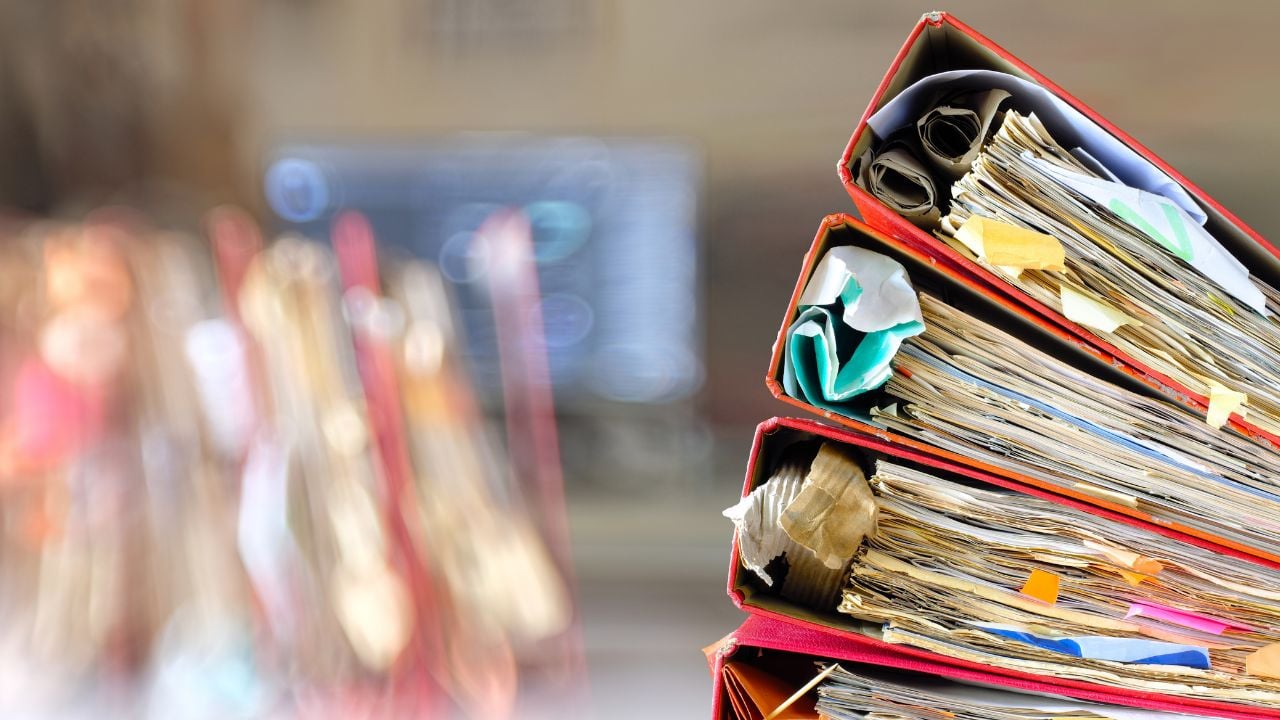
10 Records Alabamians Should Save Before the Next Natural Disaster

On April 27, 2011, a tornado carved a 132-mile path across northern Alabama with winds the National Weather Service clocked at 210 mph.
Entire neighborhoods disappeared within minutes, and the families who made it out grabbed whatever they could reach on the way to the door.
Paperwork didn’t always make it.
These are the records Alabamians should save before the next natural disaster.
Note: This is general information, not legal, financial, or insurance advice. Document and storage requirements are subject to change.
1. Your Insurance Declarations Page
What’s the one page a disaster claim runs on? The insurance declarations page. It’s the summary sheet the Federal Emergency Management Agency (FEMA) lists among the top documents to protect before a disaster, carrying your policy number, coverage limits, and deductible.
No policy number, no timeline.
A storm doesn’t have to be historic to make that page matter. The 210 mph tornado that tore a 132-mile path across northern Alabama in 2011 left many families filing claims without that page in hand.
2. Your Separate Flood Insurance Policy
A standard homeowners policy and a flood policy aren’t the same piece of paper, and claims fall apart when a family saved only one of them.
The National Flood Insurance Program says plainly that a standard homeowners policy doesn’t cover flood damage, so a flood policy has to be bought and filed on its own.
It carries a number, a declarations page, and a file, separate from the homeowners paperwork.
Coastal storms in Mobile and Baldwin counties routinely do as much damage with water as with wind.
That’s exactly why the flood declarations page deserves the same fireproof spot as the homeowners one, not a drawer where it’s the one paper nobody thinks to grab.
3. Your Property Deed or Mortgage
Who does Alabama’s county Probate Office say owns this house? Property deeds live on file right there, not at a separate land-records office, so a paper trail already exists before a disaster ever hits.
Keeping a copy at home just saves the trip, and it becomes proof of ownership the instant a disaster assistance application asks who owns the address.
Insurers ask for it too, often before a claim moves past the first phone call, so this document earns its keep well beyond the courthouse.
A deed, a mortgage statement, or a property tax bill can each stand in for the others when a home has to prove who owns it after a storm.
4. Vehicle Titles and Registration
Titling and registering a vehicle in Alabama runs through the county probate office or license commissioner, never a standalone driver-and-vehicle agency the way some other states handle it.
A lost title means a trip back to that same local office.
A flooded glove compartment takes the registration with it.
The title usually isn’t even riding in the car, so both deserve a copy kept somewhere drier.
Both cost time to replace.
Keep the vehicle identification number (VIN) with them, since the state title office will ask for it before it reissues anything.
5. Birth Certificates and Social Security Cards
Losing a birth certificate and a Social Security card in the same disaster means two separate trips to two separate agencies.
Disasterassistance.gov lists both among the official documents a household may need to reestablish afterward.
One comes from the state, the other from the Social Security Administration, and neither office moves quickly right after a declared disaster.
Weeks, sometimes months.
A photocopy or a phone photo of each won’t replace the original, but it proves who you are long enough to get through an aid application or a pharmacy counter.
Psst! How disaster-ready are your records right now? Run through this checklist and see where you stand.
6. Your Home Photo Inventory
An insurance adjuster moves faster when a homeowner can produce a record of what a house held before the storm took it.
Ready.gov’s financial-preparedness guidance keeps it simple: Take photos or a video of the home’s interior and exterior.
Include personal belongings in the inventory.
A ten-minute walkthrough with a phone camera covers nearly every room.
Note the brand and serial number on anything expensive, a TV, a laptop, a generator, and that turns a memory into a receipt an adjuster can use.
A serial number settles a disputed claim faster than a description ever will.
7. Your Medication List
A plain list of every medication, dose, and allergy is the one record Alabamians managing a chronic condition or a daily prescription can’t recreate from memory.
FEMA’s preparedness guidance groups medical records into the same emergency kit as insurance and financial papers.
A shelter or an emergency room can’t treat what it doesn’t know about, and a pharmacist filling an emergency refill can’t guess a dosage either.
Keep a paper copy in a bag by the door, since a phone with a dead battery does a family no good in a first-aid line.
8. Bank and Investment Records
Bank and investment records prove which accounts are yours when a flooded branch can’t, and FEMA’s guidance treats that paperwork as a separate category from insurance or property papers.
Checking, savings, retirement, and investment accounts each carry a different account number, and a printed statement or a saved screenshot settles a dispute a phone call can’t.
Numbers, not memory.
A locked branch doesn’t erase an account, but it can erase your ability to prove one exists without something in writing.
9. Federal and State Tax Returns
Proof of income is one of the most common asks on a disaster-aid application, and a tax return answers it faster than almost anything else in a filing cabinet.
FEMA’s guidance on protecting critical documents lists tax records among the categories worth safeguarding before a disaster, alongside insurance and property paperwork.
Proof of address, too.
You can request a copy again later, but doing it after a disaster costs time an aid deadline might not allow.
10. Your Will and Power of Attorney
Probate courts need a will on file before they can settle an estate, and a disaster is a bad time to discover the only copy burned with the house.
FEMA’s document safeguarding guidance lists estate planning, a will, a trust, a power of attorney, as a protected category separate from the everyday paperwork.
One copy isn’t enough.
A lawyer’s office often keeps the original on file, so ask before you assume the version at home is the only one that counts.
The Certified-Copy Catch Nobody Mentions
Not every Alabama office that asks for these records will accept a plain copy.
A birth certificate, in particular, often has to come back as a certified copy carrying the issuing agency’s raised seal or stamp.
A phone photo proves who you are in a pinch, but it won’t satisfy an office that asked for a certified copy.
A notarized copy is a different thing again. A notary only certifies that the copy in front of them matches an original they personally examined, and some agencies accept that while others reject it outright.
The safe-deposit box holding a second set of copies carries a catch.
A bank generally won’t open that box for anyone whose name isn’t already on the signature card, disaster or not.
So the person meant to grab that backup needs to be listed on the account ahead of time, not just handed a key.
Alabama’s Tax-Free Weekend for Storm Supplies
Alabama runs a Severe Weather Preparedness Sales Tax Holiday every February, and it’s built for exactly the shopping list this article just walked through.
Emergency supplies priced at $94 or less skip the sales tax that weekend, and portable generators do too, up to $1,564.
Tax-free, for one weekend.
A portable fireproof file safe sized for the records on this list usually falls under that cap.
Buying it during the tax holiday beats paying full price once hurricane season is already underway.
The Alabama Department of Revenue sets the holiday for the last full weekend of February each year, running from Friday at 12:01 a.m. through Sunday at midnight.
Miss that window, and the sales tax comes right back onto that flashlight or that file safe the following Monday.
8 Sweet Tea Rules Out-of-Staters Break at Every Alabama Cookout
Alabama cookouts run on sweet tea, and the pitcher comes with unwritten rules that out-of-staters break almost every time.
A few of the rules have nothing to do with sugar at all, and breaking them gets a new guest side-eyed at the first refill.
8 Sweet Tea Rules Out-of-Staters Break at Every Alabama Cookout
8 Alabama Car Warranty Traps Drivers Fall For at the Dealership

Alabama dealership finance offices know exactly when a car buyer’s guard is down, and the extended warranty pitch usually lands right then.
A few of the add-ons on that page cost far more than the protection is worth, and the contract rarely spells that out in plain language.
8 Alabama Car Warranty Traps Drivers Fall For at the Dealership
