
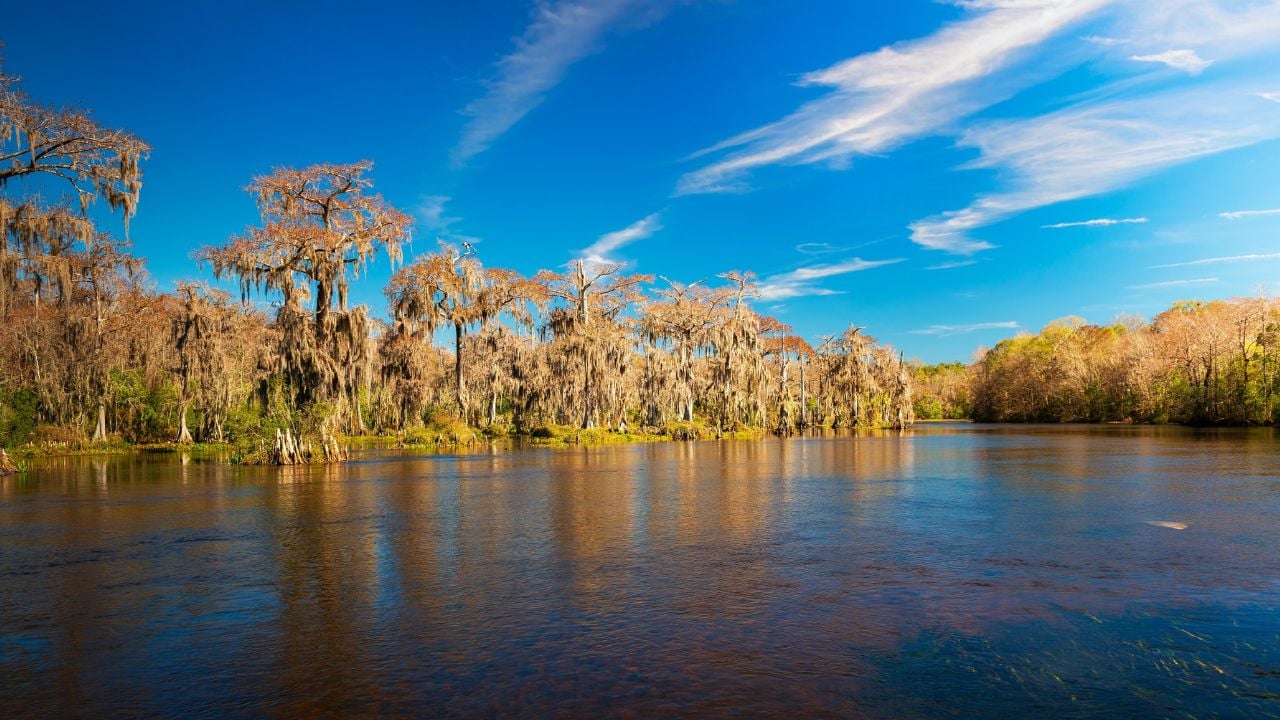
8 Florida State Parks Floridians Guard From Tourists

Ichetucknee Springs State Park packs in so many summer tubers that Florida’s park service closes the gate to everyone once the crowd maxes out, reservation or not.
Not every Florida state park fills up like that.
These are the Florida state parks Floridians guard from tourists.
1. Cayo Costa State Park
Cayo Costa State Park has no bridge, no causeway, and no road connecting it to the mainland.
A boat or a kayak is the only way in.
No shortcut exists.
The island sits about four nautical miles off Pine Island in Lee County.
The payoff for the trip is nine miles of undeveloped beach that never got a hotel, a boardwalk, or a snack stand.
Calusa fishing crews worked these waters long before the state turned the island into a park.
The shoreline still looks close to what they would have seen.
A day-use visit costs $2 a person, dropped into an honor box by the dock.
Locals who own a boat treat Cayo Costa like a private beach.
Many never think to mention the trip to a visiting cousin planning a week at a crowded Gulf Coast resort instead.
2. Paynes Prairie Preserve State Park
Paynes Prairie Preserve State Park sits split down the middle by Interstate 75.
Many of the cars speeding between Gainesville and Ocala never take the exit.
Wild bison graze less than a mile from the highway shoulder.
Florida reintroduced bison to the prairie from Oklahoma’s Wichita Mountains Wildlife Refuge in 1975.
The state added a herd of Florida Cracker horses too, meant to recreate what the land looked like before European settlement.
The preserve covers 23,000 acres.
Its La Chua Trail boardwalk puts visitors within a few feet of alligators many tourists only ever see on a screen.
No ticket required.
Floridians who grew up nearby know to take the U.S. 441 exit instead of staying on I-75.
Out-of-state drivers barreling down the interstate never learn why.
3. Highlands Hammock State Park
Highlands Hammock State Park opened to the public in 1931 and became one of eight original Florida parks built by the Civilian Conservation Corps (CCC).
It still looks the part.
The park’s 9,000 acres hold an elevated boardwalk through a cypress swamp and a small museum on the CCC crews who built it.
Old trees stand here that nobody ever cleared for development.
Highlands Hammock sits well inland in Sebring, an hour past where many tourists turn toward the coast or a theme park.
National Geographic named it one of Florida’s most overlooked parks for exactly that reason.
The entrance fee is $6 per vehicle.
Residents who camp there every winter never mention Highlands Hammock when a visitor asks about Central Florida getaways.
The same names fill the campground’s reservation list winter after winter, long before a first-time visitor ever finds the park.
4. Fakahatchee Strand Preserve State Park
Fakahatchee Strand Preserve State Park sits in the Big Cypress Swamp, bordering Everglades National Park.
Many first-time visitors to South Florida buy their ticket to the more famous national park next door instead.
Fakahatchee stays empty instead.
Rare ghost orchids grow wild here, alongside royal palms and bald cypress trees that tower over Janes Scenic Drive, a 6-mile unpaved road through the preserve.
Another 4.5 miles continue past a gate open only to hikers and cyclists.
Ranger-led swamp walks take visitors off the boardwalk and into the muck itself, wading past bromeliads and standing cypress in a landscape that inspired the book The Orchid Thief.
Locals who know the swamp well point tourists toward the national park’s paved trails and keep Fakahatchee’s wading tours to themselves.
Psst! How much do you know about Florida’s state parks? See if you can ace this quiz.
Quiz
Florida State Park IQ
Answer these questions on Florida’s state parks and the history hiding inside them. We bet you can’t get them all right. Prove us wrong?
Which Florida state park drew a record-breaking gathering of nearly 1,000 manatees in one recent winter sighting?
5. Wakulla Springs State Park
Wakulla Springs State Park sits in a county with just two small incorporated towns and no city big enough to support a tourist strip.
The detour never happens.
Glass-bottom boat tours drift over the spring that made this park famous in the first place.
Hollywood crews filmed Tarzan movies and Creature from the Black Lagoon here decades ago.
The historic lodge dates to 1935, built in Mediterranean Revival style by financier Ed Ball, and it still rents rooms with the original marble bathrooms.
Anyone who grew up boating on the Wakulla River happily send visitors to Weeki Wachee's mermaid shows down the coast and keep this slower spring to themselves.
6. O'Leno State Park
O'Leno State Park's stretch of the Santa Fe River disappears underground and doesn't resurface for more than three miles, at River Rise Preserve State Park.
There's nothing to tube down.
Ichetucknee Springs, a few minutes away, draws such a crowd in summer that park rangers close the gate to everyone once the tube launch hits capacity, reservations included.
O'Leno draws a different crowd instead.
Campers come for the Civilian Conservation Corps-built suspension bridge, shaded trails, and a river that vanishes instead of a parking lot full of tour buses.
That's the whole appeal.
Regulars who camp at O'Leno every spring rarely mention the alternative down the road, and the tourists chasing a lazy river never think to ask.
7. Torreya State Park
Torreya State Park sits in Liberty County, Florida's least populous county, where roughly 8,000 people live across a landscape of pine forest and slow rivers.
Many visitors never even pass through.
Steep bluffs rise above the Apalachicola River here, tall enough to feel like a different state.
Botanist Hardy Bryan Croom found the rare Torreya tree growing only on these bluffs around 1835.
The species still grows nowhere else in the wild.
The 1849 Gregory House still stands on the riverbank after being moved to the park, and rangers still walk visitors through it.
Few tourists ever find it.
Families who camp along the bluffs rarely bring it up when a visitor asks where to see the Panhandle.
Many out-of-staters never get past the beaches at Destin anyway.
O'Leno's River Versus Ichetucknee's Crowd Cap
O'Leno State Park and Ichetucknee Springs State Park sit a few minutes apart on the same river system, yet their crowds couldn't look more different.
Ichetucknee Springs State Park caps its daily tubing launch at a fixed number.
Florida park rangers close the gate the moment it fills, no matter who is holding a reservation.
O'Leno State Park never hits a similar limit, since there's no river surface left to tube once the Santa Fe sinks underground nearby.
8. Blackwater River State Park
Blackwater River State Park protects a stretch of what state officials call one of the most pristine rivers in the nation.
Many Panhandle visitors never see it.
The park sits an hour inland from Destin and the beaches along 30A, where many Panhandle tourists spend their whole trip without ever crossing back toward Milton.
Locals like it that way.
People paddle the Blackwater's tea-colored water past white sand bars that build up along nearly every bend, renting canoes and kayaks from outfitters that have worked the river for decades.
The park's roughly 600 acres feel bigger than the number suggests, since paddlers can spend a full day floating downstream without seeing the same sandbar twice.
The Blackwater averages just 2.5 feet deep, shallow enough that paddlers can see straight through to its clear, sandy bottom the whole way down.
9 Strange Florida Laws About What Residents Can Throw in the Trash
Florida doesn't care how a resident folds their bedsheets, but state and county rules narrow fast once those sheets go in the trash.
Skip the wrapping on an old mattress, and one Florida county can fine a resident $100 before the truck ever leaves the curb.
9 Strange Florida Laws About What Residents Can Throw in the Trash
9 Early Sinkhole Signs Florida Homeowners Mistake for Something Harmless
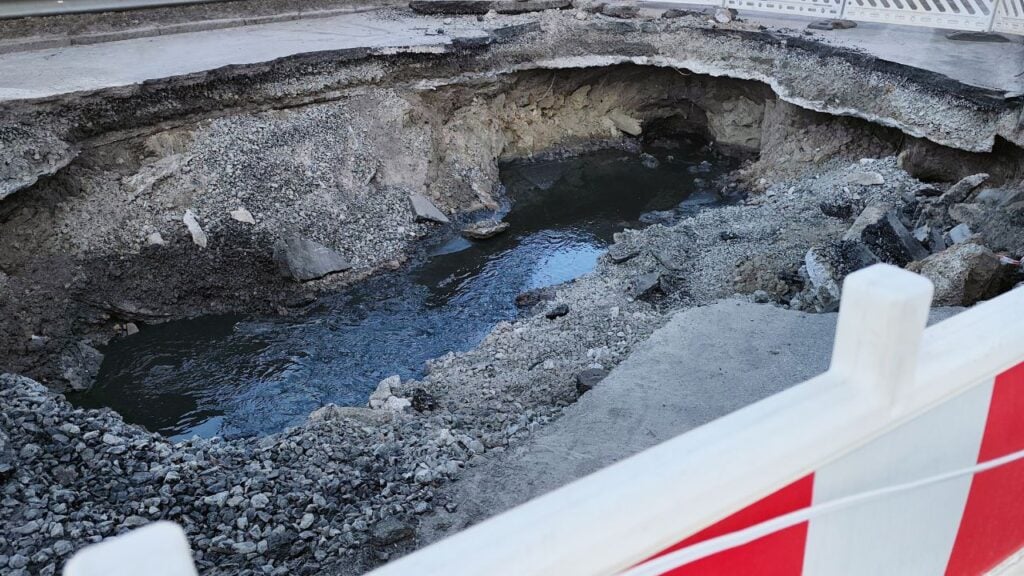
Florida property insurers paid out $1.4 billion in sinkhole claims over a single five-year stretch, and almost none of those claims started with a hole anyone could see.
These are the early signs homeowners mistake for something harmless, long before a sinkhole ever opens up.
9 Early Sinkhole Signs Florida Homeowners Mistake for Something Harmless
