
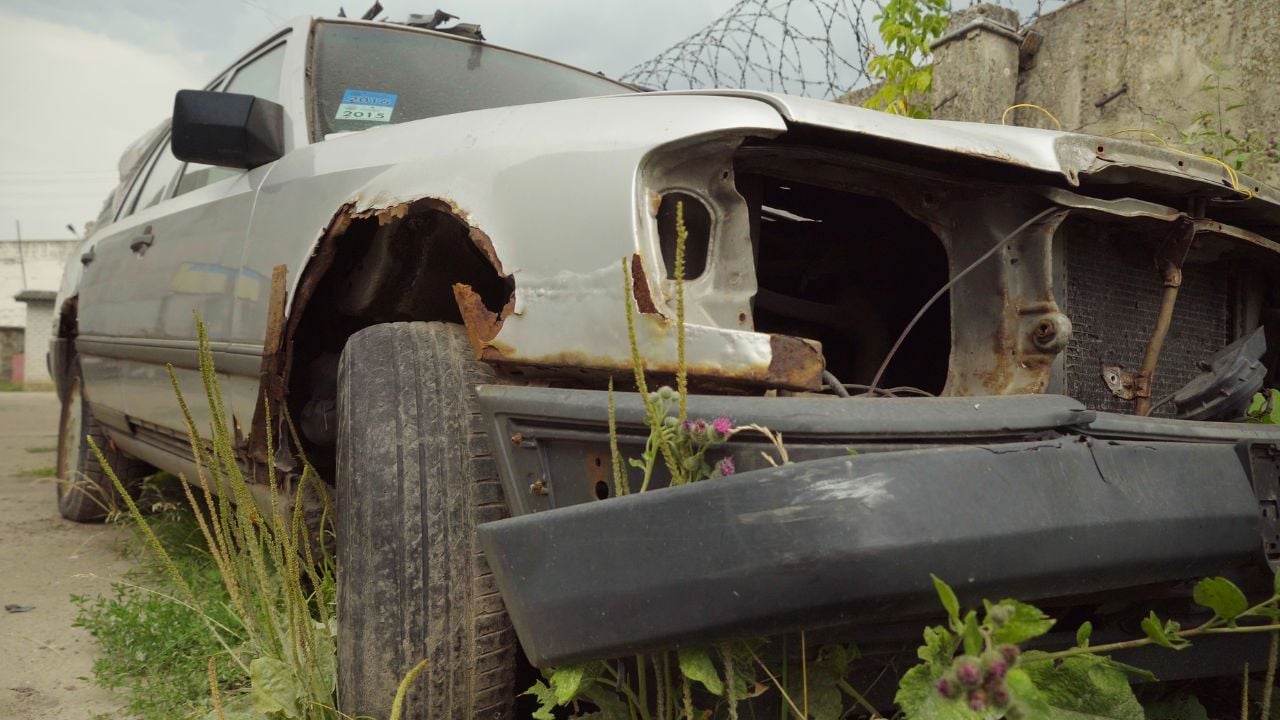
8 Legal Steps Hoosiers Have to Take Before Claiming an Abandoned Vehicle

Indiana’s Bureau of Motor Vehicles will sign a car’s title over to someone else for as little as $15, once the legal process finally clears.
That process starts long before any paperwork reaches Indianapolis, with a property owner watching a clock many drivers never notice.
These are the legal steps Hoosiers have to take before they can lawfully claim an abandoned vehicle for themselves.
Note: This is general information, not legal advice. Abandoned-vehicle procedures and required forms are subject to change, so confirm the current requirements with the Indiana Bureau of Motor Vehicles.
1. Confirming an Abandoned Vehicle
Not every parked car on someone else’s property counts as abandoned under Indiana law.
A vehicle left on private property only qualifies once it sits there without the owner’s consent for more than 48 hours, under the state’s motor vehicle code.
A car parked on a public street doesn’t get that same grace period.
It counts as abandoned after just 24 hours if nobody moves it, or right away if it’s blocking traffic.
Different clocks, same law.
Indiana’s Other Abandonment Clocks
Indiana’s vehicle code covers more ground than a driveway or a curb.
A car missing its engine, transmission, or differential counts as abandoned the moment it’s left on public property, with no waiting period at all.
A car that’s at least three model years old and mechanically dead can also be declared abandoned after 20 days.
That rule only applies when the vehicle sits on private property but stays visible from public property.
A tarp thrown over it doesn’t stop the clock.
2. Posting the Notice Tag
State law gives a property owner two ways to start that clock once a vehicle qualifies as abandoned.
One is calling in a police officer to tag it.
The other is doing it personally, by attaching a notice tag to the vehicle.
That tag needs the date and time, the property owner’s name and address, a contact number, and a statement that the vehicle is considered abandoned and will be removed.
No tag, no timeline.
The tag also has to warn the vehicle’s owner that removal, storage, and disposal costs land on them if the car isn’t moved in time.
It also has to say those costs disappear if the vehicle moves within 24 hours.
3. Pre-Tow Waiting Period
A Hoosier property owner has to wait before towing a car they’ve just tagged as abandoned.
Indiana’s motor vehicle code holds them to a full 24 hours after the tag goes up before anyone can touch the vehicle.
That removal countdown runs separately from the abandonment clock in the first step.
Not a minute sooner.
One exception lets the property owner skip the wait.
If the vehicle blocks normal business operations or threatens someone’s safety, it can be towed immediately.
4. Towing the Vehicle
A Hoosier property owner can call in a tow once that 24-hour window closes.
That towing company picks up a statutory lien on the car for the cost of the tow and the storage that follows.
Not for free.
That lien is what eventually lets someone other than the original owner end up holding the title, but only after several more steps.
Local ordinances cap how much the lienholder can charge for the towing and storage along the way.
5. Searching Records and Mailing Notice
A Hoosier property owner who’s reached this point still has paperwork to arrange, done through the towing company now holding the vehicle.
Within three business days of the tow, that towing company has to search the National Motor Vehicle Title Information System (NMVTIS) to track down the registered owner and any lienholder.
Once a name and address turn up, a certified letter goes out within three more business days, billed to the property owner.
It has to name the earliest possible sale date and warn that storage costs are piling up.
No notice, no sale.
If the towing company skips this step, the storage bill legally stops growing.
6. Advertising the Public Sale
Getting a vehicle to public sale takes more than one certified letter, and arranging what comes next falls to the property owner.
That means placing a notice in a newspaper of general circulation near the lienholder’s place of business.
That ad has to list the vehicle’s make, year, and vehicle identification number (VIN), the unpaid charges, and the sale’s time and place.
No shortcuts.
The sale itself can’t happen until a full week of that notice has passed.
7. Waiting Out the Reclaim Window
One more window stands between a Hoosier property owner and that sale.
The vehicle’s original owner or lienholder of record gets 20 days from the certified mailing to show up and pay the bill.
Marion County and other consolidated cities allow only 15.
Many owners never show.
Once that window closes without a claim, the property owner can finally move the vehicle toward public sale or auction.
Psst! How much do you know about Indiana’s driving history? Take our quiz and see how many you can get right.
Quiz
Indiana Roads & Rules IQ
Answer these questions on Indiana’s roads, plates, and racing history. We bet you can’t get them all right. Prove us wrong?
Indiana adopted “The Crossroads of America” as its official state motto in what year?
8. Filing for Title With the BMV
The last legal step in Indiana happens on paper, not on a tow lot.
Whoever ends up holding the vehicle after the public sale applies to the Indiana Bureau of Motor Vehicles (BMV) Central Office.
That application needs a certificate of title form and a mechanic's lien bill of sale.
That packet also needs proof of the certified mailing and the newspaper ad, a law enforcement VIN inspection, and an odometer statement.
Paper trail or no title.
The BMV charges a $15 title fee for a vehicle valued at $3,500 or less under the mechanic's lien process it lists among its special titling circumstances.
It sends the entire application back if even one document is missing.
A vehicle worth more than $3,500 follows a separate lien packet with a few extra requirements.
Whoever applies has to check the value against National Automobile Dealers Association (NADA) pricing before filing anything.
When the paperwork clears, the BMV issues a new certificate of title with the applicant's name on it.
8 Ways Out-of-Staters Break Buc-ee's Etiquette Before They Reach the Brisket

An announcement about fresh brisket is enough to turn half the store toward the barbecue counter inside a Buc-ee's location.
Regulars already know the drill there, but out-of-staters often learn Buc-ee's etiquette the hard way.
8 Ways Out-of-Staters Break Buc-ee's Etiquette Before They Reach the Brisket
