
4 Florida Laws Taking Effect October 1 That Change Everyday Life for Residents

October 1, 2026, is the day a lie on a Florida rental application turns into a felony charge.
The Florida Legislature passed that change this year, and it’s one of more than a dozen new state laws landing on the same October 1 start date.
These are the Florida laws taking effect October 1 that change everyday life for residents.
Note: This is general information, not legal advice. Statutes and effective dates are subject to change.
1. $2,000 Crash Threshold
Florida law has required a driver to notify police after any crash causing at least $500 in property damage, a number that hasn’t changed in years.
That’s changing on October 1.
Senate Bill 488 raises that threshold to $2,000 starting October 1, 2026, so many parking-lot fender-benders and mailbox clips will no longer legally require a call to the police.
That’s four times the old bar.
Skip the call above that new line, though, and it’s still a traffic infraction, not a shrug.
What Counts Toward Florida’s $2,000 Line
Florida’s $2,000 threshold adds up the damage to every vehicle, mailbox, fence, or guardrail in the crash, not just the dent in your bumper.
A driver still has to stop, show a license, and trade insurance and registration information, and call for help if anyone’s hurt, no matter how small the damage looks.
That duty comes from a separate Florida statute.
The new $2,000 line only changes whether a driver must notify police, never whether a driver has to stop at all.
Skipping the notification above that new line stays a noncriminal traffic infraction under Florida’s traffic code, not an arrest.
2. Fraudulent Rental Applications
Florida turns a lie on a rental application into a stand-alone crime starting October 1.
Gov. Ron DeSantis signed House Bill 1293 in June, creating a new charge for fraudulent entry into a residential dwelling.
It’s a third-degree felony.
It covers a forged pay stub, a fake ID, or signing someone else’s name to gain approval and move in under it.
Lawmakers wrote the new charge into Florida Statute 817.537, right alongside the state’s other fraud crimes.
Landlords who catch it don’t have to offer a chance to fix it first.
The new law makes fraudulent entry a non-curable lease violation, so a landlord can hand over a seven-day notice to vacate instead of the usual back-and-forth.
Psst! How much do you know about Florida’s history? Take our quiz and see how many you can get right.
Quiz
Florida History IQ
Answer these questions on Florida’s flag, founding, and statehood story. We bet you can’t get them all right. Prove us wrong?
Which number state was Florida when it joined the Union in 1845?
3. Protected Email Addresses
The Florida Department of Highway Safety and Motor Vehicles already keeps an email address on file for many drivers and boat owners.
The department uses that address to send renewal and registration notices instead of paper mail.
Starting October 1, Senate Bill 490 pulls those addresses out of the public records law for good, widening an exemption that used to cover fewer notices.
Legislative staff who analyzed the bill spelled out the risk.
A public email address, combined with what the department already knows about a driver or boat owner, invites identity theft, scams, and unwanted solicitations.
A records request now comes back with nothing.
For a driver or boat owner, that means the address tied to your registration or your vessel's title can no longer be pulled through a public records request.
The same address can't be turned into a target for a scam email or an unwanted solicitation, either.
The protection now reaches email collected for general notifications, not just renewals, plus the addresses the department keeps for vessel title and lien notices.
It isn't permanent, either.
Florida law forces the Legislature to review and reenact the exemption by October 2, 2031, or it expires on its own.
4. Nine New Specialty Plates
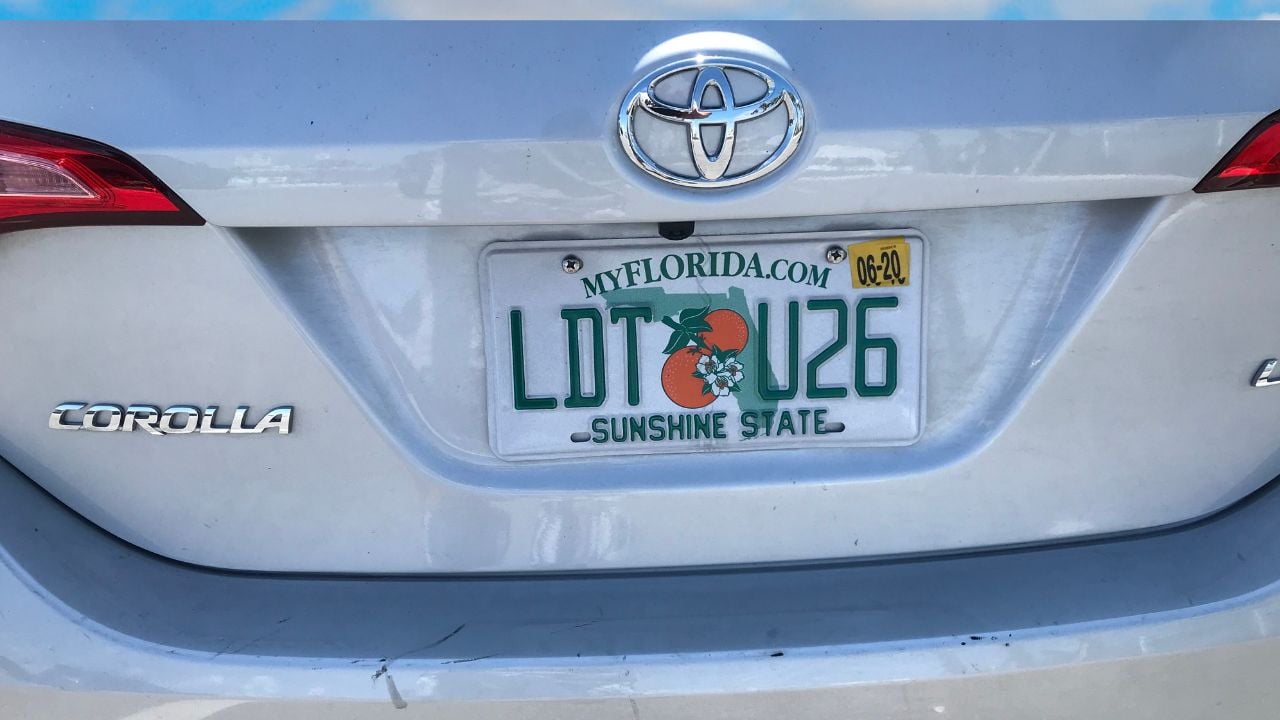
Florida drivers get nine new specialty plate designs to choose from the next time they register or renew a vehicle after October 1.
Senate Bill 246 adds plates for the Ultimate Fighting Championship (UFC), the Miami Northwestern Alumni Association, Christopher Columbus High School, the U.S. Naval Academy, the U.S. Military Academy, Miami Dade College, Florida Film Legacy, St. Petersburg College, and an Endless Summer motorcycle tag.
There's something for nearly everyone.
Picking one at the tag counter adds the standard $25 annual specialty-plate fee on top of the regular registration bill.
That extra money funds the cause printed on the plate, not the state's general fund.
The same law repeals the old restriction on who can buy a Fraternal Order of Police plate.
Until now, a driver needed a notarized letter from the Florida State Lodge of the Fraternal Order of Police proving lodge membership or a family tie to a member.
Only then would the tag counter issue the plate.
Any driver can request one now, no letter and no proof of membership required.
Narrower New Laws
Florida's Legislature sent more than a dozen other laws to the same October 1 start date, and many of them never touch an ordinary resident's week.
One creates a new trafficking charge for xylazine, the animal sedative increasingly showing up cut into street fentanyl.
Others are hyper-local by design.
A single city's firefighter pension formula changes, and House Bill 4039 requires a feasibility study and a public hearing before Broward County's Monarch Hill Landfill can expand.
In Indian River County, House Bill 4093 shrinks the Fellsmere Water Control District and folds what's left under county control.
A companion bill creates a new Headwaters Water Control District to cover the area the old district gave up.
Another, House Bill 559, makes it a third-degree felony for an adult to force a minor into animal cruelty or commit the act in front of one.
A separate bill, Senate Bill 1332, gives convicted career offenders a new 48-hour window to register in person, with the requirement stamped right onto their driver's license.
None of that moves the needle for a driver, a renter, or anyone outside the one city or county named in the bill.
Checking a Law Yourself
Florida publishes the full text of all new laws free of charge through the Legislature's website, filed by chapter number.
Type a chapter number like 2026-143 into the site's search, and the actual bill language comes up instead of a summary someone else wrote about it.
You don't need an account.
That's the same primary source county clerks and state motor vehicle staff check before writing guidance for the public.
Bookmark the chapter number, not just the news story about it, since a headline can vanish while the statute stays put for years.
8 Septic and Well Rules Florida Buyers Inherit With Their House
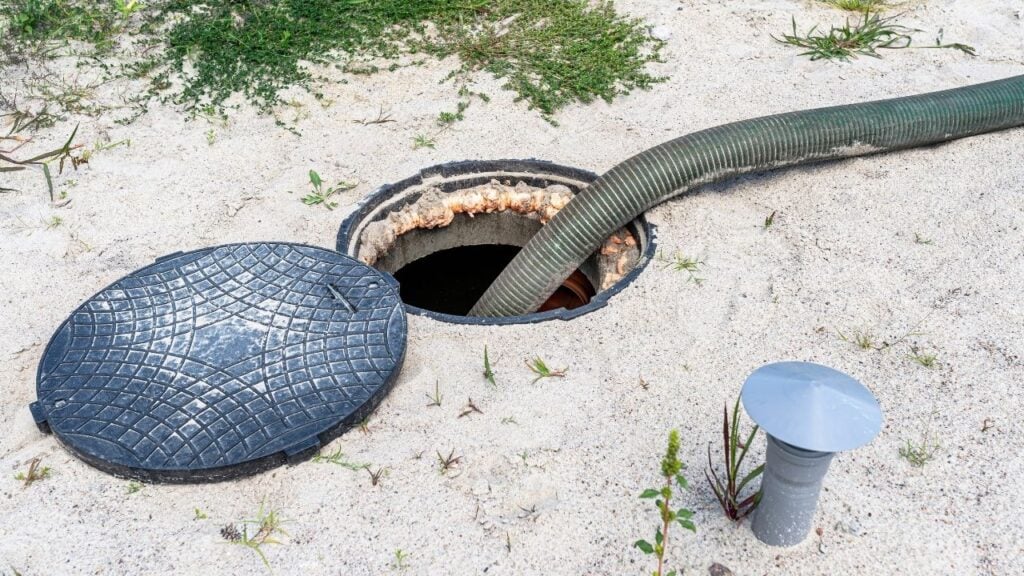
Florida has roughly 2.6 million septic systems in the ground, covering close to a third of the state's homes.
Buy one of those houses, and every rule attached to that system transfers with the deed, whether the closing paperwork mentions it or not.
8 Septic and Well Rules Florida Buyers Inherit With Their House
What Happens If You Don't Pay an HOA Fine in Florida?
Close to 3.9 million Florida homes sit inside a homeowners association, and sooner or later many of them get a notice with a dollar figure attached.
State law caps that fine at $100 per violation, but ignoring the notice altogether can still snowball into something bigger than the sticker price.
