
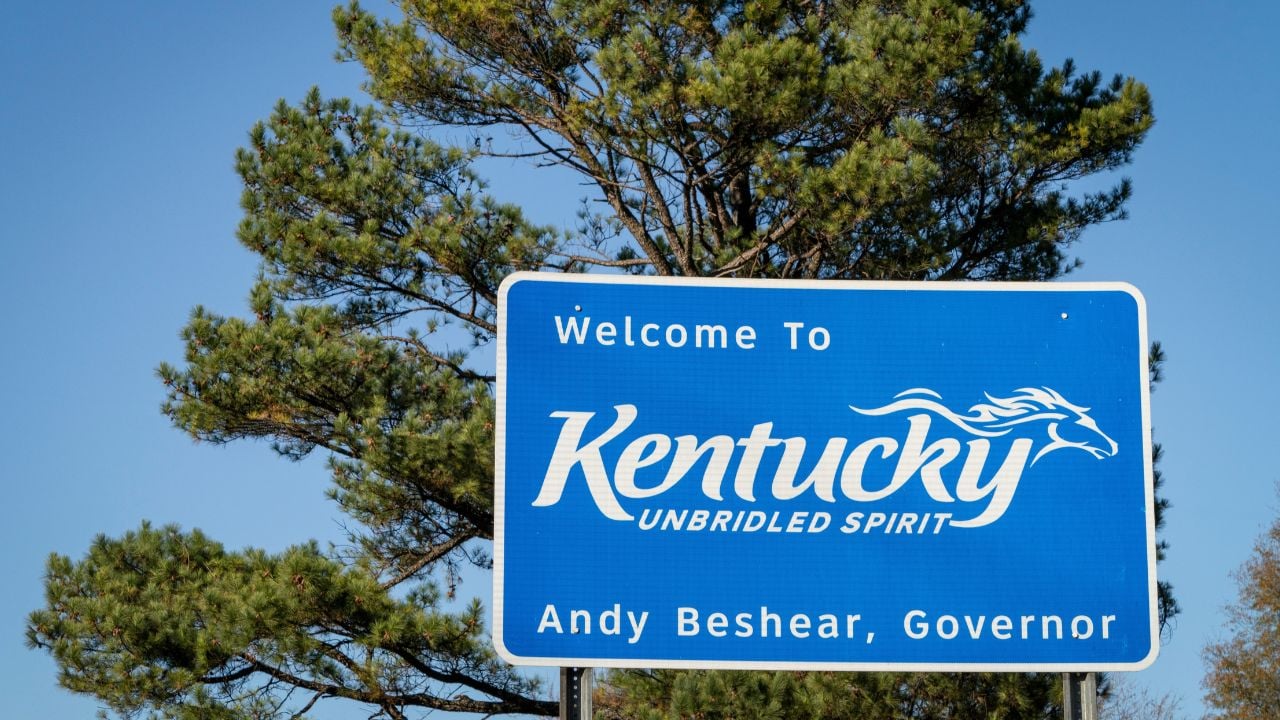
5 Everyday Costs That Jump the Moment Tennesseans Cross Into Kentucky

Kentucky charges a steeper tax on wine than any other state in the country, according to the Tax Foundation’s 2026 excise tax rankings.
Tennessee’s tax on that same bottle runs a fraction of it.
Wine isn’t alone. Other everyday costs look different once a shopper crosses the state line too.
These are the everyday costs that jump the moment Tennesseans cross into Kentucky.
Note: This is general information, not tax, financial, or legal advice. Rates and rules in both states are subject to change.
1. Pack of Cigarettes
Kentucky taxes a pack of cigarettes at $1.10, plus a small stamping fee, according to its Department of Revenue.
Tennessee charges 62 cents for the identical pack, according to federal tracking of every state’s tobacco tax.
Tennessee’s rate hasn’t moved since 2007.
The gap is nearly double.
A carton crossing the state line changes price without changing brands.
2. Bottle of Wine
Kentucky’s excise tax on wine runs $3.82 a gallon, the highest rate any state charges, according to the Tax Foundation’s 2026 rankings.
That figure includes the state’s 10% wholesale tax, layered on top of the base rate.
Tennessee taxes the same gallon at $1.27, less than a third of Kentucky’s rate.
On a standard 750-milliliter bottle, that gap works out to roughly 75 cents in tax on the Kentucky side of the line and about 25 cents on the Tennessee side.
The bottle is identical.
The tax isn’t.
3. Kentucky’s Income Tax
Kentucky’s income tax reaches into a paycheck the moment work happens inside the state, at a flat 3.5% for tax year 2026, according to the state Department of Revenue.
Tennessee doesn’t tax wages at all, and never has.
A Tennessean who commutes to a job in Kentucky doesn’t get a pass on that difference.
Kentucky’s reciprocal tax agreements cover people who live in Illinois, Indiana, Michigan, Ohio, Virginia, West Virginia, and Wisconsin, under state regulation, and Tennessee isn’t on that list.
Anyone living in Tennessee but earning a paycheck in Kentucky has to file a nonresident Kentucky return and pay Kentucky tax on those wages.
Tennessee never sends one.
4. Auto Insurance Premiums
Auto insurance costs Kentucky drivers an average of $2,246 a year, compared with $1,789 in Tennessee, according to Experian’s July 2026 data on policies sold through its marketplace.
Minimum coverage shows the widest split: Kentucky drivers average $2,085 a year for it, while Tennessee drivers average $1,070, less than half.
Full coverage runs $3,150 a year in Kentucky versus $2,497 in Tennessee.
None of those numbers move because of anything the driver did.
They move because of the state on the registration.
The state changes.
So does the premium.
5. Annual Car Tax Bill
Kentucky bills every car owner a property tax on their vehicle every year, based on the car’s value each January 1.
Tennessee has no such tax.
A Tennessee driver pays a flat state registration fee instead, plus whatever wheel tax their home county charges, and dozens of counties charge none at all.
What Kentucky’s Car Tax Rate Costs
Kentucky’s state ad valorem rate on a car sits at 40 cents for every $100 of assessed value in 2026.
A car appraised at $20,000 owes $80 in state tax alone under that rate.
A new state law phases that rate down every year until it reaches zero in 2034.
Kentucky’s county, school, and city rates still apply on top of it, so the car tax bill never hits zero on its own.
Active-duty service members stationed in Kentucky on orders from another state don’t owe this tax at all.
Psst! How much do you know about the Tennessee-Kentucky line? Take our quiz and see how many you can get right.
Quiz
Tennessee-Kentucky Border IQ
Answer these questions on the Tennessee-Kentucky line, from Fort Campbell to bourbon country. We bet you can’t get them all right. Prove us wrong?
The Kentucky Distillers’ Association credits Kentucky with making about what share of the world’s bourbon?
Where Kentucky Charges Less
Kentucky's sales tax sits at a flat 6%, and no city or county gets to add a slice on top.
Tennessee's combined state and local rate averages 9.61%, the second-highest in the country, behind only Louisiana.
A $40 cart of general merchandise carries close to $2.40 in tax on the Kentucky side of the line and $3.84 on the Tennessee side.
Kentucky doesn't tax groceries at all, under state law, though candy, soda, and hot deli food still ring up at the regular rate.
Tennessee taxes food for home consumption at a reduced 4%, and local governments can add more on top of that.
Bread rings up clean.
Two Taxes That Barely Move
Kentucky taxes gasoline at 26.4 cents a gallon as of July 1, 2026, according to the state's Department of Revenue.
Tennessee taxes it at 27.4 cents a gallon, a 26-cent gasoline tax plus a 1-cent special tax and a small environmental fee, according to its Department of Revenue.
Kentucky's rate is a penny lower.
That's the smallest gap of any tax along the line.
Beer tells almost the same story, in the other direction.
Kentucky's beer tax runs about 89 cents a gallon, per the Tax Foundation's 2026 rankings.
Tennessee's beer tax is the highest in the country, at $1.287 a gallon, built mostly from a $35.60 wholesale tax the state charges on every barrel a distributor sells.
The gap flips again.
A case of the same beer costs less once it crosses into Kentucky.
Tennessee taxes wine and beer at the wholesale level, long before a retailer ever sets a shelf price.
That cost shows up baked into the tag instead of added at the register.
8 Great Smoky Mountains Mistakes Tennessee Visitors Make Every September

September 2015 sent more than a million people through Great Smoky Mountains National Park in a single month, one of the busiest Septembers the park has ever logged.
Tennessee visitors picturing empty trails once school starts back are picturing the wrong month.
8 Great Smoky Mountains Mistakes Tennessee Visitors Make Every September
8 Renters Insurance Myths Tennessee Tenants Believe Until a Claim Gets Denied

Close to half of American renters carry no insurance on their apartment at all, and many of the rest are covered for less than they assume.
That gap shows up in Nashville, Knoxville, and Memphis apartments just as often as anywhere else.
8 Renters Insurance Myths Tennessee Tenants Believe Until a Claim Gets Denied
