
9 Things Montanans Skip in October and Regret All Winter

Studded snow tires became legal on Montana roads again on October 1, under the state’s tire law.
Many drivers haven’t swapped their tires yet.
Tires are only one fall chore that gets put off even though Montana’s winter gets a head start on much of the country.
These are the things some Montanans skip in October and regret all winter.
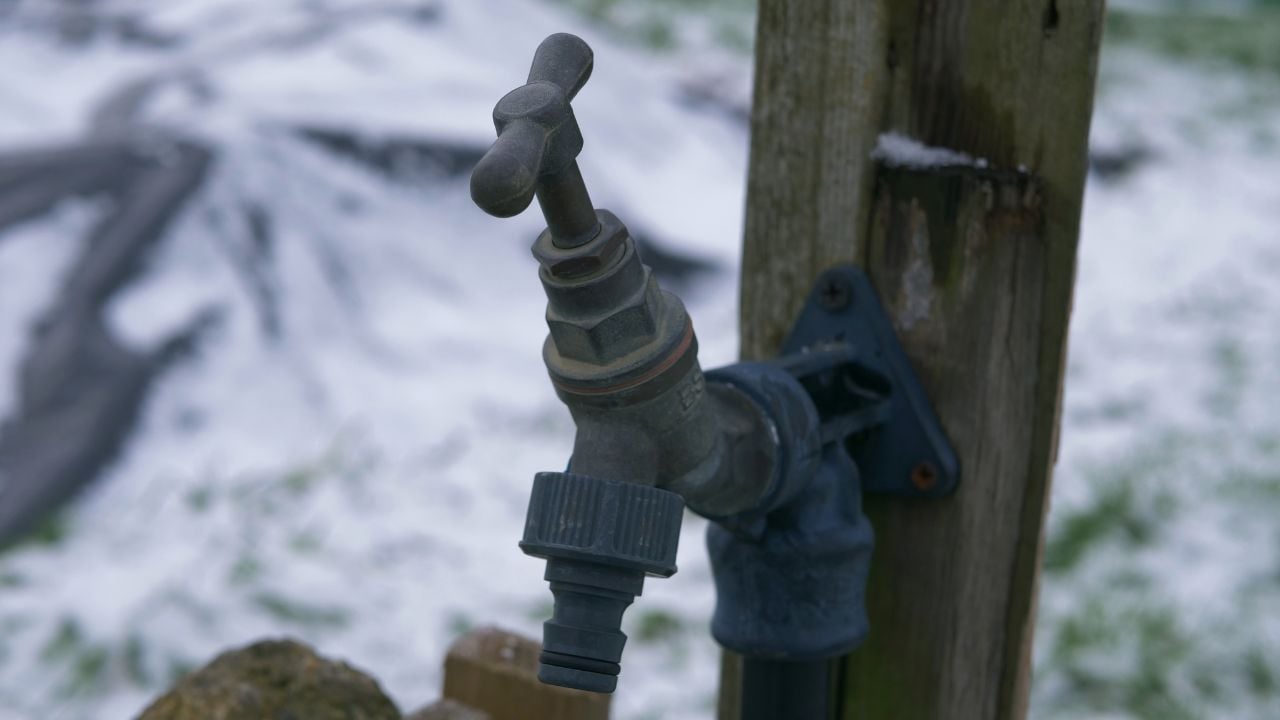
1. Outdoor Spigots and Hoses
Homeowners who leave a hose connected to an outside spigot through October are betting against physics.
Water sitting in that hose and the pipe behind it has nowhere to go once a hard freeze sets in.
It expands.
State Farm’s claims data put the average payout for a frozen or burst pipe in a Montana home at more than $9,000 in 2020.
Shutting off the interior valve behind the faucet, draining the line, and disconnecting the hose takes a few minutes.
What Runs Up to $9,000
By itself, a frozen pipe in a Montana home rarely costs $9,000.
Drywall soaks through, flooring has to come up, and an electrician often has to check the wiring before the power goes back on.
A foam faucet cover runs about $10, and shutting one interior valve costs nothing at all.
2. Snow Tires
Montana’s tire law lets studded snow tires back onto the road every October 1, and pulls them again on May 31.
That’s the legal window, not a calendar reminder to swap them.
It’s not the same thing.
A car still riding on worn all-season rubber has less grip on ice and packed snow than a car running winter tires.
The first snow tends to land early, often before a car makes it in for the seasonal swap.
Waiting until the roads are already white to dig out the winter set means driving on the wrong tires for whatever storm shows up first.
Montana logs about 8,300 weather-related crashes and 17,000 injuries a year, and icy pavement alone accounts for 14% of them, according to the state’s crash data.
3. Sprinkler Blowout
Lawns wired for automatic sprinklers carry water in every line until somebody clears it out before winter.
Trapped water freezes solid, and the ice cracks pipes, valves, and the backflow preventer on its way out.
A homeowner pays for that damage every time.
Bozeman and Missoula irrigation crews tell customers to schedule a blowout by late September or early October, before the ground’s first hard freeze.
Montana State University Extension’s fall checklist tells gardeners to blow the water out of the system at the end of the season.
Call a professional if the work doesn’t feel like a do-it-yourself (DIY) job.
Do it before the ground freezes.
4. Car Battery Test
A car battery does its hardest work in winter weather most batteries were never designed for.
Great Falls’ average January low sits at 15°F, according to 30 years of federal climate data, and mornings well below zero aren’t rare across the state.
A battery’s output measurably drops as the temperature falls.
The American Automobile Association (AAA) reports that a battery loses roughly a third of its strength at freezing, and even more once temperatures drop further.
AAA has reported cold snaps driving as much as an 85% spike in dead-battery service calls compared with a normal day.
A battery that’s already weak in September doesn’t announce itself until the first hard cold snap leaves a car silent in the driveway.
A quick test at any auto shop costs little and takes minutes.
5. Furnace and Chimney Check
Furnaces and wood stoves start their season once October’s first hard freeze hits, and many go untouched between one winter and the next.
A blocked flue or a cracked heat exchanger can push carbon monoxide back into the house instead of up and out.
Montana ranks third in the nation for carbon monoxide poisoning deaths per capita.
Heating systems account for over 30% of all carbon monoxide poisoning deaths, according to Great Falls Fire Rescue.
Warning signs sit in plain view for anyone who looks: Discolored bricks at the top of the chimney, rust on the vent pipe, or damp walls near the furnace.
A chimney sweep or heating contractor can look over both the furnace and the flue before the first cold snap, usually in one visit.
6. Coolant Check
A Montana engine’s coolant has to handle some of the sharpest temperature swings in the country.
Loma, Montana holds the official U.S. record for the fastest 24-hour temperature swing on the books.
A chinook wind pushed the town from -54°F to 49°F, a 103-degree jump, in one day in January 1972, according to the National Weather Service.
The antifreeze mixture in the radiator and engine block is what keeps that liquid from freezing solid through a swing like that.
Low or diluted coolant lets the water inside freeze, and ice expanding inside a sealed system can crack a radiator, split a hose, or damage the engine block.
AAA recommends checking the coolant level and mix before the first hard freeze, since a diluted mix stops lowering the cooling system’s freezing point the way it’s supposed to.
7. Gutters and the Roof
Montana roofs spend winter dealing with freeze-thaw cycles that milder states rarely see.
Gutters clogged with fall leaves and pine needles trap snowmelt instead of draining it away.
That trapped water refreezes into an ice dam at the roof’s edge, and the dam backs meltwater up under the shingles.
Water damage and freezing together account for nearly 22.6% of all homeowners insurance losses nationwide, according to the Insurance Information Institute.
A clean gutter and a quick look at the roofline in October cost nothing but a Saturday afternoon.
8. Drafty Windows and Doors
In winter, homes lose heat through gaps that many people never think to check: Around window frames, under exterior doors, and where pipes and wires pass through an outside wall.
Small as they look, those gaps add up.
NorthWestern Energy, which supplies natural gas and electricity to many households, is the one that eventually bills for all that escaped heat.
The U.S. Department of Energy and the Environmental Protection Agency (EPA) estimate that sealing and insulating those spots can cut a home’s heating and cooling costs by an average of 15%.
That’s a lower bill every month all winter, not a one-time fix.
A tube of caulk and an afternoon are cheaper than a whole season of paying to heat the outdoors.
Psst! How much do you know about Montana? Take our quiz and see if you can ace it.
Quiz
Montana Winter IQ
Answer these questions on Montana history, geography, and winter records. We bet you can’t get them all right. Prove us wrong?
What’s the coldest temperature ever officially recorded in the contiguous United States, set at Rogers Pass, Montana, in January 1954?
9. Winter Car Kit
Montana's Homestake Pass and MacDonald Pass shut down for hours at a time each winter once a whiteout rolls through the mountains.
Drivers caught without a winter kit are stuck waiting it out.
The Montana Department of Transportation (MDT) advises keeping a full emergency kit in every vehicle: A blanket, a flashlight, sand or cat litter for traction, and jumper cables.
A shovel small enough to fit in the trunk belongs in there too.
MDT's 511 service tracks pass closures in real time, but it can't refill an empty tank or charge a dead phone for a driver already stuck.
A full tank of gas, a charged phone, and a blanket in the trunk are what turn that wait into an inconvenience instead of an emergency.
16 Reasons Montanans Hate Being Stuck Behind You in the Checkout Line

In Montana and across the country, the checkout line is where patience runs thin fastest, and one slow shopper can throw everything off.
These are the habits Montanans notice first, long before they ever say anything out loud.
16 Reasons Montanans Hate Being Stuck Behind You in the Checkout Line
16 Unusual Natural Phenomena Montanans Should See at Least Once
Nature doesn't stop at sunsets and waterfalls, and sometimes it goes all out with a pink lake or a glowing beach.
These aren't the everyday sights a Montanan passes on the daily commute.
16 Unusual Natural Phenomena Montanans Should See at Least Once
