
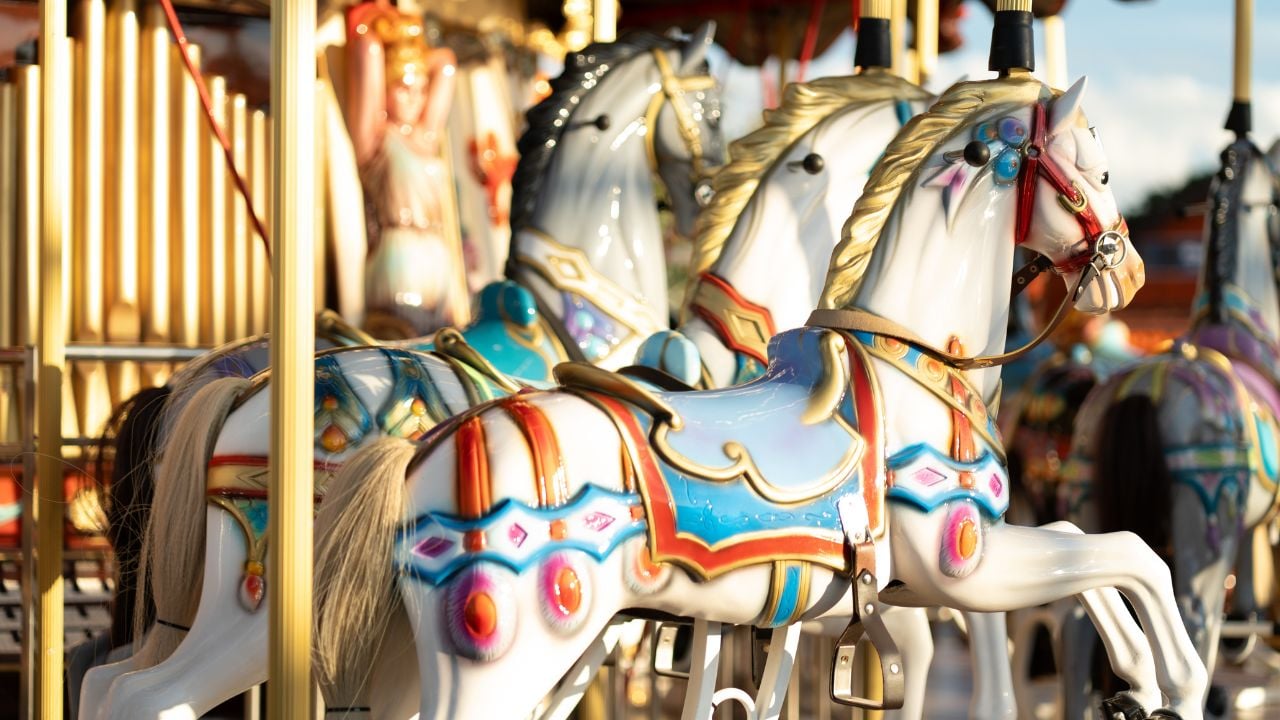
8 Places Illinoisans Grew Up Going That Closed for Good

A marble plaque in a Rate Field parking lot marks the exact spot where Comiskey Park’s home plate once stood, according to a historical marker on the site.
That spot sits roughly 500 feet from home plate in the ballpark that replaced it.
That’s as close as any place on this list comes to still standing. The rest are gone.
These are the places Illinoisans grew up going that closed for good.
1. Riverview Park
Riverview Park spent 64 years as the amusement park generations of Chicago-area kids grew up visiting, a sprawling Roscoe Village midway of roller coasters, fun houses, and boat rides.
An estimated 200 million people rode through its gates before the doors shut for good.
Shareholders sold the land to a real estate investor in 1967, and the deal stayed secret until it was already done.
Nobody got a farewell ride.
Employees and regular visitors read about the closing in the newspaper the same morning as everyone else.
The park never reopened for even one more season.
The Bobs, the wooden coaster known for one of the tallest drops of any coaster of its era, is gone.
The land underneath it now holds a shopping center, a police station, and a Catholic high school.
2. Kiddieland
Kiddieland opened in 1929 and grew into Chicago’s oldest amusement park, a Melrose Park fixture built for kids too small for Riverview’s grown-up coasters.
A leasing dispute between two branches of the same family ended it: The family that owned the land refused to renew the lease in early 2009.
Nobody saw it coming.
The rides scattered everywhere.
Six Flags Great America bought the Little Dipper coaster, while other rides ended up in amusement parks in Michigan, Georgia, and New Jersey.
Crews demolished the park in 2010.
A Costco stands on the land today.
3. Comiskey Park
Comiskey Park hosted White Sox baseball on the same 35th Street lot for 80 years, ever since it opened in 1910 billing itself as the finest ballpark anywhere.
The ballpark played its final game on September 30, 1990, a 2-1 White Sox win over the Seattle Mariners.
Organist Nancy Faust closed it out with “Na Na Hey Hey Kiss Him Goodbye.”
Then it was over.
Wreckers spent the summer of 1991 tearing the building down, working from the outfield corner toward the infield.
A new ballpark opened just across 35th Street in 1991, the stadium White Sox fans know today as Rate Field.
The original Comiskey Park is a parking lot today, with the old foul lines still painted on the pavement.
A marble marker there pinpoints home plate’s old spot, roughly 500 feet from where the White Sox play now.
4. Sears
Every mall people grew up going to had a Sears.
Sears grew out of the mail-order catalog business it started in Chicago in 1893, then opened its first Illinois retail store in the city in 1925.
For decades, shoppers found school clothes, tools, and Christmas gifts under one roof at nearly any Sears in the state.
The retreat took decades.
Sears closed its last Chicago store, the Six Corners location, in July 2018.
The chain’s last full-line Illinois department store, at Woodfield Mall in Schaumburg, closed on November 14, 2021.
No department store carrying the Sears name has reopened in Illinois since.
Closed Doesn’t Always Mean Gone
Comiskey Park and Sears each spark a version of the same question, since Illinois still has something carrying a familiar name.
Rate Field has worn three different names since it opened in 1991: U.S. Cellular Field from 2003 to 2016, Guaranteed Rate Field from 2016 to 2024, and Rate Field since the sponsor rebranded that December.
Sears isn’t gone from Illinois, either.
A handful of Sears Hometown Stores, independently owned and focused mainly on appliances, still operate under the name in other Illinois towns.
They have no connection to the department stores that anchored Illinois malls for generations.
5. Dominick’s Finer Foods
Dominick’s Finer Foods filled the deli counter and produce aisle for generations of Chicago-area families, growing to 130 stores across the region by the late 1990s.
Safeway, which owned the chain by then, announced in October 2013 that it was leaving the Chicago market.
The end came fast.
Every remaining store was gone before the year was out.
A handful of the buildings reopened as Whole Foods locations, but the Dominick’s name and the company behind it disappeared for good.
Psst! How much do you know about Illinois history and trivia? Take our quiz and see how many you can get right.
Quiz
Illinois History Trivia Quiz
Think you know the Land of Lincoln? Prove it.
What nickname has appeared on Illinois license plates since 1955?
6. Carson Pirie Scott
Carson Pirie Scott anchored malls and downtown Chicago storefronts for generations, the department store chain shoppers around the state grew up calling "Carson's."
Its parent company, Bon-Ton Stores, filed for bankruptcy in February 2018 and couldn't find a buyer willing to keep the stores open.
Liquidation firms won the auction instead.
The 160 employees at the North Riverside Park Mall location got the news in April 2018, and stores across Illinois closed within weeks of each other.
Only one ever came back.
New owners reopened the Evergreen Park store that November under the same Carson's name.
It closed again for good in October 2020.
7. Venture Stores
Venture Stores ran dozens of discount stores across the Chicago area and downstate Illinois, the kind of place families went for school clothes, toys, and everything in between.
The Missouri-based chain filed for Chapter 11 bankruptcy in January 1998, then that February announced it would close 20 stores, including its Rockford, Illinois location, to try to survive.
It didn't work.
Venture announced a full liquidation that April, and every remaining store, roughly 70 of them, was gone by mid-July 1998.
Kmart bought dozens of the empty buildings and turned many of them into Big Kmart stores that same year.
8. K's Merchandise
K's Merchandise grew out of a Decatur wholesaler into a catalog-showroom chain with stores in Springfield, Peoria, Bloomington, Danville, Carbondale, Quincy, Rockford, and Champaign.
Its reach covered downstate and central Illinois far beyond Chicago's suburbs.
A cash infusion from a Boston investment firm was supposed to save it in 2006.
The rebound never came.
Company president Bill Weinstein announced on October 3, 2006, that all 17 K's stores would close and liquidate.
The Champaign store alone employed 81 people, and the chain's roots stretched back to a Decatur wholesaler founded in 1957.
Nearly half a century of downstate shopping trips ended within a single announcement.
9 Chicago Alley Rules That Illinois Residents and Dumpster Divers Get Wrong
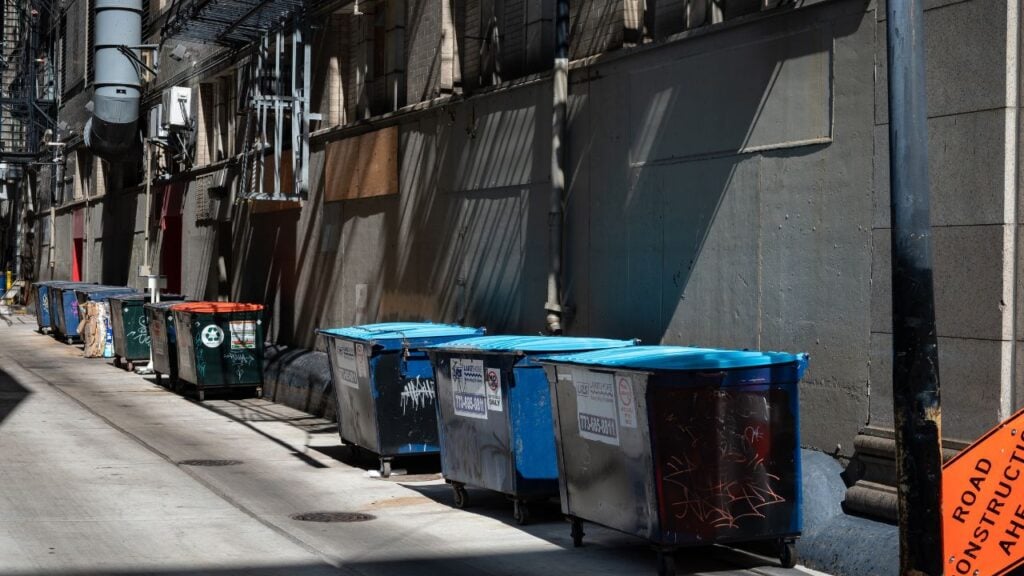
Chicago's alleys come with an actual rulebook, and one violation on the books can run into the hundreds of dollars.
Many residents break at least one of these rules without ever realizing it's a rule at all.
9 Chicago Alley Rules That Illinois Residents and Dumpster Divers Get Wrong
The 10 Most Missed 1950s Fashion Trends by Illinois's Older Generation

Getting dressed in 1950s Illinois meant more than grabbing a T-shirt, even for a quick grocery run.
Older Illinoisans still miss the poodle skirts, the sharp suits, and the gloves that used to finish off an outfit.
The 10 Most Missed 1950s Fashion Trends by Illinois's Older Generation
