
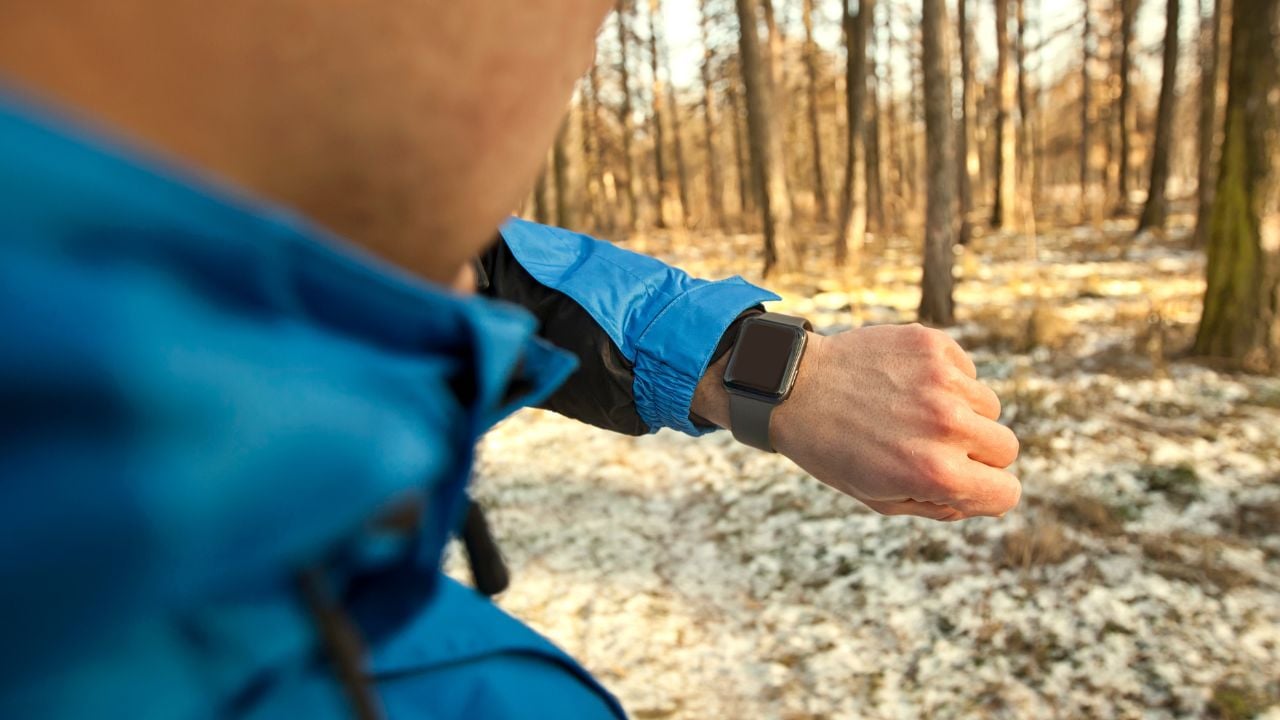
9 Fitness Tracker Numbers Coloradans Shouldn’t Take Seriously

Colorado reports the lowest rate of physical inactivity of any state in the country, with just 17.7% of adults skipping exercise altogether, according to the Centers for Disease Control and Prevention.
People log a lot of that movement on a wrist these days.
These are the fitness tracker numbers Coloradans shouldn’t take at face value.
Note: This is general information, not medical advice. Fitness tracker numbers can vary by device, so talk to a doctor about any health concern that worries you.
1. Calories Burned
Calorie counts from a fitness tracker look precise down to the single digit, but they’re rarely close.
Stanford researchers strapped seven different trackers, including the Apple Watch, Fitbit Surge, and Microsoft Band, onto 60 people who sat, walked a treadmill, and rode a stationary bike.
Six of the seven devices measured heart rate within 5%, a strong showing.
None of them came close on calories.
The best performer, the Fitbit Surge, still missed by 27%, and the worst device missed by a 93% margin.
Wrong number.
Apple Watch landed in the middle, missing by 40%.
No wrist sensor can measure a person’s metabolism directly, so it has to guess from heart rate and motion instead.
2. Your Daily Step Count
Daily step counts come from a fitness tracker reading wrist motion, not actual walking motion, and the two aren’t the same thing.
Push a stroller, a shopping cart, or a wheelchair, and a wrist tracker’s arm barely swings the way it does on an ordinary walk.
Researchers who compared five activity monitors against video footage found wrist-worn trackers undercounted steps by 35% to 95% during exactly those activities.
That’s a big gap.
Colorado already leads the country on movement, with only 17.7% of adults reporting no exercise outside work.
A lot of that activity happens exactly where a tracker struggles most, on trails, behind a jogging stroller, or pushing a cart through a grocery run.
3. Your Workout Heart Rate
Effort is what breaks a fitness tracker’s workout heart rate reading, even though it holds up fine at rest.
The American College of Cardiology has flagged wrist-worn monitors as less accurate than a chest strap.
Independent exercise-physiology researchers tested Fitbit’s PurePulse technology against a lab electrocardiogram (ECG) using a chest-strap monitor, running 43 subjects through a range of laboratory and treadmill exercises.
Above roughly 130 beats per minute, the readings swung as much as 24 beats off the ECG.
That gap led to a class-action lawsuit against Fitbit, which the company settled in 2019.
Effort throws it off.
Optical sensors read light bouncing through the skin.
Sudden arm motion, sweat, or a loose strap can scramble that signal during a hard set or a sprint.
4. Heart Rate Zone Percentages
Heart rate zones on a fitness tracker lean on an estimated maximum heart rate, and many trackers never measure it directly.
The default formula, 220 minus your age, comes from a 1971 rule of thumb aimed at a general population, not a test of the person wearing the watch.
A University of Colorado Boulder physiologist helped prove that formula wrong.
Douglas Seals and his research partners pooled decades of exercise data and found the old formula misses a person’s maximum heart rate by 10 to 15 beats per minute.
A guess, not a measurement.
That gap grows even wider with age.
The Math Behind Your Heart Rate Zone
A fitness tracker’s default heart rate zones plug a 50-year-old into the 220-minus-age formula for a 170 beats-per-minute max, with a “moderate” zone set around 119 to 145.
That number never came from a lab test of that 50-year-old.
It came from a decades-old formula applied to everyone the same way, no matter how fit or unfit someone is.
5. Blood Oxygen Reading
Few fitness trackers are cleared to deliver a blood oxygen reading the way an actual lab test is, even though the number on screen looks just as official.
The Food and Drug Administration (FDA) has warned that pulse oximetry, the light-based technology behind every wrist SpO2 feature, gets less reliable with movement, poor circulation, and skin pigmentation.
A study of several popular smartwatches found errors ranging from about 2% on the best-performing model to nearly 6% on the worst, tested against clinical equipment.
Elevation changes the baseline, too.
A healthy Denver resident typically reads in the low-to-mid 90s on a pulse oximeter, well under the high-90s a sea-level chart expects, a normal effect of high-altitude oxygenation.
Head up to Breckenridge or Leadville, and a normal reading drops further still.
That’s not a malfunction.
Thinner air at elevation explains the lower number.
6. Sleep Stage Breakdown
A fitness tracker generates a sleep stage breakdown, the neat pie chart of light, deep, and rapid eye movement (REM) sleep.
That breakdown is the least trustworthy part of the whole sleep report.
Wearables are good at the basic question of asleep versus awake, right 85% to 95% of the time compared with a clinical sleep study.
Splitting that sleep into stages is a different problem.
Accuracy on light, deep, and REM sleep drops to somewhere between 60% and 85%.
Staging is the hard part.
A wrist tracker has no way to read brain waves the way a sleep lab’s electroencephalogram (EEG) does.
Different brands miss in different directions, too.
Fitbit has tended to overestimate light sleep and underestimate deep sleep, while Apple Watch does well spotting REM sleep but struggles with deep sleep.
Psst! How much do you know about what your fitness tracker is telling you? Guess each one, then tap to see if you’re right.
7. VO2 Max Score
VO2 max promises a lab-grade fitness number without the lab, at least on paper, and a fitness tracker’s estimate rarely delivers it that cleanly.
It’s an estimate built from heart rate, pace, and age, and it can miss by a wide margin.
Individual readings can run 10% to 15% off a true lab test that measures the gas a person breathes.
The error isn’t random, either.
Research on Apple Watch’s estimate found it tends to lowball fit people and inflate the number for people who rarely exercise.
The same VO2 max score can mean two very different things on two different wrists.
8. Stress and Energy Scores
A fitness tracker’s stress score and energy or “Body Battery” readout sound clinical, updating throughout the day, but no outside body has ever validated the formula behind them.
Companies that sell these scores don’t publish the math, so nobody outside the building can check it.
A 2025 study that tracked 781 college students wearing a Garmin device for three months compared their self-reported stress against the watch’s stress score.
Barely any match.
The energy or fatigue score fared only a little better, with researchers measuring just a weak statistical link to how tired people said they felt.
9. GPS Pace and Distance
Global Positioning System (GPS) accuracy on a fitness tracker depends heavily on terrain, even though the pace and distance numbers look exact to the hundredth of a mile.
Instrument testing on eight sport watches found overall distance error ranging from 3.2% to 6.1%, with one watch narrowing to under 1% in the study’s wide-open, obstruction-free test course.
Move under tree cover or between tall buildings, and that error can rise toward 8.9%.
Bad signal, worse math.
That’s enough to turn a genuine 5-mile run into a watch that reads well over 5.4.
Canyon walls and dense conifer forest block a clean line to the satellite, the same problem tall buildings cause downtown.
A lot of Colorado’s best trails run through exactly that kind of cover.
The pace number on the screen moves even when the runner’s actual effort doesn’t.
17 Everyday Moves That Improve Balance as Coloradans Age

Balance isn’t something to take for granted as the years add up, and it shapes everything from taking the stairs to catching yourself after a stumble.
None of the moves on this list need a gym membership or fancy equipment, just a few minutes worked into an ordinary day.
17 Everyday Moves That Improve Balance as Coloradans Age
10 Things Coloradans Are Told About Their State That Aren’t True

A hiker in Rocky Mountain National Park points at a distant summit and calls it the tallest peak in the state, and it isn’t.
Colorado carries a whole set of numbers and claims that people repeat so often they stop checking whether they’re true.
10 Things Coloradans Are Told About Their State That Aren’t True
