
9 Things Minnesotans Should Finish Outside Before the First Frost

The National Weather Service’s Twin Cities forecast office says the metro’s normal first freeze date is between October 1 and October 10 every fall.
That window has already opened this year.
These are the things Minnesotans should finish outside before the first frost lands.
1. Draining the Garden Hoses
A garden hose left connected to the spigot through Minnesota’s first hard freeze usually costs its owner a repair bill come spring.
The hose blocks water from draining back out of the pipe once the tap shuts off.
That trapped water freezes, expands, and can split the pipe behind the wall, and nobody notices until spring.
Disconnect every hose, drain it by lifting both ends, and coil it somewhere it won’t sit in a puddle.
A cheap reel from Fleet Farm or the hardware store keeps the coil off frozen concrete until it comes back out in April.
2. Shutting off Outdoor Faucets
Homes built before frost-free spigots became standard still route an exposed pipe straight to an outdoor faucet, with no drain-back built in at all.
Those older faucets need the homeowner to do the job a frost-free spigot handles on its own.
Find the interior shutoff valve, usually in the basement or a crawl space near where the pipe leaves the house, and close it before the first hard freeze hits.
Then open the outside faucet and let the line drain completely.
That’s the whole trick.
Skip it, and the pipe freezes and bursts instead, something homeowners usually only discover once the wall around it turns spongy.
Why Closing the Valve Alone Isn’t Enough
A Minnesota home’s interior shutoff valve controls the water supply, but a stretch of pipe still runs between that valve and the outdoor faucet.
Closing the valve only solves half the problem if that stretch of pipe can’t drain completely once the water’s off.
A hose left connected blocks that drain-back and traps water inside the pipe for the whole first freeze.
That trapped water splits the pipe from the inside, and the leak usually doesn’t show up until someone turns the water back on in spring.
3. Bringing in Tender Potted Plants
A tender potted plant, like a hibiscus or a geranium that spent all summer on a Minnesota deck, cannot survive a single frosty night below 32 degrees.
A light frost kills the leaves outright, and the plant rarely recovers even when someone rushes it inside the next morning. There’s no fixing that after the fact.
Bring tender plants in before the temperature drops, not after.
A trip to Bachman’s or another local garden center for a sheet of frost cloth buys an extra week or two outside.
That covers anything too big to carry, like a potted Japanese maple.
Everything else, the hibiscus, the succulents, the herb pots by the back door, needs an actual spot inside.
A tarp tossed over the pot at 10 p.m. isn’t the same thing.
4. Harvesting the Last Vegetables
Gardeners still have tomatoes, peppers, and squash ripening in late September, and every one of them turns to mush the first night the temperature drops below freezing.
The National Weather Service‘s Twin Cities office puts that metro’s normal first-freeze window at October 1 to October 10.
Gardeners outside the metro are working on a shorter clock: The same office lists St. Cloud and Eau Claire’s window as September 21 to September 30.
That’s up to two weeks earlier than the Twin Cities’ own window, so anything still ripening there needs picking that much sooner.
Warm-season vegetables carry no frost tolerance at all.
One cold night.
That’s all it takes.
Pick everything with even a hint of color, including green tomatoes, and let them finish ripening on a sunny windowsill instead of on a dead vine.
Basil goes first among the herbs, since it blackens at the first hard chill even before a true frost arrives.
Cut it, freeze it in oil, or turn it into pesto before that happens.
5. Winterizing the Sprinkler System
An in-ground sprinkler system in a yard runs against the same first-frost deadline as the garden hose, only with a lot more pipe at stake.
Water left inside the lines after the last watering freezes and expands inside the valves, the backflow preventer, and every sprinkler head buried in the yard.
A cracked valve isn’t cheap to dig up and replace.
Many irrigation companies book their fall blowouts from mid-September through late October, before the ground itself starts to freeze.
A compressor forces the water out of every line, whether the system runs Rain Bird, Hunter, Toro, or another brand of head.
Book it early.
Those appointment slots disappear fast once the first hard freeze makes the local news.
6. Draining the Rain Barrel
Rain barrels left outside don’t hold up well against ice.
Water expands by roughly nine percent as it freezes, and a full plastic barrel has nowhere for that extra volume to go. The seams split first.
Drain the barrel completely, disconnect it from the downspout, and leave the spigot open so any last bit of rainwater can run out instead of sitting and freezing.
An empty barrel can ride out winter outside, but many people flip theirs upside down or move it into a garage just to be safe.
7. Emptying Ceramic Planters
Ceramic and terra cotta planters left outside crack for the same reason a rain barrel does, just on a smaller scale.
Wet soil inside the pot freezes solid and expands against the container walls until something gives, usually right through the side.
Empty the soil, hose out the pot, and store it somewhere dry, a garage shelf or a shed, rather than leaving it standing outside full through the winter.
Plastic and resin pots shrug off the cold.
Ceramic, terra cotta, and concrete don’t, and a cracked planter never patches back together in spring.
8. Draining the Water Feature
Backyard ponds and patio fountains often keep running until frost turns the water around them to slush, and that timing works against the pump.
A pump left sitting in the water, or one still full when the temperature drops, can crack its housing and ruin the seals inside.
Remove the pump before that happens, clean it, and store it somewhere it won’t freeze.
A bucket of water in the basement keeps the seals from drying out over the winter.
Drain the rest of the feature, clear out the dead leaves and plant debris, and cover what’s left with a tarp or a pond net for the season.
Psst! How much do you know about frost, freezes, and yard care across America? Take our quiz and see how many you can get right.
Quiz
Frost & Freeze IQ
Answer these questions on frost, freezes, and yard care across America. We bet you can’t get them all right. Prove us wrong?
What is the coldest temperature ever officially recorded in the United States?
9. Storing the Patio Furniture
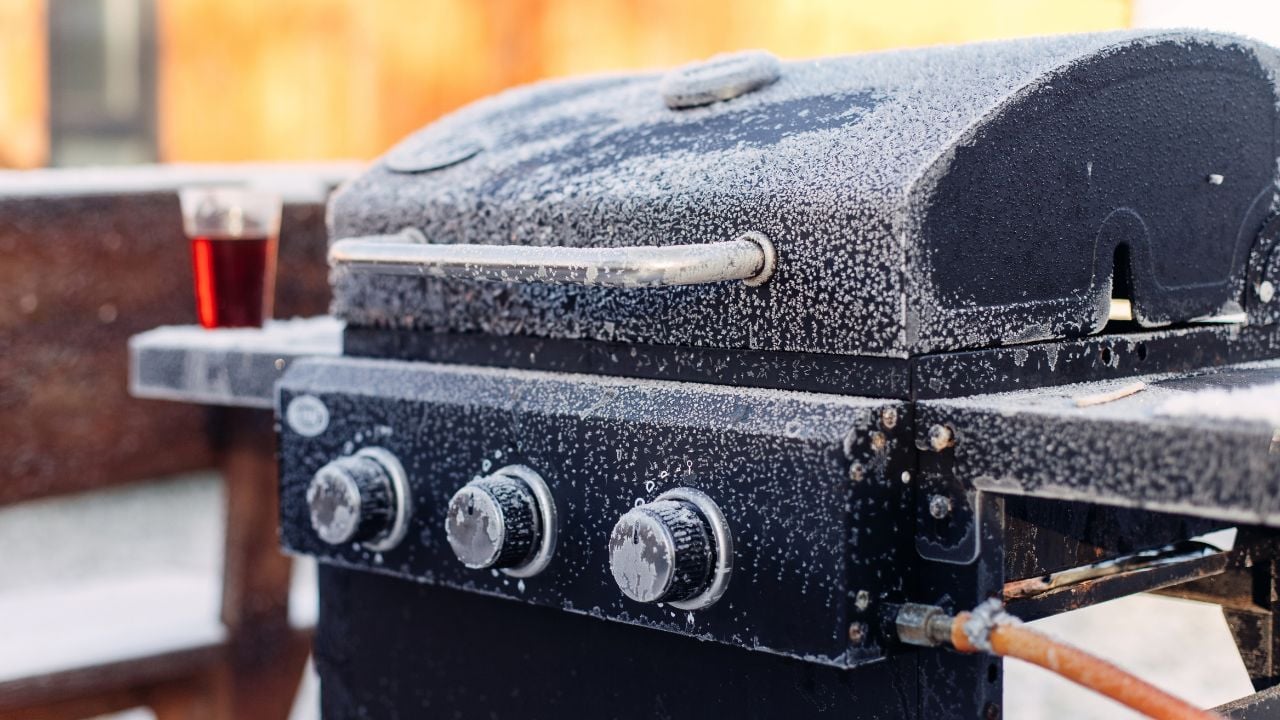
Patio cushions and grills left outside through winter take on more damage from repeated freezing and thawing than a single frigid January night ever does.
Moisture trapped inside cushion foam freezes, thaws, and freezes again, and the foam breaks down a little more each time.
Ruined by spring.
Get cushions inside before the first frost hits, not after a month of soggy nights has already ruined them.
A dry garage shelf or a storage bin with a lid both work fine.
A Weber or similar grill left uncovered collects rain and snowmelt in the burner tubes and drip pan.
That water freezes and thaws right along with everything else outside, rusting parts from the inside.
Disconnect the propane tank and store it upright outside in a shaded, ventilated spot, never in the garage or basement.
Cover the grill itself, or better, roll it into a shed or garage where Minnesota's freeze and thaw cannot touch it until the burgers come back out in the spring.
9 Signs You Grew Up in Minnesota, No Matter Where You Live Now

More than 810,000 Minnesotans claim Norwegian ancestry, more than any other state in the country.
That number shows up everywhere from church basements to hockey rinks, and it's why so many kids grow up saying uff da before they even know what it means.
9 Signs You Grew Up in Minnesota, No Matter Where You Live Now
8 Hy-Vee Fuel Saver Mistakes That Cost Minnesota Shoppers at the Pump
A free card that knocks cents off gas sounds like the easiest money in Minnesota, and Hy-Vee's Fuel Saver + Perks card can trim a family's bill.
Get it wrong on a program that's far from perfect, though, and Hy-Vee keeps that discount instead of your tank.
8 Hy-Vee Fuel Saver Mistakes That Cost Minnesota Shoppers at the Pump
