
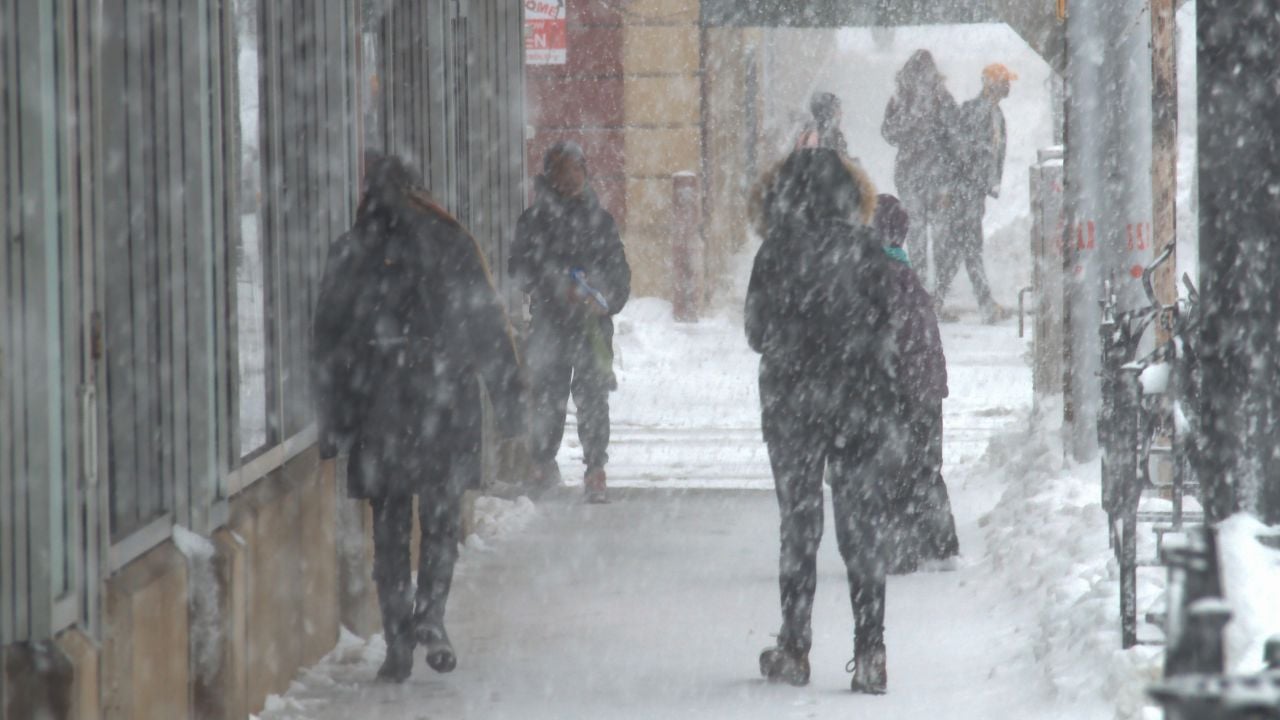
The Blizzard of ’78 Buried Ohio for Days. 7 Things Ohioans Who Lived Through It Still Talk About

Ask an Ohioan who lived through the Blizzard of ’78 about it, and the stories don’t stop.
Everyone has a personal story.
Here’s what Ohioans who lived through the Blizzard of ’78 still talk about.
1. Ohio Turnpike Shutdown
During the Blizzard of ’78, the entire length of the Ohio Turnpike closed for the first time in its history.
If you needed to get across northern Ohio, the turnpike wasn’t an option.
Interstate 75 stayed closed for three days.
A portion of Interstate 475 near Toledo stayed shut for six days.
Those closures left many areas short on food.
The Red Cross and armed forces stepped in to help distribute it.
2. Closed Schools, Airports and Roads
The Blizzard of ’78 shut down Ohio’s transportation, business and industry for at least two days.
Normal life took five days to return.
Officials closed nearly all schools on Jan. 26, which kept children from being stranded at school or on buses.
Ohio schools didn’t reopen until early the following week.
If you were counting on a flight, the airports in Cleveland and Toledo didn’t reopen until Saturday.
That Saturday, state roads were still closed in half of Ohio counties.
In many communities, a snowplow sat at each fire station to clear the snow ahead of the fire truck.
3. Record-Low Pressure
Air pressure at Cleveland fell to 28.28 inches during the Blizzard of ’78, the lowest ever recorded in Ohio.
The National Weather Service in Wilmington says that reading remains the state record.
It ranks among the lowest readings on record in the mainland United States for a storm that wasn’t a hurricane.
Akron-Canton fell to 28.33 inches and Youngstown to 28.39.
If you lived in Columbus, Dayton or Cincinnati, your city set a station record for the lowest sea level pressure on Jan. 26.
Weather stations in the storm’s path had to readjust their barographs because pressure fell below the first chart scale.
What the Blizzard’s 28.28 Measures
The Blizzard of ’78 reading at Cleveland was a measure of air pressure, given in inches of mercury.
That unit is the height of a column of mercury, so if you picture a mercury barometer, Cleveland’s reading meant a column 28.28 inches tall.
Weather stations convert their readings to what they would show at sea level, so a city’s elevation doesn’t skew the number.
Standard air pressure at sea level is 29.92 inches, which puts the Blizzard of ’78 reading about 1.64 inches below it.
4. Wind and a Temperature Plunge
Cleveland Hopkins Airport recorded peak gusts of 82 mph during the Blizzard of ’78.
Akron recorded 75 mph, and Dayton and Columbus each reached 69.
Blizzard conditions reached Cincinnati around 1 a.m. on Jan. 26.
By 7 a.m., you’d have found them in Cleveland, too.
The cold hit fast.
Temperatures fell 30 degrees in two hours as the arctic cold front arrived.
Snow totals in two of Ohio’s largest cities ranged from 4.7 inches in Columbus to 6.9 in Cincinnati, but the gusts still heaped the snow into drifts.
Psst! How much do you know about Ohio’s weather records? Take our quiz and see if you can ace it.
Quiz
Ohio Weather IQ
Answer these questions on Ohio’s weather records and historic storms. We bet you can’t get them all right. Prove us wrong?
What’s the lowest temperature ever recorded in Ohio?
5. Drifts That Buried Semitrucks
Snowdrifts as deep as 25 feet in places covered cars and houses during the Blizzard of '78.
Many people who lived through it still bring up those drifts.
If you were in northern Ohio, the National Weather Service says drifts were tall enough to bury whole semitrucks.
Cars in Vandalia were buried up to their rooftops.
One car in Kettering stayed buried for over a month.
A Cleveland truck driver was trapped in his cab for more than five days in a huge drift.
6. National Guard Call-Up
The Ohio National Guard called more than 5,000 soldiers and airmen to state active duty during the Blizzard of '78.
Gov. James A. Rhodes called for assistance to all 88 counties.
If you were stranded in your car, the Guard had 800 vehicles and 45 helicopters in service to evacuate motorists like you, deliver supplies and remove snow.
The National Weather Service says helicopters were often the only way to rescue people with medical emergencies.
Ohio Memory says armories sheltered more than 1,300 people the first night.
The response lasted 11 days.
The Adjutant General's March 1978 report compared the immobilization to a statewide nuclear attack.
7. Milk Dumped on Farms
Agricultural losses from the Blizzard of '78 totaled around $73 million in Ohio.
That figure covers dead livestock, lost production, property damage, and milk and egg losses.
If you ran a modern dairy farm where the electricity had failed, you couldn't use your milking machines.
Ohio farmers dumped more than 90% of the state's daily milk production on Friday, Jan. 27, when storage and transport weren't available, according to the National Weather Service in Cleveland.
How the Blizzard Started
The Blizzard of '78 began when two disturbances high in the atmosphere merged, one over Texas and one over the Northern Plains.
The National Weather Service calls that kind of merger relatively rare.
That merger made a low-pressure system moving north from the Gulf Coast into Kentucky and Ohio strengthen very rapidly.
Wednesday evening, Jan. 25, brought rain and fog across the region, with temperatures generally in the 30s and 40s.
If you checked the forecast that night, blizzard warnings were already out for much of the region.
On Jan. 26, visibility was near zero for much of the day and even into the 27th.
8 Ohio Town Names Locals Pronounce in a Way That Trips Up Everyone Else

Reading a map of Ohio out loud can earn you a few strange looks.
The spelling on the sign isn't always a reliable guide, so here are the town names worth practicing before your next chat with a local.
8 Ohio Town Names Locals Pronounce in a Way That Trips Up Everyone Else
13 Things Ohioans Do at a Tailgate That Confuse Everyone From Out of State
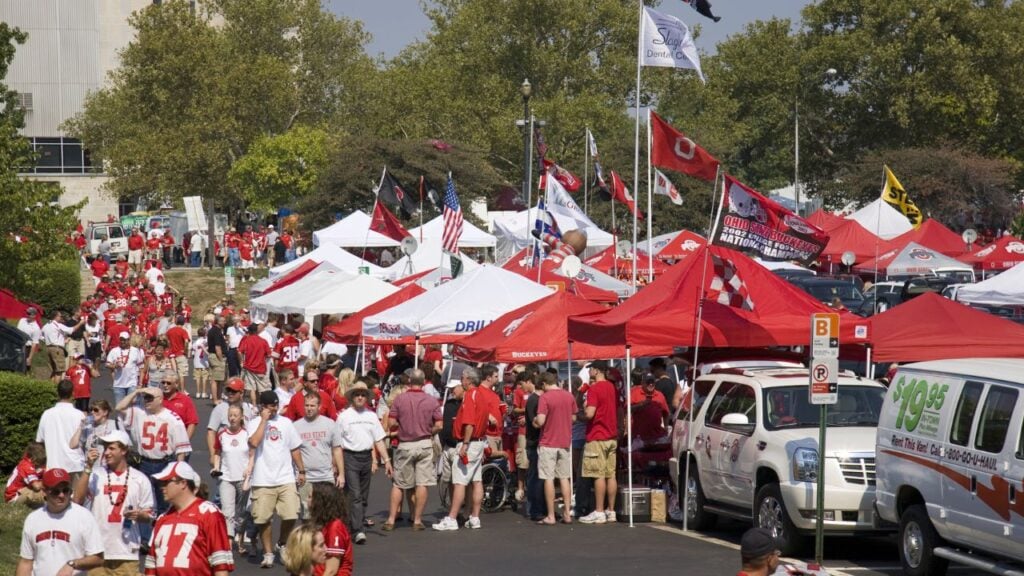
Tailgating needs only a parking lot, a game and something on the grill.
Ohioans often take it further, and fans from other states don't always know what to make of it.
13 Things Ohioans Do at a Tailgate That Confuse Everyone From Out of State
