
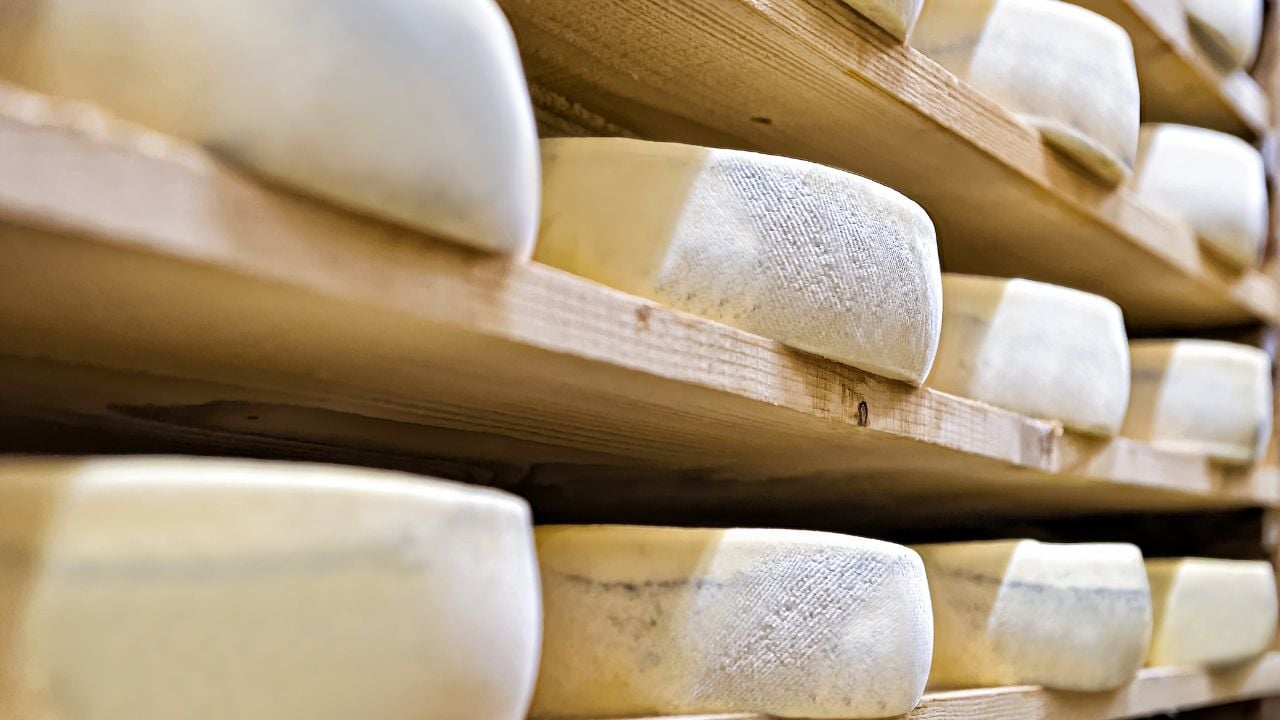
5 Vermont Cheddar Rules Vermonters Won’t Bend

The Vermont Cheese Council says the state’s cheesemakers won 33 medals at the 2025-2026 World Cheese Awards in Bern, Switzerland, and two of them went to cheddar alone.
None of that happens by accident.
These are the Vermont cheddar rules Vermonters won’t bend.
1. the No-Annatto Standard
Cheddar comes out of the vat pale, and many of the state’s cheesemakers keep it that way.
That’s a choice, not an accident.
Many Wisconsin cheesemakers add annatto, a seed extract, to turn their cheddar orange and keep the color identical batch after batch.
One Wisconsin producer even makes the same cheddar two ways, orange some days and pale on others, and the orange curds outsell the pale curds by four to one.
Vermont skips the dye.
Whatever color a wheel turns out comes from the cows’ feed, not a bottle.
A block made from summer grass can look a shade more golden than one made from winter hay.
Pick up a white or pale-straw block at a creamery, and it’s cheddar with nothing added but salt, culture, and rennet.
2. Unwashed Curd
Vermont cheddar carries a sharper, sometimes almost sulfuric edge that cheese professionals have a name for: The “Vermont bite.”
That comes partly from skipping a step many Wisconsin plants use, washing the curd.
Washing rinses out some of the lactose and acid partway through the make.
It mellows the tang into a milder wheel.
Many of the state’s makers skip it.
The acid stays in the curd, and the cheese ages into something sharper.
Cheesemonger Gordon Edgar and others in the trade credit that acid for giving Vermont cheddar its identity.
Add the raw-milk tradition, still common at small creameries across the state, and the flavor becomes even harder to copy somewhere else.
What “Washing the Curd” Means for Vermont Cheddar
Vermont cheddar gets its edge from skipping a cheesemaking step called washing the curd.
Washing means running warm water through the curd partway through the make, the same step that turns cheddar’s base into Colby, its milder, sweeter cousin.
Vermont cheddar makers who skip that wash keep more lactose in the curd for the bacteria to convert into lactic acid.
That acid is the source of Vermont cheddar’s bite.
3. Sharpness by the Month
Cheddar makers don’t slap “sharp” on a label just because it sounds strong.
Cabot Creamery, the farmer-owned co-op founded in 1919, sets every sharpness level by an exact count of aging months.
Months, not vibes.
Mild ages 2 to 3 months.
Vermont Sharp runs 7 to 9.
Extra Sharp and Seriously Sharp both clear a year in the aging room, and the co-op’s reserve wheels can age up to 10 years before release.
Grafton Village Cheese, another well-known Vermont creamery, sells cheddar aged 1 year, 2 years, and a 30-month reserve.
The age goes right on the label instead of a vague “aged” claim.
Two of Vermont’s medals at the World Cheese Awards went to cheddar alone this year, Cabot Alpine Cheddar and Cabot Vintage Choice Cheddar, both graded under that same month-by-month system.
Psst! How much do you know about Vermont cheddar? Tap through these myth-or-fact cards and see how many you get right.
4. Cloth-and-Lard Aging
The state’s best-known cheddar skips the plastic bag and ages under cloth and lard instead.
Cabot ships its young curd north to Jasper Hill Farm in Greensboro, where the Cellars coat each wheel in lard and wrap it in cheesecloth.
The wheels then sit in a climate-controlled cave for 9 to 14 months, brushed and turned by hand the entire time.
That’s cloth-and-lard aging, an English technique most factory cheddar dropped once vacuum-sealed plastic took over.
The lard coat keeps the rind from drying out while still letting it breathe, and a sealed plastic bag can’t do that.
Time does the work.
The same Cellars picked up a Super Gold, five Silvers, and a Bronze across their lineup at the 2025-2026 World Cheese Awards, proof the patience pays off.
5. the Sixty-Day Wait
Vermont’s raw-milk cheddar makers answer to a federal clock they can’t set themselves.
Under federal law, any cheddar made from milk that hasn’t been pasteurized has to cure for at least 60 days at 35 degrees Fahrenheit or warmer.
Nobody can sell it before that clock runs out.
No exceptions.
No early release, no matter how good a wheel tastes on day 40.
The wait gives naturally occurring bacteria time to die back to a safe level, which is the whole reason the clock exists.
Small Vermont creameries that still make raw-milk cheddar, built on the idea that unpasteurized milk carries more flavor, plan their entire release schedule around that 60-day floor.
Crowley Cheese in Mount Holly is believed to be the oldest cheese factory still operating in the country, and it still makes its cheddar from raw milk today.
Every batch answers to that same 60-day rule before it ever reaches a store shelf.
The clock doesn’t bend for a good batch.
A State Crowded With Cheesemakers
The state backs its cheddar standards with sheer density.
The state is home to more than 60 licensed cheesemakers producing upwards of 225 varieties of cheese, according to Farm to Plate, Vermont’s food-system tracking initiative.
That works out to roughly one cheesemaker for every 13,000 Vermonters, more state-inspected cheese producers per capita than any other state in the country.
One cheesemaker, 13,000 neighbors.
The Vermont Cheese Council, the trade group that keeps track of who’s making what, started in 1997 with 19 founding members.
Cheesemaking now brings in more than $657 million a year for the state, a figure that keeps small producers competitive against national brands.
That founding roster has grown to more than 40 member creameries today.
The Council maps them on its Vermont Cheese Trail, a self-guided route that sends visitors from one creamery’s door to the next.
Every fall the Council also runs the Vermont Cheesemakers Festival at Shelburne Farms, pulling producers from across the state into one room to pour and sell side by side.
9 Vermont Foods and Drinks That Make Visitors Regret Asking What’s in Them
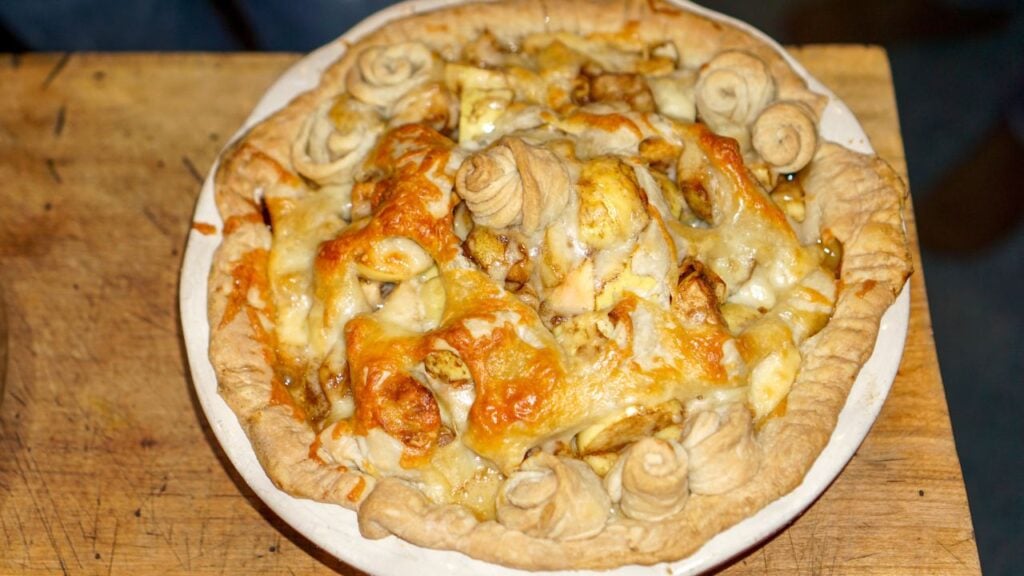
Vermont wrote a law in 1999 about what’s supposed to sit beside a slice of apple pie, and it has nothing to do with crust.
It sounds unappetizing to other Americans, and it’s far from the only Vermont food or drink that catches an out-of-stater off guard.
9 Vermont Foods and Drinks That Make Visitors Regret Asking What’s in Them
21 Old-School Skills Vermont Baby Boomers Have That AI Is Obliterating

Vermont baby boomers learned everything on chalkboards, encyclopedias, and overhead projectors, and none of it lived on a phone.
Artificial intelligence has caught up to many of the skills that took them years to build, and some of the losses are bigger than they sound.
21 Old-School Skills Vermont Baby Boomers Have That AI Is Obliterating
