
7 Reasons a Colorado Retirement Costs More at Altitude Than Retirees Expect

Colorado’s Division of Insurance expects health insurance premiums in the state’s mountain counties to rise by nearly 40% in 2026, well above the 28% statewide average.
That’s before a single moving truck arrives.
Elevation adds a cost to nearly every bill a Colorado retiree assumes is fixed.
These are the reasons a Colorado retirement costs more at altitude than retirees expect.
Note: This is general information, not financial, tax, legal, or insurance advice. Rates, rules, and dollar amounts are subject to change.
1. Building at 9,000 Feet
Mountain towns turn a retiree’s ordinary remodel into a logistics problem before the first stud goes up.
A Colorado design-build firm puts production homes in the Denver area at $150 to $180 a square foot.
A custom build in Vail or Aspen runs as high as $800 a square foot.
That’s roughly four to five times over.
Altitude has a price.
Crews haul lumber and concrete up narrow mountain roads that close for days in a bad storm, and heavier snow-load framing adds engineering costs a flatland build never carries.
A retiree planning a simple one-level remodel in Summit County pays mountain prices for that convenience, not Denver prices.
2. Insurance in Wildfire Country
Colorado launched a property insurer of last resort in April 2025, after private insurers started declining coverage across the state’s high-wildfire mountain and foothill areas.
The state calls it the Fair Access to Insurance Requirements Plan, or the FAIR Plan for short.
Three private insurers have to turn a homeowner down before the state plan will even take an application.
Only then does help arrive.
That risk rises with elevation: The forested, hard-to-reach terrain insurers price against sits mostly on mountain slopes, far from the nearest hydrant or fire station.
Retirees drawn to a forested Colorado hillside for the view are often moving toward exactly the terrain that pushed a previous owner’s insurer out of the county.
What Colorado’s FAIR Plan Pays
Colorado’s FAIR Plan doesn’t rebuild a home to its old condition. It pays actual value, which subtracts wear and depreciation from the payout.
A traditional homeowner’s policy with replacement-cost coverage pays what it costs to rebuild today, with no depreciation subtracted.
A retiree who lands on the FAIR Plan after being turned down elsewhere should plan for that gap in cash, not a payout that matches a brand-new build.
3. Health Coverage on the Western Slope
Colorado’s health insurance premiums are rising statewide in 2026, and the Western Slope is set to see the steepest part of the cost increase.
The Colorado Division of Insurance traces the statewide 28% average increase to expiring federal subsidies and a cut to the state’s reinsurance program.
That cut trims the reinsurance program’s effectiveness by roughly 40%, and no single region drives the statewide number.
Western Slope premiums are still projected to rise as high as 38%, a full ten points above that statewide average.
Not a rounding error.
Colorado’s insurance commissioner, Michael Conway, has said the increases hit mountain areas, rural counties, and the Western Slope hardest.
The Steamboat Pilot & Today reports that Western Slope counties also have less competition among health care providers and fewer chances to share costs across hospitals.
That gap is part of why the region’s individual-market premiums rank among Colorado’s highest.
If you’re pricing a move to Steamboat Springs off a Denver quote, you’re pricing the wrong market.
4. Heat Beyond the Gas Line
The state’s natural gas network covers Denver, Boulder, and much of the Front Range, but it stops well short of the mountains.
Homes in foothill subdivisions and mountain communities heat with propane instead, fuel that a truck delivers along roads a storm can close overnight.
There’s no backup pipe underground.
The most recent measured statewide price, from the week of March 30, 2026, put propane at about $2.30 a gallon.
A mountain address still pays extra for the last few miles up a private road.
A flatland gas bill and a mountain propane bill aren’t the same number.
Psst! See how far a mountain retirement budget can stretch once you plug in the numbers.
5. Special Districts on the Tax Bill
Colorado’s property tax bill starts small at the county level, but a retiree’s mountain address often owes more than one taxing body on top of it.
The state’s Division of Local Government notes most special districts, the fire protection, water, and sanitation boards that levy a separate tax, sit on unincorporated land.
The city offers no cushion.
A homeowner outside city limits near Steamboat Springs or Telluride can end up paying county tax, a fire-district levy, and a water-district levy, all on the same bill.
A Denver condo owner never sees a bill like that.
Three taxing bodies, one bill: That’s what a county-rate estimate misses.
6. HOA Dues for Snow Country
Mountain homeowners associations (HOAs) and metro districts fund costs a flatland community never budgets for: Snowmelt systems, community water storage, and wildfire defensible-space upkeep.
Douglas County will match up to $25,000 toward a single home’s wildfire mitigation work through its 2026 cost-share program.
The county covers half.
The homeowner covers the rest.
A mountain HOA also plows every private road in the neighborhood after every storm, work a downtown HOA never has to do.
A plow truck clearing a private road before sunrise is what that dues line pays for.
7. Chains, Tires, and Fines
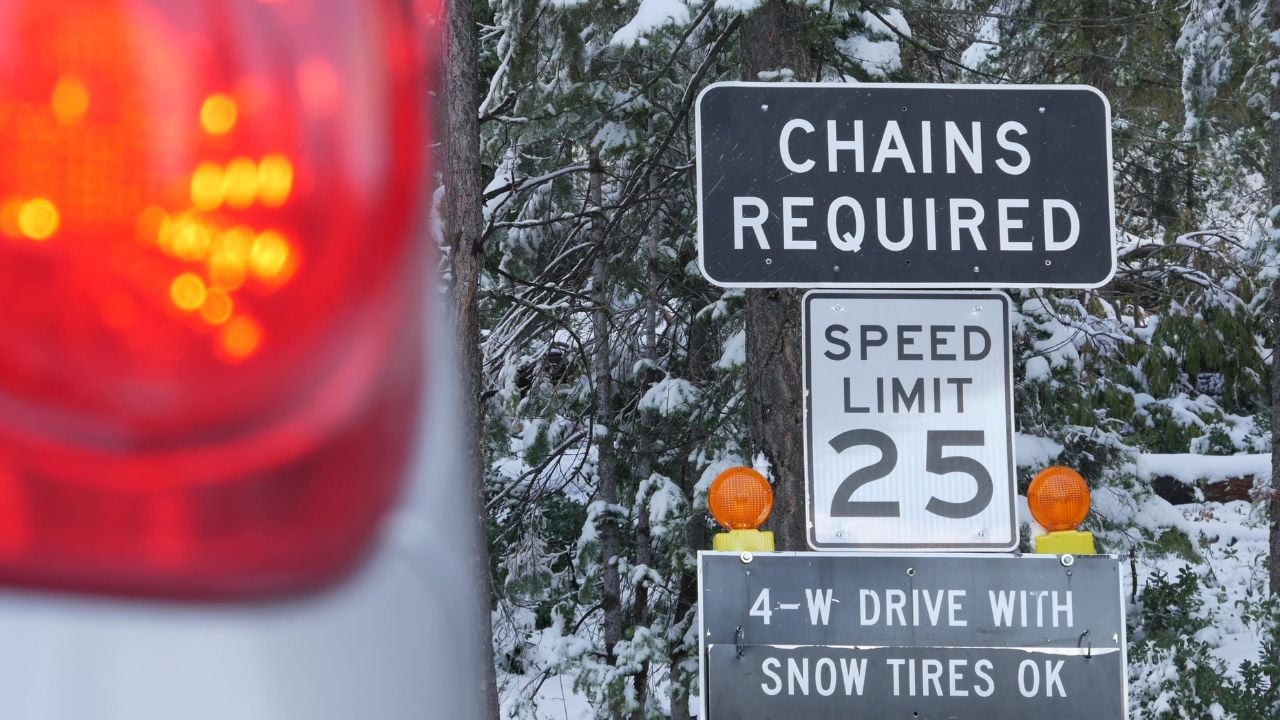
Colorado’s Traction Law covers every vehicle on the I-70 mountain corridor between Dotsero and Morrison from September 1 through May 31 every year.
Tires need at least 3/16 inch of tread and a winter, all-weather, or mud-and-snow rating, or the driver needs chains on two drive tires instead.
Skip it, and the fine runs $50 plus a $17 surcharge.
The fine rises to $1,000 plus a $157 surcharge if bad tires leave a vehicle stuck and blocking the road.
Tread costs less than fines.
Ordinary all-season tires don’t always qualify, so a retiree who never needed dedicated winter tires in Florida or Texas gets to buy a set now.
A four-wheel-drive sport-utility vehicle doesn’t get a pass either, unless its tires meet the same tread and rating rule.
The Budget That Falls Short
A Colorado retirement plan built on Fidelity’s 25th annual retiree healthcare estimate starts at $185,500 for a 65-year-old retiring in 2026, a figure built from national averages.
Fidelity’s same survey found 54% of pre-retirees think Medicare will cover all of their health expenses.
It doesn’t.
Medicare Part B alone carries a standard monthly premium of $202.90 in 2026, up from $185 in 2025, plus a $283 annual deductible before it pays a claim.
Long-term care isn’t part of that Fidelity estimate at all, and it’s the gap a mountain retirement budget can least afford to ignore.
8 Ways Out-of-Staters Break Buc-ee’s Etiquette Before They Reach the Brisket

Fresh, hot brisket over the loudspeaker sends half the store turning toward the counter inside a Buc-ee’s.
Regulars know the drill without thinking about it, and out-of-staters give themselves away before they even reach the register.
8 Ways Out-of-Staters Break Buc-ee’s Etiquette Before They Reach the Brisket
