
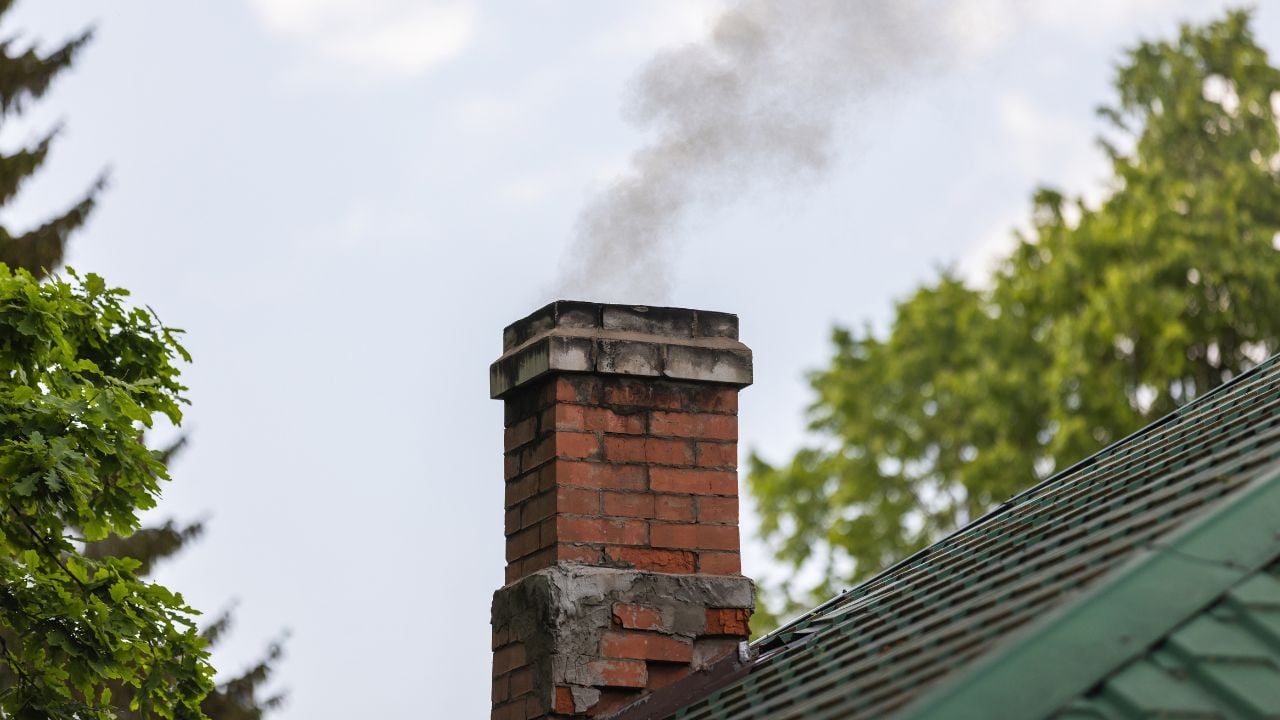
6 Chimney Mistakes That Can Start a House Fire in Maryland

Nationally, the National Fire Protection Association points to one factor behind more home heating fires than any other: Equipment nobody bothered to clean.
Often, that means the chimney.
And in Baltimore’s older rowhouse blocks, it’s common for two neighboring homes to share the wall their chimneys are built against.
These are the chimney mistakes that can start a house fire in Maryland.
1. Skipped Chimney Sweep
Skipping the chimney sweep is the easiest chimney mistake to make, and it happens more once the weather turns cooler.
The Chimney Safety Institute of America (CSIA) trains and certifies sweeps nationwide.
CSIA backs a standard many homeowners never hear about: A sweep should inspect your chimney and fireplace at least once a year.
That holds whether you used it constantly or barely touched it all season.
Roughly three in 10 home heating equipment fires trace back to a fireplace or chimney.
Fire researchers point to one cause ahead of every other behind those fires: A chimney nobody swept, and the creosote left behind because of it.
Creosote is the tar-like residue wood smoke leaves on the inside of your flue, and it’s flammable enough to ignite on its own.
That’s a chimney fire.
2. Wood That Never Dried
Wood that never fully dried is one of the fastest ways to load your chimney with creosote.
CSIA’s guidance is blunt: A home fireplace should only burn well-seasoned wood, never a green log cut and burned the same week.
The Environmental Protection Agency backs the same standard, telling homeowners to season wood for at least six months until its moisture content drops under 20 percent.
Green or wet wood burns cooler and throws off more smoke, and that smoke condenses into creosote faster than smoke from dry wood ever does.
Wetter wood means more residue.
If you grab a downed branch from your yard and burn it that same week, you’re doing exactly what a dirty chimney needs.
3. Missing Chimney Cap
A chimney cap that’s missing, cracked, or rusted through stops doing the one job it has: Keeping everything but smoke out of your flue.
CSIA names debris buildup and animal nests among the top causes of a blocked flue.
CSIA doesn’t stop at fumes.
The same guidance ties that kind of blockage directly to chimney fires, on top of the toxic gases a clogged flue can force back into your home.
A nest of dry twigs sitting inside a flue you still use is fuel, not decoration.
It just needs a fire hot enough to reach it.
4. What Never Belongs in the Fire
A fireplace that turns into a trash can is a chimney mistake Maryland fire officials have called out by name.
The Consumer Product Safety Commission (CPSC), the National Fire Protection Association (NFPA), and Maryland’s Office of the State Fire Marshal once ran a joint campaign on holiday fire hazards.
It warned that wrapping paper burned in a fireplace can flash: Thin, treated paper can ignite suddenly and burn intensely.
That kind of flash sends flue temperatures climbing fast.
CSIA describes exactly what sets off a chimney fire from there: Creosote already built up, and the flue suddenly hot enough to ignite it.
It’s never a safe shortcut.
The same campaign tracked holiday decorating injuries rising from 12,000 in one year to 14,000 two years later.
A dried-out Christmas tree carries a version of the same risk, since a tree that’s gone dry can catch and flare up far faster than a fresh one.
Cardboard, foam packaging, and plastic all burn dirtier and less predictably than seasoned firewood, and your fireplace was never built to handle any of it.
5. Cracks in the Flue
A cracked flue liner is a chimney mistake that hides in plain sight until an inspector points a flashlight right at it.
Montgomery County’s consumer protection office has spent years telling residents what a sweep should check every year.
Cracked masonry, poor draft, and broken sections of the flue are the warning signs.
CSIA’s fire-prevention guidance describes what a cracked liner sets up.
Thermal shock cracks tiles and displaces mortar, opening a path for flames to reach the wood frame behind your brick.
That framing doesn’t need direct flame to start smoldering.
It just needs time.
Once your chimney takes damage, a fire, a lightning strike, a bad storm, a routine glance from the firebox isn’t enough anymore.
You need a sweep willing to look at the whole flue before lighting the next fire.
Hiring a licensed contractor matters here, not just any handyman with a ladder.
Does Maryland License Chimney Sweeps?
Maryland’s Home Improvement Commission (MHIC) draws a clear line around chimney work.
A sweep who only cleans and inspects your chimney doesn’t need an MHIC license.
The commission’s FAQ says cleaning a chimney doesn’t count as home improvement.
That changes the moment a job turns into repair.
Building or reinforcing a chimney, or installing a cap, both count as home improvement work under Maryland law, so the contractor doing it needs an MHIC license.
6. Overloaded Firebox
An overloaded firebox is a chimney mistake that looks like efficiency and burns like the opposite.
Packing in extra logs to stretch out a fire’s burn time is a habit CSIA calls out directly as a cause of faster creosote buildup.
More creosote sitting inside a flue that’s already running hot is the same combination CSIA says results in a chimney fire.
Bigger doesn’t mean better.
Shutting the damper down partway once a fire’s roaring, to try to slow it, works against you the same way.
CSIA also lists restricted air supply among the habits that speed up creosote buildup.
A fireplace built for a steady fire was never built for a bonfire.
Psst! How fire-ready is your chimney setup right now? Run through this checklist and see where you stand.
A Shared Chimney Wall
A chimney built into or against a wall shared with the house next door carries a risk that has nothing to do with cleaning or dry wood.
In Baltimore’s older rowhouse blocks and similar construction across the state’s cities, two neighboring chimneys often sit directly against the same party wall, historic preservation accounts of the city’s rowhouses show.
Fire-service researchers, citing National Institute for Occupational Safety and Health (NIOSH) investigations, describe concealed voids inside party walls as a route smoke and flame travel between attached rowhouses.
That path exists whether or not a chimney sits on the wall in question.
Nobody smells it first.
A CSIA-certified sweep inspecting a chimney set against a party wall checks more than the flue you use.
That inspection covers the exterior masonry and mortar joints running the length of that shared stack.
A joint failure there opens a path toward the house next door as easily as toward yours.
A cracked mortar joint on a party-wall chimney rarely reads as an emergency from inside your living room.
It only shows itself once smoke or heat turns up on the other side of that wall, in a house whose owner never sees the chimney causing it.
8 Sunday Rules That Catch New Residents Off Guard

Every state hides at least one rule new residents never see coming.
It still decides which businesses get to open on Sundays and which ones don’t.
