
4 West Virginia Foods Nobody Makes Until It Gets Cold

Cold weather is easier to welcome when you know what’s coming out of the kitchen.
In West Virginia, some old family recipes feel as much a part of the season as reaching for your heavier coat.
These are the West Virginia foods families save for when it gets cold.
1. Leather Britches Beans
Leather britches beans start as whole green beans that gardeners string on thread.
Gardeners hang the strings to dry near a stove or in a warm attic, according to the West Virginia Encyclopedia.
Roane County, West Virginia, is home to the Fat Horse bean, one of several heirloom varieties.
Gardeners still dry Fat Horse, Turkey Craw, and Logan Giant beans into leather britches, per Explore Parts Unknown.
The garden empties long before the beans do.
The dried beans wait in a jar until the garden’s empty, and cold weather is when families finally take them down.
Then they get a long soak and an even longer simmer with a piece of fatback.
That slow simmer is the whole point, since a bean that spent months on a string needs hours, not minutes, to turn tender again.
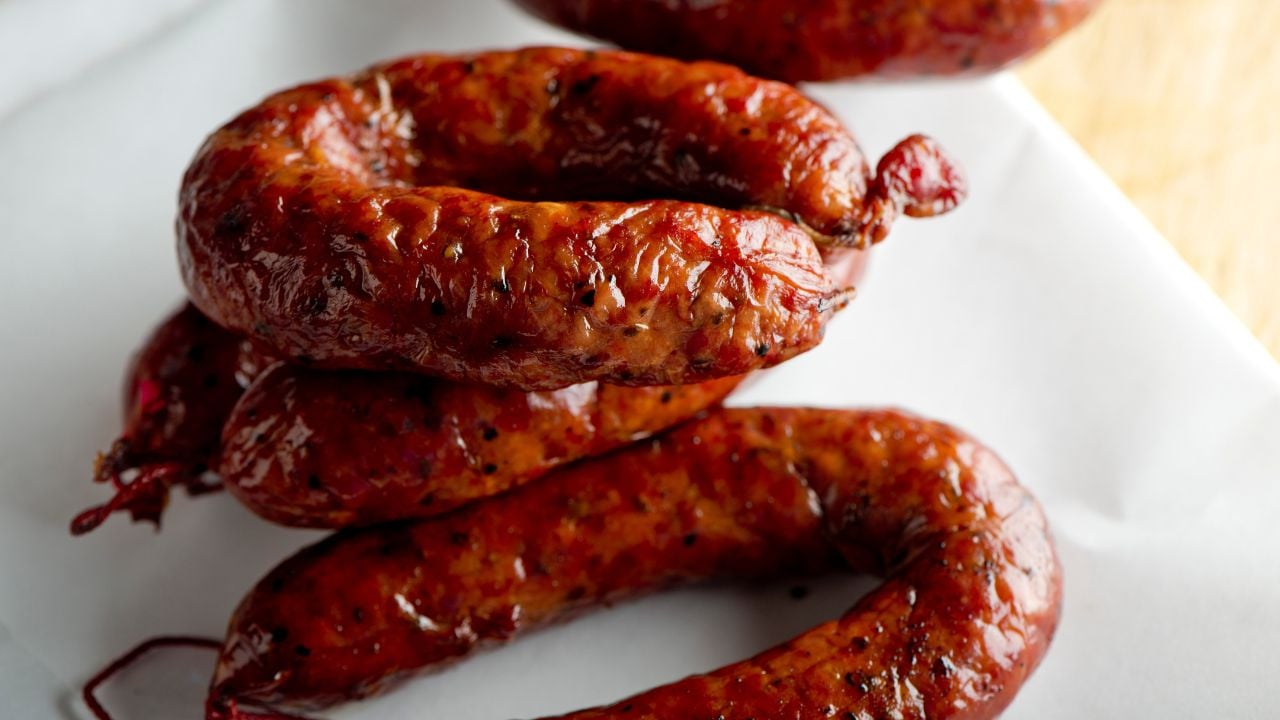
2. Hog-Butchering Sausage
Hog-butchering sausage waited on cold weather.
West Virginia farms wouldn’t butcher a hog until the cold moved in, typically holding off into late November, according to the West Virginia Encyclopedia.
The whole neighborhood showed up.
Men handled the butchering before dawn, and women spent the day cooking for a yard full of help.
By dark, the hog had become sausage, lard, souse, and scraps set aside for mincemeat, enough pork to carry one family through winter.
Why West Virginia Sausage Waited for Cold
West Virginia’s hog-butchering sausage waited for cold weather because a farm had no walk-in cooler, only the outside air.
A freshly killed hog has to cool fast, or the meat spoils before anyone finishes processing it.
A hard frost did that job for free, holding the meat near freezing while neighbors worked through the sausage and lard.
Electricity and home refrigerators took decades to reach many rural West Virginia counties, so the weather stayed the only reliable cooler on many farms.
3. Vinegar Pie
Flossie Hannah of Sedalia, West Virginia, shared a vinegar pie recipe with the Clarksburg Exponent decades ago.
A fresh lemon was hard to find in a rural mountain kitchen back then.
Vinegar stood in for citrus.
The pie belongs to a whole category cooks called desperation pies, built from vinegar, sugar, and spices.
Cooks reached for it once the cellar’s apple bin ran empty and no fresh fruit was left for a crust.
That timing lands in January or February, well after October’s apple harvest has come and gone.
4. Persimmon Pudding
A persimmon isn’t fit to eat until frost hits it, and the state’s food writers describe the change as harshness turning to sweetness overnight.
Pick a persimmon too early and it’s inedible.
Foragers go by frost, not the calendar.
Foragers wait for that first hard freeze on purpose, then gather the fallen fruit to mash into pulp.
The pulp goes into a dense, spiced pudding that tastes closer to a fall pie than a cake.
No amount of impatience speeds it up, since a persimmon picked before the cold arrives isn’t the same fruit.
Psst! How much do you know about West Virginia’s food history? Take our quiz and see how many you can get right.
Quiz
West Virginia Food IQ
Answer these questions on West Virginia food history and traditions. We bet you can’t get them all right. Prove us wrong?
Which Fairmont, West Virginia, bakery is credited with inventing the pepperoni roll in 1927?
Buckwheat Cakes
Buckwheat cakes stay on kitchen tables long after the fall festivals end.
Randolph County churches and lodges host weekly buckwheat feeds all the way from fall to spring, according to West Virginia University's Food Justice in Appalachia project.
They taste nothing like pancakes.
Kingwood, West Virginia, has run its Buckwheat Festival every fall since 1938.
Preston County still mills the flour locally at the Hazelton Mill each festival season, even though the buckwheat itself now comes from elsewhere, per the West Virginia Encyclopedia.
The cakes themselves outlast any one weekend, served hot with butter, sausage gravy, or a spoonful of apple butter clear into the cold months that follow.
Soup Beans and Cornbread
Soup beans and cornbread turn up on tables once the weather turns, a pairing the state's food writers call a winter staple.
Travel writers send visitors straight to soup beans and cornbread at West Virginia's New River Gorge.
Garden & Gun calls it the meal no trip through the state is complete without.
West Virginia's Public Broadcasting service traced the tradition to family kitchens in Wayne County.
A pot of beans and a skillet of cornbread carried those households through the state's leanest years.
Families reach for this pot once winter weather sets in.
Beans and cornbread got people through decades when store-bought groceries were scarce, and a single pot could stretch across a whole week of suppers.
Cold weather is what turns a pot of soup beans from an occasional dinner into a fixture on the stove for months at a stretch.
Apple Butter Kettles
Apple butter follows the fall apple harvest, not the calendar's cold turn.
Berkeley Springs has lit its kettles every Columbus Day weekend since 1973, according to the West Virginia Encyclopedia.
Cooks set the date by the harvest, not the weather.
A tomato festival came first, before apples took over the event in 1973.
Volunteers still cook the apple harvest down the old way, stirring cider and chopped apples over an open fire for hours until the batch turns dark and spreadable.
The tradition runs on the apple harvest's schedule, arriving every October whether or not the air outside has turned cold yet.
New Year's Kraut
New Year's kraut on West Virginia tables traces back to a Pennsylvania Dutch custom, according to Pennsylvania's public broadcasting service.
The same custom shows up across Appalachian and Mid-Atlantic kitchens too, not just in West Virginia.
Local families borrowed the custom more than they invented it.
Households that keep the custom put a pot of kraut and pork on the stove every New Year's Day.
The custom works as a good-luck ritual, not a regular Tuesday dinner.
Cabbage comes out of the ground every fall, and it takes weeks in a crock to ferment into kraut.
By New Year's Eve, the crock has had all the time it needs.
8 Sunday Rules That Catch New Residents Off Guard
Every state hides a Sunday rule or two that catches new residents off guard, since blue laws written decades ago haven't gone anywhere in a lot of places.
Some exemptions still hinge on whether a business happened to be open on one exact date, which is a strange way to run a rulebook today.
