
8 Rural Water Rules That Catch Nevada Homeowners Off Guard

The Nevada Division of Water Resources caps every domestic well in the state at two acre-feet of water a year, about 651,700 gallons.
If you go over that cap or skip the paperwork for your well, the state has legal ways to stop you from pumping.
These are the rural water rules that catch Nevada homeowners off guard.
Note: This is general information, not legal advice. Water rights and well-drilling rules are subject to change, so confirm the current requirements with the Nevada Division of Water Resources.
1. New-Well Ban
Nevada’s State Engineer, the official who oversees water rights statewide, banned new domestic wells across the Pahrump Basin in December 2017.
A local water company challenged the order.
A Nye County district court sided with the company in December 2018, ruling that the State Engineer lacked the authority to impose the ban.
The Nevada Supreme Court reversed that ruling in 2021, in Wilson, P.E. v. Pahrump Fair Water, LLC, and put the ban back in force.
The ban held.
The rule works the same way it did before the lawsuit.
No new domestic well goes in unless the owner relinquishes an existing water right of at least two acre-feet to the state first.
Nye County’s current guidance narrows the exceptions to three.
A parcel with water rights already relinquished qualifies, along with a well that needs replacement or one that qualifies for reconditioning or rehabilitation under state well rules.
Everyone else building new in the basin now trucks water in instead, since no other legal path to a household water supply exists there without that relinquished right.
2. Two-Acre-Foot Ceiling
A two-acre-foot cap covers every domestic well, lumping together the kitchen sink, the shower, the garden hose, the lawn, and the livestock trough.
Everything shares one number’s worth of room.
The ceiling doesn’t bend.
Cross that ceiling with a bigger garden, a small herd, or a second household on the same meter, and the well no longer qualifies for the domestic exemption.
At that point, the state expects a full water-right application instead of a free pass.
The paperwork changes fast, and so does the cost of getting more water to a rural property once a household outgrows that ceiling.
Where Nevada Draws the Domestic-Use Line
Nevada’s domestic-use exemption is a legal category, not a rule of thumb, and the difference decides whether a rural well needs the state’s sign-off to expand.
The exemption covers a single-family home’s culinary and household needs, plus a family garden, a lawn, and the household’s livestock or pets, all inside that two-acre-foot ceiling.
Irrigate a crop grown to sell, water a herd raised for market, or add a second home without a separate well or meter, and the exemption no longer applies.
At that point the property needs a standard water-right permit, and a closed basin like Pahrump’s may not grant one at all.
3. One Well, One House
A single well can serve only one dwelling under Nevada law, so a second house on the same rural parcel almost always needs a separate water source.
A guest house or an accessory dwelling can tap the same well only with local approval and a water meter.
Even then, the combined draw still can’t cross two acre-feet a year.
Meter it, or drill again.
Skip that step, and the second home on the property has no legal water source besides a truck, no matter how close it sits to the first house’s well.
4. 1,250-Foot Rule
A domestic well already in the ground in Nevada can lose its legal status once utility water arrives nearby.
Drilling it never needed a state permit in the first place.
Nevada Revised Statutes 534.180 exempts wells that draw two acre-feet a year or less for a single home from that permitting process.
That exemption doesn’t last forever for a well drilled on or after July 1, 1981.
That covers a well served by a political subdivision, or by a utility regulated by the Public Utilities Commission of Nevada.
Once either one can furnish water within 1,250 feet of the well, the State Engineer can order it plugged.
The law builds in a grace period: The order can’t take effect sooner than one year after that utility water becomes available.
One year, then it’s over.
A homeowner who assumed a private well was permanent can end up choosing between a hauling contract and a utility hookup once the countdown runs out.
Psst! How does Nevada’s well law stack up against its neighbors? Sort the table below to see which states go easiest on a new domestic well.
Sources, state by state: Nevada’s domestic-well exemption, Arizona’s exempt-well statute, and Idaho’s domestic exemption.
Also Colorado’s exempt-well statute, New Mexico’s domestic-well permit law, and California’s well-permitting standards, which leave construction permits to each county.
5. Hauling as a Utility
Hauling water into anything Nevada defines as a public water system, meaning 15 or more connections or 25 or more people, flips the rules overnight.
State regulation then pulls that operation under the same drinking-water rules as a small utility.
That’s a different rulebook.
The Division of Environmental Protection or the local health district reviews the proposal, inspects every hauling vehicle before it’s used, and inspects it again every year after that.
The review alone runs $600, plus $300 for each annual inspection.
None of that applies to one family filling a backyard tank.
6. Emergency-Only Rule
Regulators built Nevada’s rule on hauling water into a public system as a stopgap, not a permanent utility.
State code allows it only as an emergency or temporary fix, when hauling is the only way left to get drinking water to a public water system’s customers.
It’s not forever, on paper.
A small rural subdivision that’s leaned on trucked-in water as its everyday supply for years is still operating, technically, under a temporary label the state can revisit.
Nothing about that arrangement breaks the law by itself, but the rule that approved it was never built to last indefinitely.
7. Forfeiture Clock
Letting a water right sit idle risks losing it, and Nevada’s forfeiture rule treats switching to hauled water while a permitted right sits unused as exactly that kind of gap.
Four consecutive years of nonuse trigger written notice from the State Engineer.
A fifth year without action can turn that notice into forfeiture.
The countdown is short.
The owner gets a year after that notice to put the water back to use.
After that comes a final warning, and 30 more days before the state can declare the right gone for good.
A rural owner who switches to hauling and lets a permitted right sit unused can lose it without ever meaning to.
8. Unlicensed Driller Trap
Every water well driller in Nevada must hold an annual license, even to drill a domestic well that needs no state permit at all.
The exemption covers the water, not the driller.
Paperwork-free doesn’t mean licensing-free.
Hire someone unlicensed to save money, and the State Engineer can order that well plugged.
The 30-day clock starts when that order is issued, not whenever the state first learns about the unlicensed work.
If the owner misses that 30-day window, the state plugs the well itself and bills the owner for it.
Then the search starts over.
A household in that spot goes right back to hauling water while a licensed driller starts a new well from scratch.
9 Nevada Myths Out-of-Staters Refuse to Stop Believing

Many people picture slot machines the second Nevada comes up, and that picture leaves out a lot of the state.
This piece runs through nine persistent myths about Nevada, from gold production to where the capital sits.
9 Nevada Myths Out-of-Staters Refuse to Stop Believing
7 Nevada Ghost Town Finds That Are Illegal to Remove
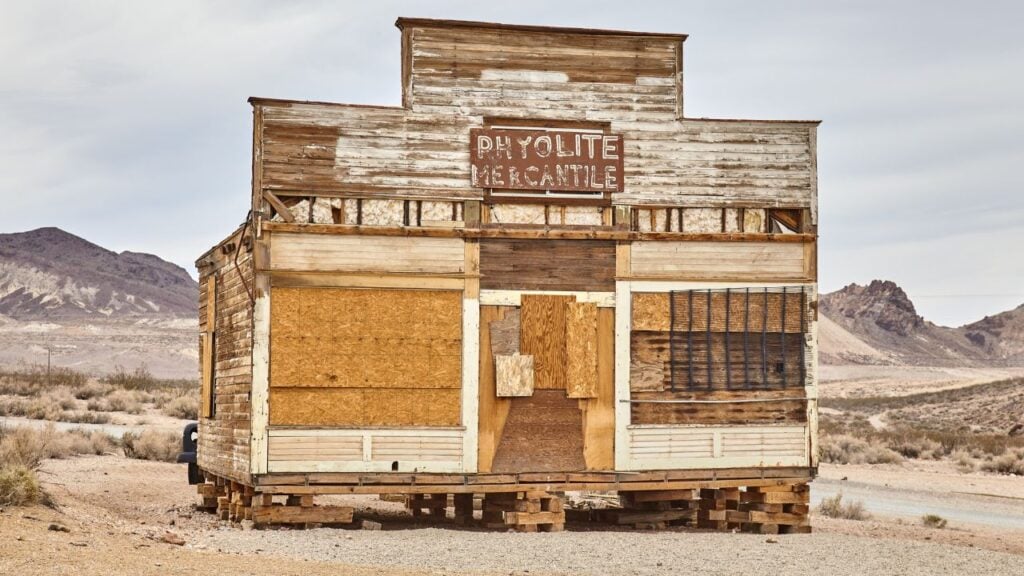
Nevada’s ghost towns look abandoned, but a lot of what’s scattered across them still belongs to someone else on paper.
This piece runs through the ghost-town finds that count as federal or state property and can turn a keepsake into a criminal case.
