
12 Things in Pennsylvania’s Woods That Are Worse Than Pennsylvanians Think

Pennsylvania’s Bureau of Forestry has 2.2 million acres of state forest, and every fall, hunters, hikers, and leaf-peepers all pour into it at once.
Do you think you already know what’s risky out there?
The obvious answers aren’t it.
These are the things in Pennsylvania’s woods that are worse than Pennsylvanians think.
Note: This is general information, not legal advice. Wildlife, hunting, and quarantine regulations are subject to change.
1. Poison Hemlock
You’ll find poison hemlock spreading into roadside ditches, field edges, and streambanks across the state, and it’s far worse than the mild-sounding herb its name suggests.
Every part of the plant carries a toxin that can shut down the muscles you need to breathe.
No antidote exists.
You can spot it by a smooth, purple-blotched stem that can reach six feet tall.
Penn State Extension warns that you can easily mistake it for wild carrot, a shorter, fuzzy-stemmed look-alike from the same ditches.
Confuse the two, and you’re not just wrong.
2. Hemlock Woolly Adelgid
The hemlock woolly adelgid sounds like a minor bug problem in the woods, and that assumption is exactly what’s wrong.
This tiny invasive insect is killing off the eastern hemlock, Pennsylvania’s official state tree.
That’s a different plant from the poison hemlock in the last item.
It has reached all 67 counties as of the end of 2023.
It feeds at the base of the needles, and the tree can’t recover once the needles start dropping.
There’s no cure yet.
Whole hillsides of hemlock, the trees that shade the state’s coldest trout streams, are dying at once.
If you assumed this was a pest you could spray off one tree, the actual scale is a statewide loss of Pennsylvania’s state tree.
3. Emerald Ash Borer
The emerald ash borer is turning ash trees into standing dead wood.
If you’re hiking beneath a dead ash, that wood can drop with no warning.
The beetle tunnels under the bark and cuts off a tree’s nutrients from the roots up.
It killed 900 ash trees at Tyler Arboretum in Delaware County alone.
The preserve had to close 17 miles of trails just to keep hikers out from under the dead limbs.
Multiply that statewide.
Land managers can’t flag every dead ash the same way.
So if you’re on an ordinary state forest trail, a brittle trunk overhead rarely comes with a warning sign.
4. Spotted Lanternfly Fines
If you live in Pennsylvania, spotted lanternflies look like nothing worse than a mess to sweep off your porch, not a legal problem.
Pennsylvania disagrees.
You might already live inside it: The state’s quarantine order covers dozens of counties.
Violating it can bring a criminal citation of up to $300 plus a civil penalty of up to $20,000 per violation.
Move a firewood bundle, a camper, or a load of mulch without checking it first, and you can carry the insect straight into a new county.
The bug is small, and the paperwork behind it isn’t.
5. Alpha-Gal Syndrome
Alpha-gal syndrome doesn’t come from the tick many people blame for Lyme disease.
The lone star tick causes it instead, and its bite can trigger a delayed allergy to red meat.
Red meat becomes the enemy.
Pennsylvania’s health department only started formally tracking it in February 2026, after roughly 600 cases had already turned up over the two years before that.
If you eat a burger hours after a hike and don’t remember any bite, that’s often how the reaction first shows up.
6. Rutting Elk
Pennsylvania’s wild elk herd draws crowds every fall to Benezette, and it’s grown to as many as 1,400 animals now.
You might be tempted to treat them like oversized deer.
The Game Commission’s guidance calls elk unpredictable and sometimes aggressive during the fall breeding season.
It tells you to keep at least 100 yards back.
A bull can weigh 700 pounds and close that gap on you in seconds.
That’s fast.
Cows guard their calves just as hard.
7. Blaze-Orange Rules
Pennsylvania’s blaze-orange rule can apply to you in the woods even if you never planned to hunt.
Every licensed hunter has to carry at least 250 square inches of fluorescent orange on the head, chest, and back during firearms deer season, visible from every direction.
That part isn’t the surprise.
A separate regulation extends that same requirement to anyone on State Game Lands during set stretches each fall and spring, whether they’re hunting or not.
Who Pennsylvania’s Blaze-Orange Rule Covers
Pennsylvania’s blaze-orange rule for non-hunters doesn’t run for just one month.
The Safe Hunting Tips page puts the window at Oct. 1 through Jan. 31, then again from April 20 through May 31.
That’s about four months in fall and winter, plus six more weeks in spring.
Anyone on State Game Lands during those windows needs the same 250 square inches of fluorescent orange, hikers, dog walkers, and photographers included.
8. Falls From Tree Stands
Would you bet on a fall or a bullet being the worse risk in a tree stand?
A trauma-registry study covering three decades of Pennsylvania hunting seasons found that falls passed shooting incidents as the leading cause of deer-hunting injury in 1999.
That wasn’t a fluke.
Few of those falls are fatal.
Roughly a quarter of the hunters hurt that way left the hospital with a lasting physical limitation.
The risk rises with age, and it peaks among hunters in their 50s, not the beginners everyone worries about.
So don’t assume experience makes you safer.
9. Chronic Wasting Disease
Chronic wasting disease sounds like a rare, contained problem if you’ve only half-followed the story.
It’s far more widespread than that.
Pennsylvania has documented nearly 1,300 chronic wasting disease cases since 2012, and the Game Commission now runs seven active Disease Management Areas across the state.
No warning sign marks it.
If you hunt inside one of those zones, you can’t move a deer’s head, spine, or spleen out of it except to a state-approved processor.
Urine-based lures are banned there too, along with feeding wild deer at all.
Break one of those rules without realizing you’d crossed the boundary, and the mistake still counts against you.
10. West Nile Mosquitoes
West Nile virus travels on the same mosquitoes you swat away all summer, and the woods probably don’t cross your mind as a source.
Woods count too.
Lancaster County alone logged a 20-year high for human West Nile cases in 2025.
Statewide, that same year produced at least one confirmed and four probable West Nile deaths.
A wheel rut on a forest road holds standing water just as well as the bucket in your backyard does.
Psst! How much do you know about Pennsylvania’s wild side? Take our quiz and see how many you can get right.
Quiz
Pennsylvania Wild Side Quiz
Answer these questions on Pennsylvania’s woods and wildlife. We bet you can’t get them all right. Prove us wrong?
What does the name “Pennsylvania” translate to in Latin?
11. Abandoned Gas Wells
Old oil and gas wells sit hidden across the state's woods far more often than you'd realize.
The state's public 2.2 million acres of state forest is only part of the ground they're spread across, with millions more private acres bordering it.
State regulators say hundreds of thousands of oil and gas wells have been drilled in Pennsylvania since 1859.
That's a long history.
Unplugged wells can leak methane or contaminate groundwater without you ever seeing it.
No fence marks many of them.
A rusted pipe poking out of the leaves can be older than the trail you're walking.
12. Feral Hogs
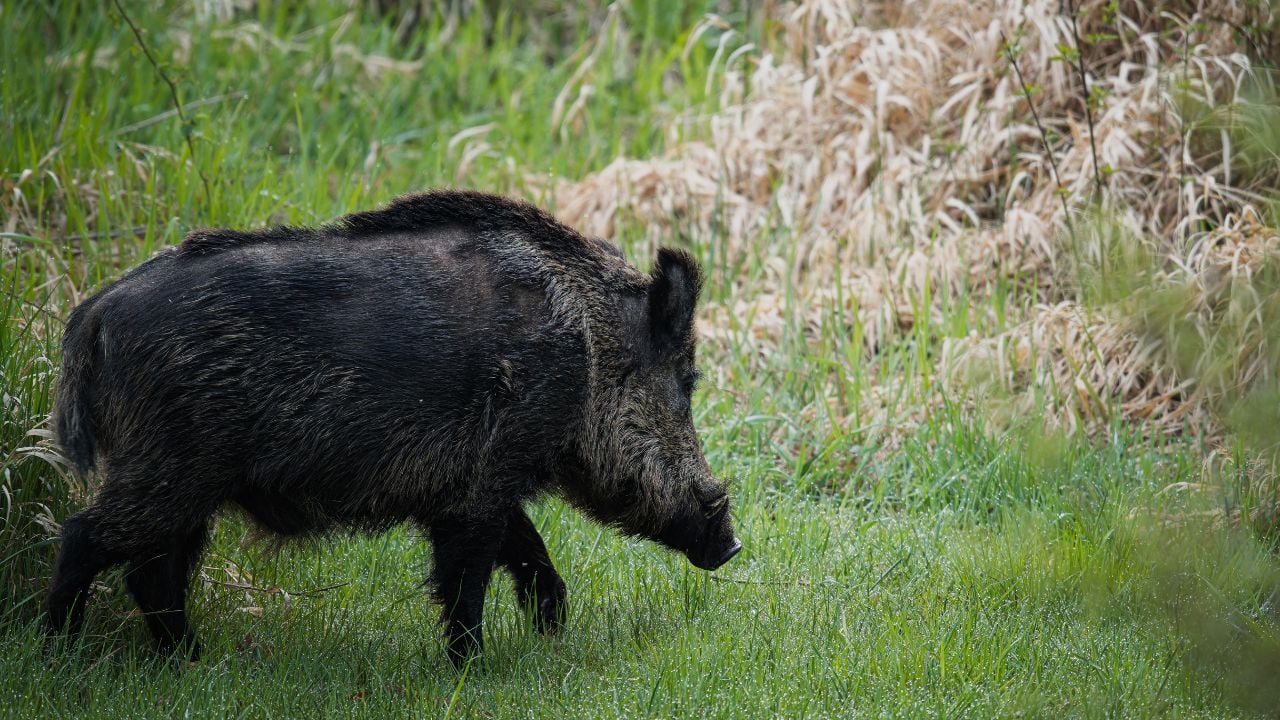
You're not supposed to find wild hogs in the state's woods, and yet a small number keep turning up anyway.
Breeding populations show up rarely.
The Game Commission traces the sightings it confirms mostly to Bedford and Fulton counties.
The state has stripped feral swine of every legal protection other wildlife gets.
If you spot a feral hog, the Game Commission asks you to report the sighting.
If you kill a hog, Pennsylvania requires you to report the kill within 24 hours, rare or not.
Every sighting counts.
A grown feral hog can weigh up to 250 pounds.
A hog that size can root up your garden or a food plot overnight, and it can carry disease straight to pets and livestock.
A hundred false alarms cost the state far less than one report that never comes in.
8 Things Pennsylvania Barn Stars Don't Mean, No Matter What Visitors Are Told

Those bright hex signs on Pennsylvania barns look like folk art with a secret code, and visitors love guessing at what each color and shape is supposed to ward off.
Barn owners hear the same confident theories every season, and many of them don't hold up.
8 Things Pennsylvania Barn Stars Don't Mean, No Matter What Visitors Are Told
8 Gut-Wrenching Pennsylvania Lottery Rules Winners Find Out About After They Claim

A winning ticket feels like the finish line, and Pennsylvania's claim process turns out to be where a lot of new rules start.
Some of what winners learn only after signing has nothing to do with taxes.
8 Gut-Wrenching Pennsylvania Lottery Rules Winners Find Out About After They Claim
