
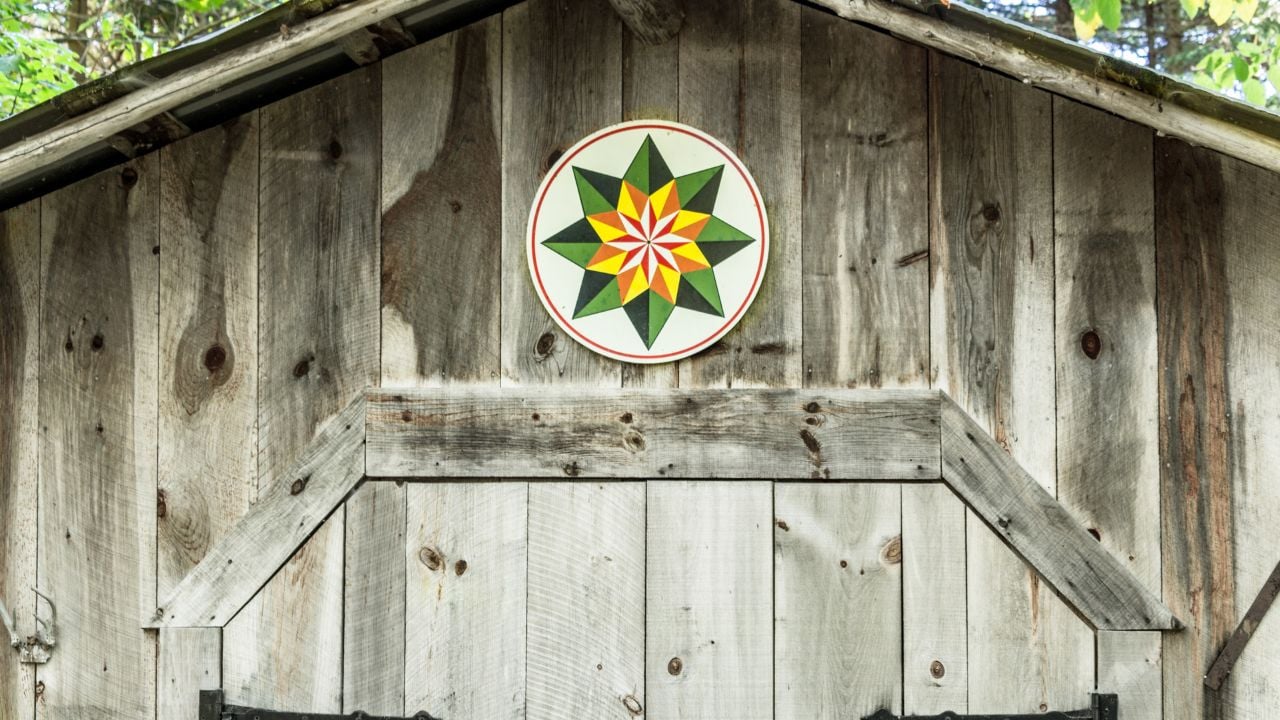
8 Things Pennsylvania Barn Stars Don’t Mean, No Matter What Visitors Are Told

In 1912, one of Pennsylvania’s busiest barn star painters logged his hours in his ledger: 52 and a quarter hours of work, at 15 cents an hour.
Pennsylvania’s barn stars carry a documented history, and these are the things they don’t mean, no matter what a gift shop sign says.
1. Not Proof of Any Hidden Power
A hex sign gets its name from outsiders, not from the families who painted the stars.
Visitors hear the word “hex” and assume it proves the paintings hold supernatural force.
It doesn’t.
The Pennsylvania German Cultural Heritage Center at Kutztown University documents that farmers called these paintings “Schtanne” and “Blumme”, Pennsylvania Dutch for stars and flowers.
Those are plain words for a plain decoration, with no magic implied.
The label “hex sign” only shows up in the record once outside travel writers picked it up in the 1920s.
It stuck to the paintings long after the painters had their own, far less mysterious name for the work.
Where Barn Stars Got the Name “Hex Sign”
Pennsylvania’s barn stars picked up the name “hex sign” from outsiders, not from the Pennsylvania Dutch families who painted them.
Travel writer Wallace Nutting introduced the label in his 1924 book Pennsylvania Beautiful, building his account on a single informant’s claim about ancient magic.
Painters knew the shapes by different words. Milton Hill, one of the region’s busiest barn star painters into the 1950s, waved off any notion of hidden power, describing his own work as plain, cheerful decoration done purely for the pleasure of it.
The meanings attached to particular shapes and colors came later still, marketed to tourists once portable versions of the signs went on sale in the 1950s.
2. Not a Ward Against Witches
At nearly every stop on a Pennsylvania barn tour, a guide repeats the same claim: Farmers painted these stars to keep witches, or “hexerei,” off the property.
Patrick Donmoyer, director of the Pennsylvania German Cultural Heritage Center at Kutztown University, has documented that story as a 1920s invention.
The claim isn’t ancient.
No one ever proved it.
Travel writer Wallace Nutting built the whole witch-protection claim into his 1924 book, based on one informant’s word.
No documented painter from the working tradition, before that book, ever described the stars that way.
3. Not a Sign of an Amish Farm
No Amish barn in Pennsylvania carries a painted star.
Visitors still read a hex sign as proof the farm behind it is Amish, since both fall under the same “Pennsylvania Dutch” label on souvenir shop signs.
That’s not what the symbol signals.
Not even a little.
Donmoyer has described Amish barns as running white, trimmed in green, without the decorative flourish barn stars represent.
The tradition instead belongs to the “Fancy Dutch,” the churchgoing Lutheran and Reformed Pennsylvania Germans who never adopted the Amish’s plainer dress and building style.
“Pennsylvania Dutch” is the broader term, and the Amish have always made up one branch of it, not the whole tree.
4. No Single Fixed Meaning
A gift shop chart near Kutztown promises to decode every shape on a Pennsylvania barn star: This one means luck, that one means faith, this bird means a happy marriage.
The people who painted the barns never agreed on that chart.
Milton Hill, one of the region’s most influential 20th-century barn star painters, insisted for decades that the work carried no symbolism at all, plain Pennsylvania Dutch phrasing for something painted purely to look nice.
There’s no hidden code to crack.
Painter and promoter Johnny Ott took the opposite position decades later, marketing individual shapes and colors as good-luck charms once portable hex signs started selling to tourists.
Two painters, two answers.
The gift shop chart picked the version that sells better.
5. Not the Old Meaning
The star bolted onto a Pennsylvania farmhouse and the one hanging in a gift shop window share a shape, not a history.
Buying the round version doesn’t hand a visitor the same centuries-old symbolism painted straight onto a barn’s wood siding.
Not the same tradition.
It’s a modern product, not an heirloom.
Sign maker Jacob Zook’s own shop traces its start to the early 1940s, selling a mountable, round hex sign meant to travel home in a car trunk.
It was never built to weather on a barn for decades.
Painters working around the Kutztown Folk Festival made their own portable boards about a decade later, giving tourists something to buy without climbing a ladder.
Both versions borrow the same shapes.
Neither one carries the centuries-old meaning that sellers often claim for it.
6. Not an Unbroken Old-World Meaning
The paint on Pennsylvania’s barns argues against the idea that today’s star symbolism crossed the ocean unchanged.
Visitors are often told the shapes carry the exact same Old-World meaning German settlers brought with them centuries ago.
The timeline doesn’t support that.
Many Pennsylvania barns went without paint until around 1840, when commercial paint finally became affordable enough for a working farm to spend on decoration.
Barn-front painting only became common once construction shifted to wood siding and paint prices dropped in the mid-1800s, decades after the first German-speaking settlers arrived.
That timeline makes barn stars a 19th-century American habit built on affordable materials, not a meaning imported fully formed from Germany.
7. Not on Every Farm
From a moving car, Pennsylvania’s Dutch Country seems to have painted stars on every historic barn.
They don’t.
The Pennsylvania German Cultural Heritage Center’s own driving tour counts just 40 documented barns visible from public roads, spread across five townships in northern Berks County.
Beyond that tour, researchers describe scattered examples across the wider region, still a small fraction of the working farms in Pennsylvania Dutch Country.
Painted stars remain the exception, not the rule, on barns across Pennsylvania Dutch Country, then or now.
8. Not Settled as Decoration
Whether Pennsylvania’s barn stars mean anything at all is still an open question among researchers.
Some tour guides tell visitors the meaning question is settled the other way, that the shapes are just pretty patterns with nothing behind them.
That’s not settled either.
Donmoyer’s own published research raises the possibility that star-point counts once tracked the farm almanac’s seasonal and celestial markers, the same charts families used to time planting and breeding.
He stops short of tying every documented shape to one unified system.
A four-pointed star, in his reading, may mark the seasons.
A six-pointed star, he suggests, could tie to the days of creation on the almanac calendar.
His research pushes back on the purely decorative reading Milton Hill’s own generation of painters preferred, and neither side has fully won the argument.
Its Biggest Stage, Gone
The Kutztown Folk Festival, billed as the country’s oldest continuously running folklife festival, gave Pennsylvania’s barn star painters their biggest stage.
Painters worked booths there every summer starting in 1950, selling the portable hex signs that carried this tradition to a national audience.
The festival doesn’t run anymore.
Its board shut it down after the 2024 event, citing mounting financial losses and falling attendance after 74 years.
A new event, the Eastern PA Homestead Festival, has since taken over the same fairgrounds.
Berks County’s Eric Claypoole, who learned the craft from his own family, has painted roughly 125 barns and still takes on new commissions and restorations today.
Psst! How much do you know about Pennsylvania Dutch folk art and language? Tap through these statements and see how many you get right.
9 Slang Words From the 1960s That Make Young Pennsylvanians Cringe
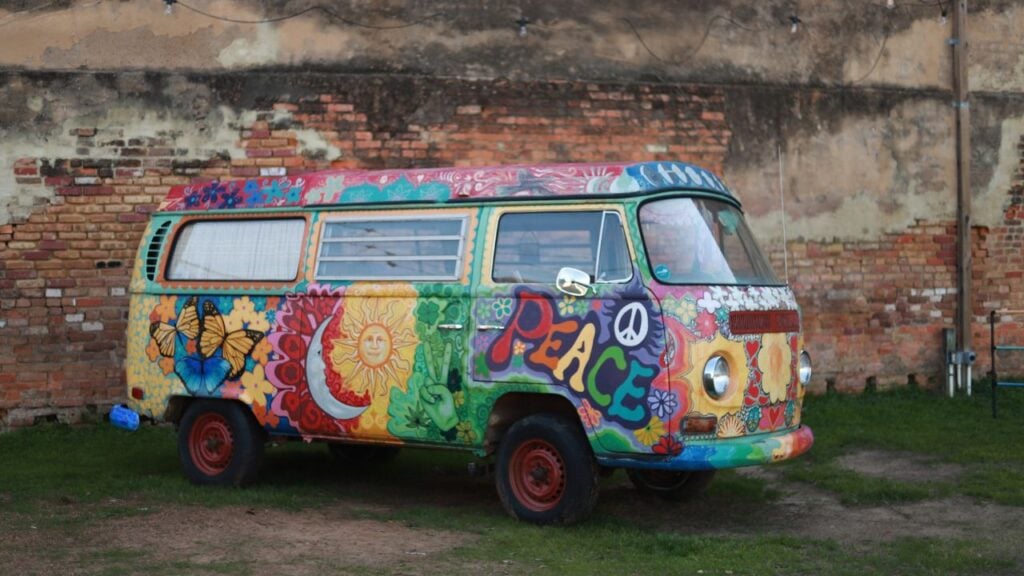
A black-and-white rerun flickers on during a family dinner in Erie, and somebody’s dad repeats the punchline out loud a half-second before the actor does.
The slang that made that joke land has mostly disappeared from Pennsylvania living rooms.
9 Slang Words From the 1960s That Make Young Pennsylvanians Cringe
10 Pennsylvania Flea Market Finds That Are Illegal to Resell
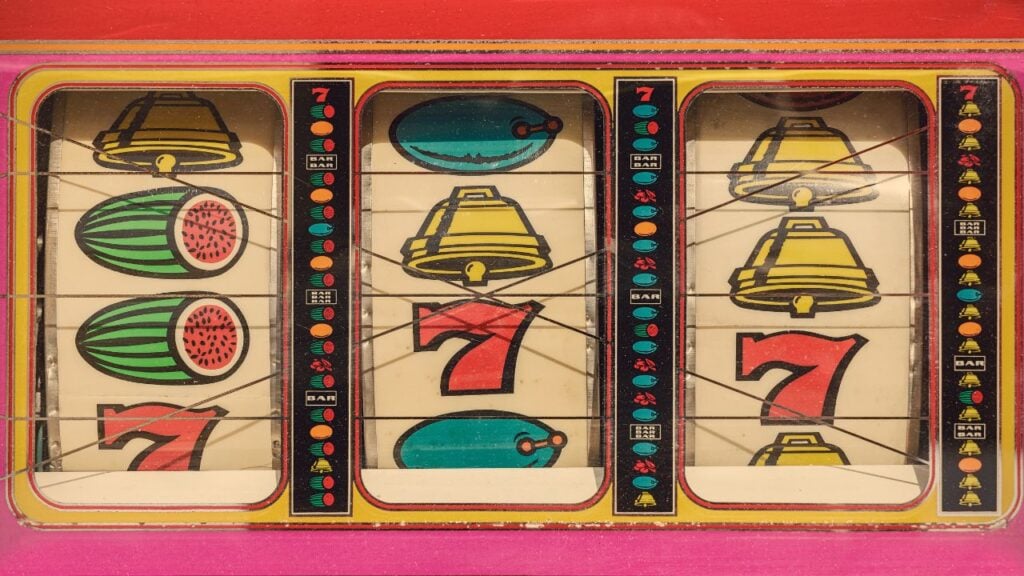
The outdoor flea market at Renninger’s in Adamstown opens at 5 a.m. every Sunday, dealers unloading tailgates under headlamp light before the sun’s even up.
A few of the finds that draw the earliest crowds are perfectly legal to buy, but illegal to turn around and resell.
10 Pennsylvania Flea Market Finds That Are Illegal to Resell
