
9 Things Texans Can’t Legally Do on Their Own Land

A permit now stands between almost 70% of Texas and a brand-new water well.
Ownership only goes so far.
These are the things Texans can’t legally do on their own land.
Note: This is general information, not legal advice. Texas property, water, and wildlife rules are complex, vary by county and district, and are subject to change.
1. County Burn Bans
Texas law lets a county’s commissioners court shut down all outdoor burning at once, no matter whose land it’s on.
Local Government Code Section 352.081 lets the court order a burn ban for up to 90 days whenever a drought or fire risk runs high enough.
That order covers the whole unincorporated county at once.
Break it, and it’s a Class C misdemeanor carrying a fine of up to $500.
The county can still ask a judge for an injunction on top of that.
That’s before any fire damage.
Even with no ban in place, Texas Commission on Environmental Quality (TCEQ) rules ban burning tires, treated lumber, roofing shingles, electrical insulation, and anything explosive every day of the year.
A fire that is allowed has to sit at least 300 feet from a neighbor’s house.
It also has to start no earlier than an hour after sunrise and go out an hour before sunset.
Wind matters too.
TCEQ won’t allow it when the wind runs slower than 6 mph or faster than 23 mph. A lazy fire smolders and a strong one jumps the fence line.
2. Deer Season Limits
Texas hunting law follows a landowner onto the family ranch exactly the way it follows a hunter onto public land.
Parks and Wildlife Code Section 61.021 bans taking a game animal outside the season and bag limit a Texas Parks and Wildlife Department (TPWD) proclamation sets.
The law carves out no exception for private property.
Ownership doesn’t buy an exemption.
The one landowner carve-out on the books covers feral hogs, not deer, turkey, or anything else the state classifies as game.
A landowner, or anyone with the landowner’s blessing, can trap or shoot feral hogs on that same land at any time of year with no hunting license.
Parks and Wildlife Code Section 42.002(c) sets that exemption out for a resident landowner or anyone with the landowner’s consent.
TPWD classifies feral hogs as an exotic species with no state bag limit, possession limit, or closed season at all on private property.
Deer get no such pass.
3. Mineral Rights Access
Land sales have split the surface from the minerals underneath it for more than a century.
A landowner holding only the surface can’t block the mineral owner from developing what’s below.
The Texas Supreme Court settled the balance of power in the 1971 case Getty Oil Co. v. Jones, ruling that the mineral estate is the “dominant” one whenever it’s owned apart from the surface.
That ruling gives the mineral owner, or whoever leases the rights, an implied easement to use the surface.
The use has to stay reasonably necessary, whether that means drilling, trucking in equipment, or laying pipeline.
No veto power.
Under what courts call the accommodation doctrine, a surface owner can force a change in method only by proving a reasonable alternative exists, never by refusing access outright.
Texas’ Two Land Estates
Texas splits land into two separate estates.
The surface estate covers farming, grazing, water, and anything built above ground.
The mineral estate covers oil, gas, coal, and other substances below it.
A landowner can hold one estate without the other.
A mineral reservation written into a Texas deed during the 1930s oil boom can still control a tract today, even after the surface has changed hands many times since.
4. New Septic Systems
Texas requires a permit before anyone puts a septic system in the ground, whether the land runs 200 acres or two.
TCEQ’s rule, Texas Administrative Code (TAC) Title 30, Section 285.3, says the owner or the owner’s agent must obtain an authorization to construct from the local permitting authority.
That approval has to happen before construction on an on-site sewage facility (OSSF) can begin.
No exceptions.
A county health department, or in some areas a TCEQ regional office, reviews the site’s soil and drainage before signing off.
A failing septic system can pollute the same groundwater a well down the road pulls from.
5. New Water Wells
Texas Water Development Board records list 98 districts across the state, together covering close to 70% of Texas and reaching into 173 of its 254 counties.
Water Code Section 36.113 requires anyone inside one of those districts to get a permit before drilling, equipping, or substantially altering a well, even on land the driller has held for decades.
Limits still apply.
State law otherwise lets a landowner pump the groundwater beneath the property.
A district can still cap how much comes out and how close two wells can sit to each other.
Psst! How much do you know about Texas land law? Take our quiz and see how many you can get right.
6. Protected Wildlife
Texas wildlife law protects certain species no matter who owns the land beneath their feet.
TPWD rules state plainly that no person may “capture, trap, take, or kill” a threatened or endangered fish or wildlife species.
That bar applies to a private ranch exactly as it applies to a state park.
Ownership doesn’t matter here.
An ocelot denning in South Texas brush country or a whooping crane wintering along the Gulf Coast carries the same federal Endangered Species Act protection.
That protection follows the animal whether it wanders onto a ranch, a wildlife refuge, or a backyard.
7. Damming a Creek
The state owns the water flowing through a natural creek or river, even the stretch crossing private land, and that changes what a rancher can legally do to it.
Water Code Section 11.142 exempts only a dam or reservoir holding 200 acre-feet or less, built for domestic or livestock use, from needing a state water right permit.
Bigger ponds need permission.
Push past that limit, or dam a creek for anything other than watering cattle or a house.
TCEQ then requires a permit exactly like it would for a city reservoir.
Water Code Section 7.052 lets TCEQ assess an administrative penalty of up to $25,000 a day for the violation.
Every day the dam stays unpermitted can count as a separate one.
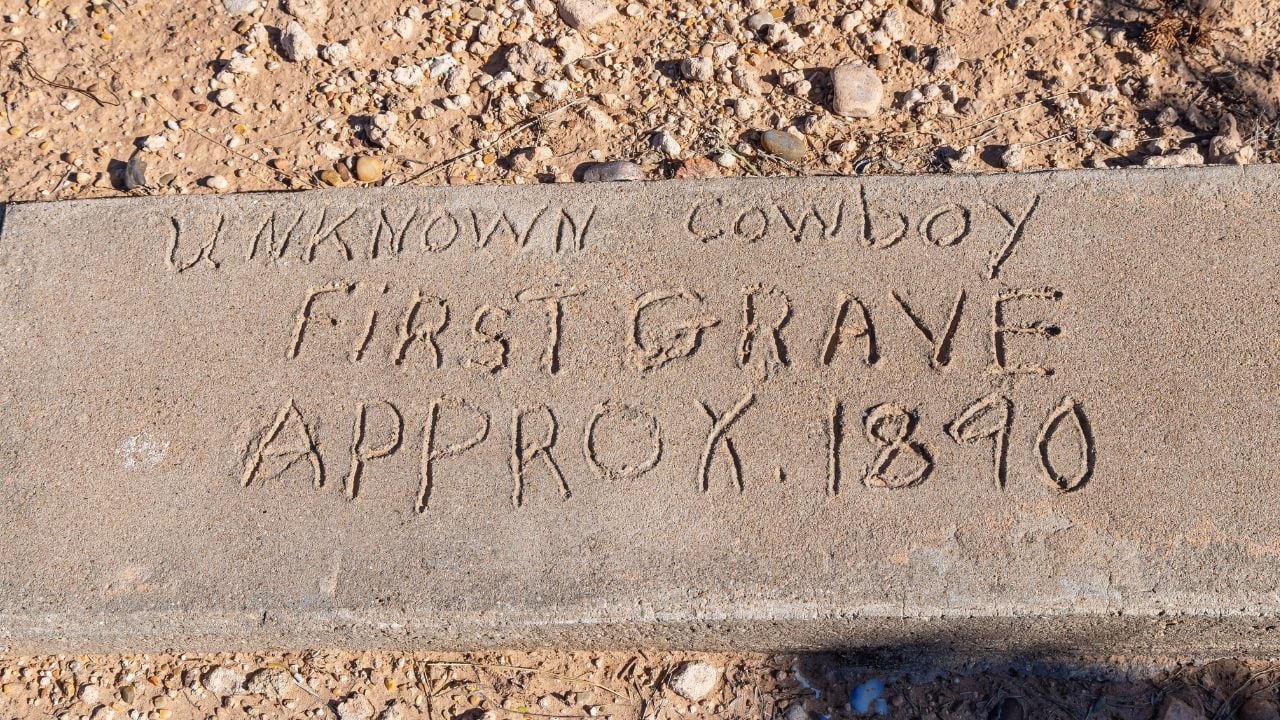
8. Old Cemetery Removal
State law treats a cemetery as protected ground long after anyone stops visiting it, and that includes a small, unmarked family plot a landowner finds in the back pasture.
Health and Safety Code Section 711.010 blocks a landowner from building over or otherwise disturbing a cemetery until the remains are removed under a written order from the state registrar.
A backhoe doesn’t settle it.
Getting there means petitioning a district court, proving the move serves the public interest, and notifying the Texas Historical Commission before anyone touches a single grave.
Health and Safety Code Section 711.041 goes further and requires a landowner to allow visitors reasonable access to a cemetery on the property.
That’s true even for a cemetery with no public road reaching it.
A visitor who wants to come outside the landowner’s posted hours only has to send written notice 14 days ahead.
Skipping the court process altogether carries criminal exposure under Penal Code Section 42.08.
Disturbing or disinterring remains without legal authority is a state jail felony under that law, on top of whatever the district court would have required anyway.
9. Dangerous Wild Pets
State law doesn’t let acreage alone legally qualify someone to keep a tiger, bear, or full-grown primate at home.
Health and Safety Code Chapter 822, Subchapter E, covers roughly 20 listed dangerous wild animals, among them big cats, bears, and primates.
Anyone keeping one has to hold a certificate of registration and carry at least $100,000 in liability insurance for each occurrence.
Acreage doesn’t exempt anyone.
That applies on 10 acres or 10,000.
Owners also have to meet state caging standards, submit veterinary inspection reports, and report an escape or an attack to authorities right away.
A handful of exemptions exist for zoos, traveling circuses, and a few sparsely populated counties dealing with predator control.
A landowner outside those categories follows the same rule whether the enclosure sits behind a suburban fence or in the middle of a thousand-acre ranch.
8 Texas Small Claims Court Mistakes That Sink a Case Before It Starts

A Texan can be right about a $4,000 fence a neighbor wrecked and still lose in small claims court over paperwork alone.
One missed form or one wrong filing date is often all it takes.
8 Texas Small Claims Court Mistakes That Sink a Case Before It Starts
4 H-E-B Perks Worth Asking About If You’re New to Texas
A new homeowner sorting out well permits and fence lines still has to eat, and H-E-B runs a few perks many shoppers never think to ask about.
None of them show up on the receipt unless someone at the counter mentions it first.
