

7 Records an Arizona HOA Has to Share With Any Homeowner Who Asks

Nearly a third of Arizona’s population lives inside a homeowners association (HOA), according to the Foundation for Community Association Research.
Getting records out of one is harder than it should be.
These are the records an Arizona HOA has to share with any homeowner who asks.
Note: This is general information, not legal advice. Records-request rules and copying fees are subject to change, so confirm the current requirements with the Arizona Department of Real Estate.
1. Financial Records and Budgets
Arizona’s records law starts from a wide-open premise: An HOA’s books belong to its members, not just its board.
Under 33-1805, the association has to make “all financial and other records” reasonably available to any member, or to someone the member names in writing.
That covers the operating budget, bank statements, and the ledger tracking who’s paid their assessments and who hasn’t.
Looking costs nothing.
Copies cost a little more, and state law caps that fee too.
What an Arizona HOA Can Withhold
Arizona’s broad records law comes with five carve-outs, and an association can lean on only those.
It can withhold attorney-client communications, litigation records, and minutes from a closed session that never had to be open to members.
It can also redact one member’s or employee’s personal, health, or financial details, plus an employee’s performance or pay records.
2. Annual Audit
An HOA board doesn’t get to keep its books from homeowners forever.
Under 33-1810, the board has to complete a yearly audit, review, or compilation within 180 days of the end of its fiscal year.
That report goes to any member who asks, within thirty days of when it’s finished.
No stalling.
Skip this step, and a board hands a homeowner an easy complaint to bring.
3. Open Meeting Minutes
Board meetings aren’t private business under Arizona’s HOA law.
The same statute that grants broad access to records carves out only one kind of minutes.
Sessions the board never had to open to members can stay off the record.
Regular meeting minutes can’t.
A member who missed last month’s meeting can still read exactly what the board discussed and decided.
4. Board Contracts
HOA boards sign contracts with landscapers, pool companies, insurers, and management firms many homeowners never read.
Those agreements count as “other records” under 33-1805, the same broad category covering the budget.
A member can ask to see what the board signed, and for how much.
The signed contract.
Not somebody’s summary of what it says.
Psst! How much do you know about Arizona homeowners association law? Take our quiz and see how many you can get right.
Quiz
Arizona HOA Law IQ
These questions cover Arizona homeowners association law you won’t find explained above. See how many you can get right.
Can an Arizona HOA prohibit a homeowner from flying the American flag in their yard?
5. Reserve Study
An Arizona HOA doesn't have to commission a reserve study, but plenty do it anyway.
Under 33-1806, if a reserve study exists, "the most recent reserve study of the association" becomes something a member can request and see.
That report spells out when the roof, the pool deck, or the clubhouse will need expensive repairs.
Not hidden.
An association with no study on file has nothing to hand over, and that's legal too.
6. Membership Roster
HOAs also keep a roster many homeowners never think to request: Everybody else's name, address, and lot number.
That list falls under 33-1805's same broad grant, since nothing exempts it by name.
It's still a record.
What the association can strip out is personal, financial, or health information tied to one person on it, the same protection that covers everybody's file.
7. Election Ballots and Sign-In Sheets
An HOA election leaves a paper record that outlasts the count.
Under 33-1812, ballots, envelopes, and sign-in sheets have to stick around and stay open to member inspection for at least a year after the election closes.
A full year.
A member who suspects the board mishandled a vote has time to check.
The Ten-Business-Day Clock
State law gives an HOA a set window to answer a homeowner's records request, not an open-ended window.
The association has ten business days to let a member examine records, and another ten business days to hand over copies once asked.
Ten days, not ten weeks.
Copies cost money, up to fifteen cents a page under the same statute, though looking at the originals stays free.
When an Association Says No
A homeowner isn't stuck if an Arizona association ignores a records request.
A member can file a petition with the Arizona Department of Real Estate, and an administrative law judge hears the dispute.
No lawyer required to start.
Win the case, and the judge can order the association to comply and pay back the homeowner's filing fee.
Psst! See how every one of these records stacks up. Sort or filter the table below to find the rule you need.
State Law, Not Corporate Law
Arizona homeowners associations are usually set up as nonprofit corporations, and that status comes with a separate set of recordkeeping rules.
Those corporate rules would normally make a member show a court-recognized "proper purpose" before inspecting a membership list.
Not for an HOA, under 10-11602.
Planned-community law wins.
Arizona's planned-community statute overrides corporate law wherever the two conflict, which is why the easier 33-1805 request, with no purpose test attached, is the request that works.
6 HOA Watering Restrictions That Surprise New Arizona Residents
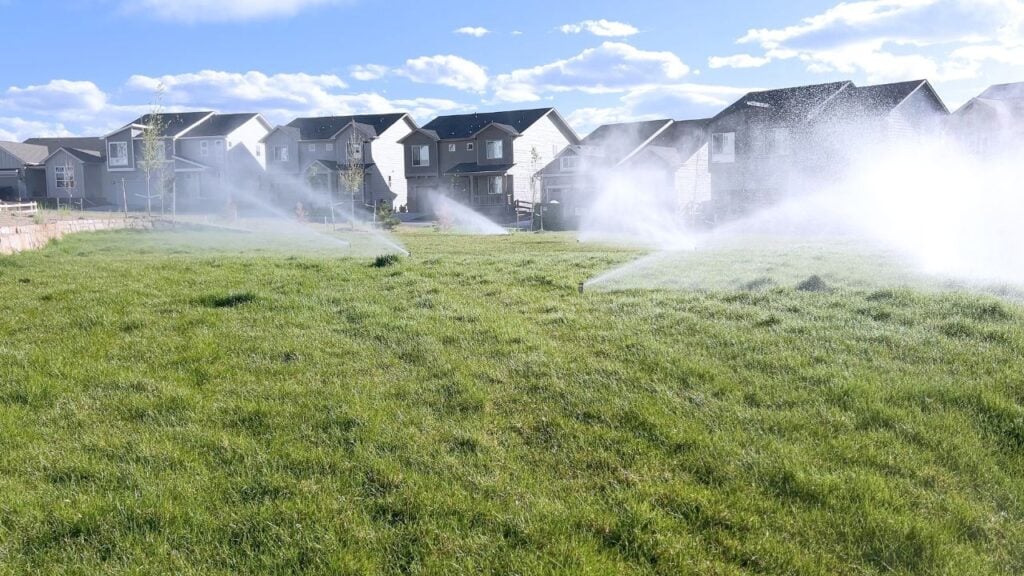
Arizona is giving up 760,000 acre-feet of Colorado River water a year under a federal water-sharing deal, more than any other state loses under that agreement.
Cities, water providers, and homeowners associations have all tightened outdoor rules since, and anyone moving into an Arizona subdivision usually meets the HOA version first.
6 HOA Watering Restrictions That Surprise New Arizona Residents
8 Arizona Water Rights Rules Rural Property Owners Get Wrong

A drilling rig can put a well on almost any rural Arizona property, but that doesn't make the water underneath it something the owner can sell.
Arizona's water law runs on doctrines going back to the 1800s, and outside the state's cities, it still catches rural landowners off guard.
8 Arizona Water Rights Rules Rural Property Owners Get Wrong
