
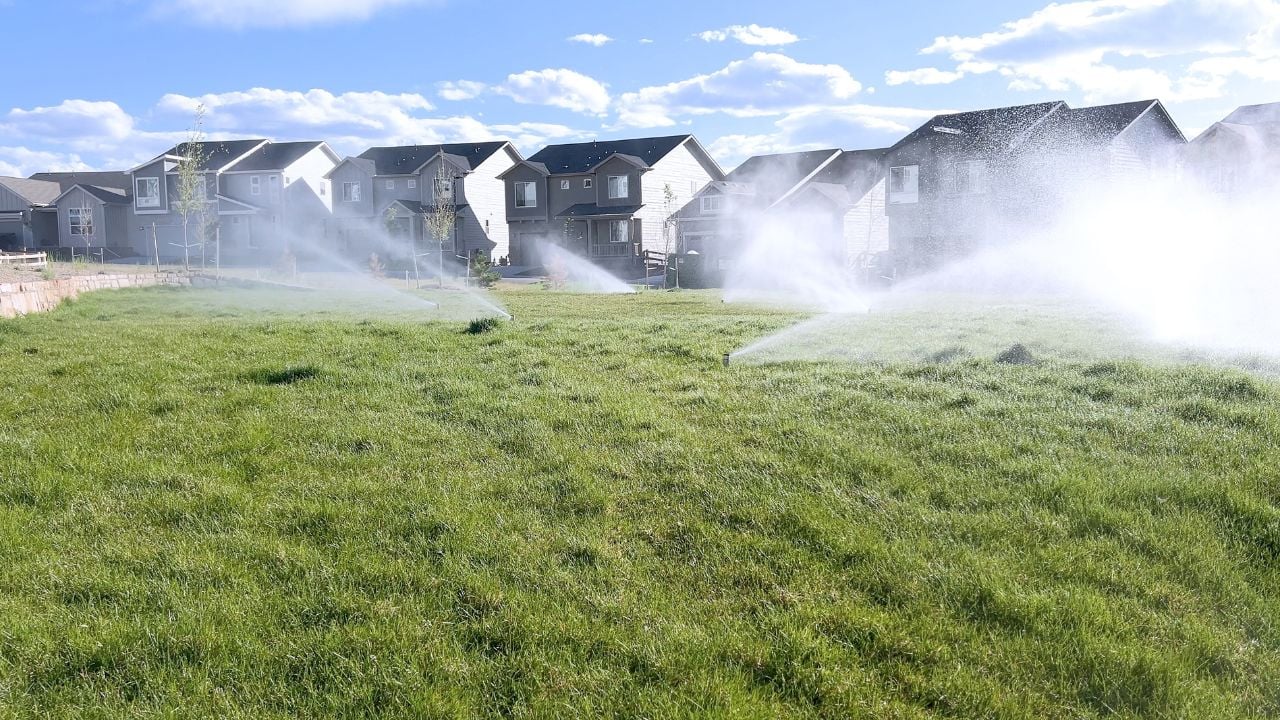
6 HOA Watering Restrictions That Surprise New Arizona Residents

Arizona is giving up 760,000 acre-feet of Colorado River water a year, more than any other state, under a federal water-sharing deal finalized this year.
That number lands on a lot of front yards.
Cities, water providers and homeowners associations have all been tightening outdoor rules since, and the HOA ones catch newcomers first.
These are the HOA watering restrictions that surprise new Arizona residents.
Note: This is general information, not legal advice. Association rules and water restrictions vary by community and water provider and are subject to change, so check your governing documents.
1. Mandatory Automatic Irrigation
Arizona homeowners associations increasingly won’t let a new resident water anything with a hose.
Vistancia, the master-planned Peoria community northwest of Phoenix, requires an automatic irrigation system for every planting bed on a lot, front yard included.
There’s no exception for a rental hose or a watering can.
CantaMia, the 55-and-over section of the nearby Estrella community in Goodyear, spells the same idea out even harder.
It requires a fully automatic underground system for every private yard on the property.
No shortcuts.
2. Turf Caps Tied to Watering Schedules
Estrella, the Goodyear community that includes the 55-and-over CantaMia section, ties its front-yard turf limits directly to a watering schedule, not just a look.
Its Oasis zone caps natural turf at 40% of the front-yard landscape area, and the Desert Vista zone next door bans it entirely.
Same master plan. Different rules.
That zone line is a watering line, too.
A lawn strip in the Oasis zone runs on turf’s summer watering cycle, per the Arizona Municipal Water Users Association (AMWUA): Roughly every three to four days.
The desert-adapted plants around it need a soak only every six to seventeen days by that same AMWUA guidance.
Desert Vista’s ban means the whole yard runs on that slower cycle.
A state law changes the math for either zone, but only once Estrella’s builder hands the association over to homeowners.
Under A.R.S. § 33-1819, once that declarant control ends, the association can’t prohibit installing artificial turf in place of the capped natural grass.
Among the conditions: Natural grass has to already be allowed somewhere on the property.
The law also exempts a community whose native vegetation or geology needs preserving.
What Arizona’s Artificial Turf Law Still Lets an HOA Control
Arizona’s artificial turf law works in both directions for a homeowners association.
An association can’t reject a turf-swap request outright.
But it can still dictate where on the lot the turf goes and how much of the yard it’s allowed to cover.
The same law lets an HOA prohibit turf in any area the association must maintain or irrigate.
It can also order the turf removed later if it creates a safety problem the homeowner won’t fix.
A denied application isn’t automatically an illegal denial.
3. The Overspray Violation
Sierra Verde, a community in Surprise, doesn’t tolerate a sprinkler that clears the property line.
Its design guidelines state it flatly: Overspray onto sidewalks and streets is strictly prohibited.
Phoenix’s water code backs that up separately, barring anyone from letting irrigation water “flow or discharge” onto a street, sidewalk, alley or public place.
Both rules stack.
A sprinkler head aimed a few degrees wrong can draw a call from either enforcement arm.
Many new residents assume that kind of runoff is somebody else’s problem to notice.
4. DRC Control Over Irrigation
Arizona’s Design Review Committees (DRC), the volunteer boards that approve exterior changes, treat irrigation like any other visible modification.
Vistancia requires DRC sign-off before a homeowner touches the exterior of a lot, and that includes swapping a spray head for drip line or moving a valve.
Skip the paperwork, and the fix isn’t just a warning letter.
Paperwork isn’t optional.
Arizona HOA attorneys who handle these disputes put typical landscaping fines in the $25-to-$100-a-day range for an ongoing violation.
That adds up fast on a project a homeowner assumed was theirs to make.
5. Flood Irrigation’s Fixed Turn
Salt River Project (SRP) runs some of Arizona’s oldest neighborhoods on flood irrigation instead of sprinklers.
Roughly 22,000 homes across its service area, about 5% of its land, still get their yards watered that way.
Many of them sit in older sections of Mesa, Chandler and Tempe.
Timing matters here.
SRP assigns each property a scheduled delivery.
Once a zanjero opens the gate, the homeowner is responsible for containing every bit of that water on their property.
That means checking a ditch gate before sunrise on delivery day, not after breakfast.
Neighborhood associations that manage these older, canal-fed subdivisions write the same containment duty into their governing rules.
A missed turn or a flooded street becomes an HOA matter as much as an SRP matter.
6. Turf and Spray Buffers From the Wall
Sierra Verde’s design guidelines recommend a watering buffer wherever a block wall meets turf or spray irrigation.
The Surprise community’s guidance puts that recommended buffer at five feet between any wall, fence or structure and the nearest sod or sprinkler head.
Five feet, recommended.
It’s guidance, not a hard rule with an automatic fine attached.
Push the sod right up against the block anyway, and a design reviewer can still flag it during the approval process.
The sprinkler head never even has to spray a drop past the property line for that to happen.
The buffer exists because standing water against a wall’s footing causes slow damage a homeowner won’t notice for years.
Psst! Curious how these rules stack up across Arizona’s biggest HOAs? Sort or filter this table to find yours.
Overwatering vs. Neglect
Kindness kills more desert-adapted plants in Arizona than neglect does.
More isn’t better.
Phoenix’s conservation guidance tells residents not to water even their thirstiest plants more than twice a week, even in the hottest part of summer.
A desert-adapted tree on a lawn-sprinkler schedule drowns from the roots up.
Estrella’s design guidelines make a homeowner responsible for replacing a dead or dying plant on the lot, and they don’t ask what killed it.
An overwatered saguaro or palo verde ends up back at the nursery counter for the same reason a neglected one does.
Why These Rules Keep Tightening
Arizona’s HOA rulebooks aren’t getting stricter for no reason.
The state is losing 760,000 acre-feet of Colorado River water a year under the federal deal finalized this year, the deepest cut of any state sharing that river.
Supply is shrinking.
Every gallon a developer saves on a common-area lawn or a homeowner’s front yard is a gallon that deal doesn’t have to come from somewhere more painful.
New master-planned communities keep writing tighter design guidelines for exactly that reason, years before a city ordinance ever forces the issue.
A homeowner who bought in five years ago is often grandfathered under an older, looser guideline than the version a new resident signs today.
That gap is why a longtime neighbor can leave a hose running at noon, while a new arrival two doors down gets a violation notice for the same yard.
9 Things That Confuse First-Time Visitors to Arizona
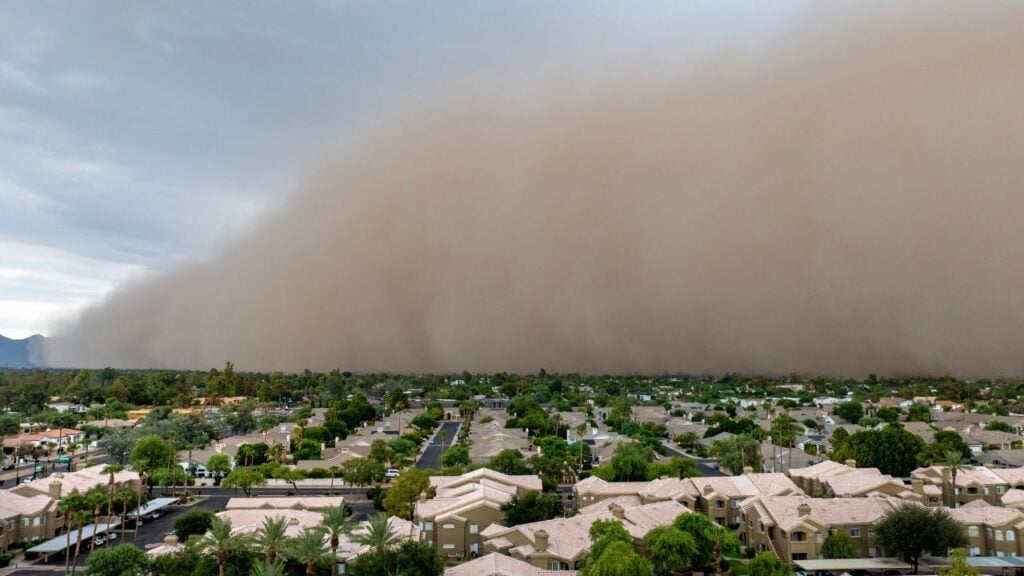
Cactus and sunshine are the whole picture many tourists bring to Arizona, right up until reality corrects them.
Some of those corrections catch a visitor badly enough to land them in urgent care, and the state’s clock habits confuse people before they’ve even unpacked.
9 Things That Confuse First-Time Visitors to Arizona
8 Arizona Towns That Feel Like They Belong in Another State
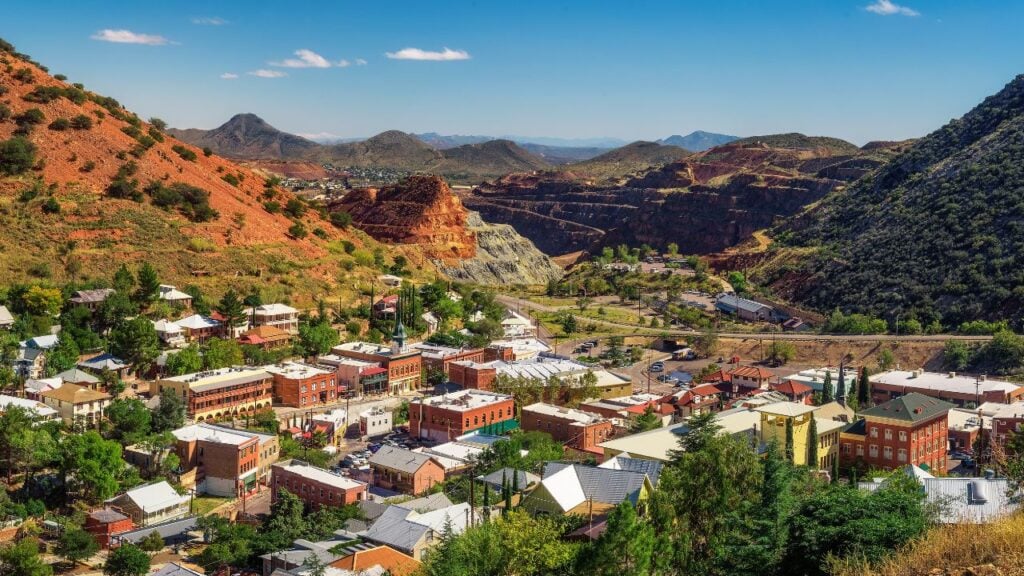
One Arizona hillside carries 155 stairs and not a single street, built by hand between 1910 and 1915 so mining families could reach the grocery store and the bank.
That’s not the only Arizona town that looks like it wandered in from somewhere else entirely.
