
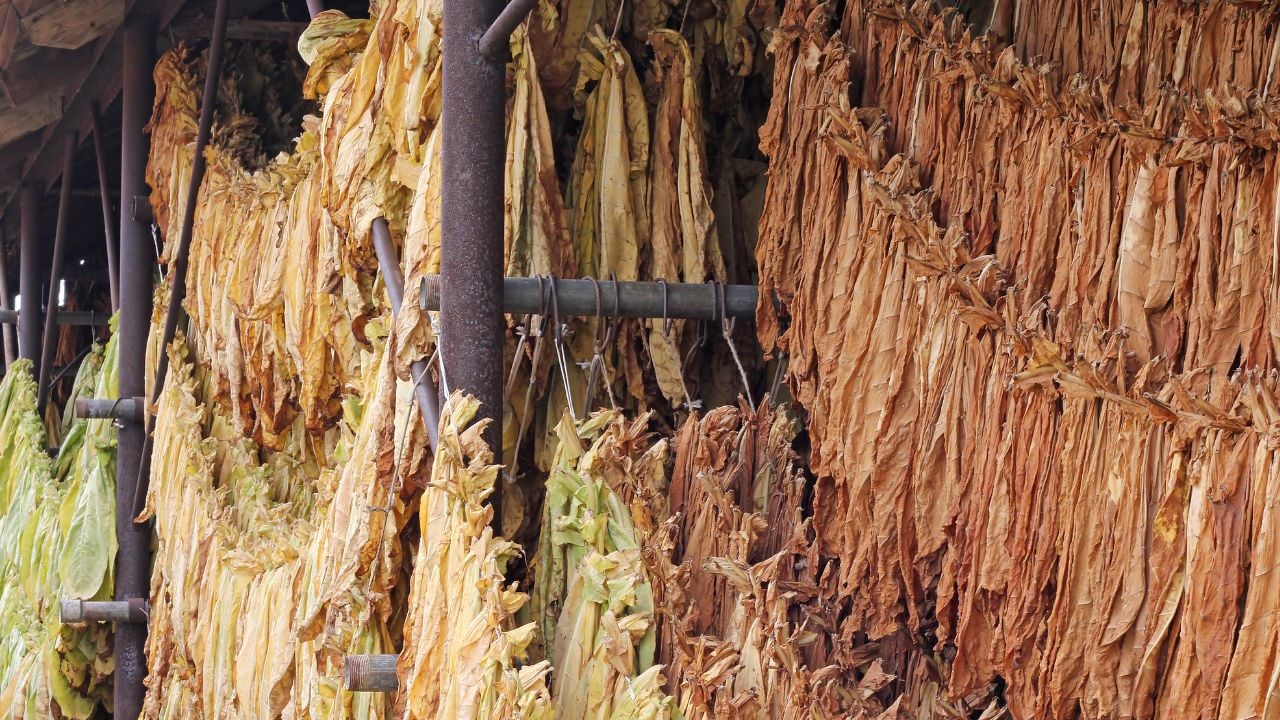
6 Things That Happen in a Kentucky Tobacco Barn After the Leaves Come Down

By late November, Kentucky’s tobacco fields have gone bare.
The barns are another story.
Here’s what happens in a Kentucky tobacco barn after the leaves come down.
1. Bulking the Stalks
The University of Kentucky (UK) burley extension site lists the market preparation steps in order.
Cured tobacco comes out of the curing facility, then goes through temporary bulking, stripping, grading and packaging for market.
Takedown and bulking mean moving the cured tobacco out of the curing structure and consolidating it, so workers can reach it or haul it to a remote stripping location.
The 2025-2026 production guide says the tobacco shouldn’t leave the curing facility until the stems, called midribs, of every leaf have dried to a firm condition.
You bulk the tobacco on a clean, dry surface such as wooden boards, pallets or a wagon bed.
Early in the fall, the stalks are still green and full of moisture.
Bulking with the sticks still inserted is often used then, to let air and moisture move out of the bulk.
A plastic sheet can serve as a barrier under the bulk.
If you use one, a layer of moisture can condense on it under certain atmospheric conditions.
The guide says to check tobacco touching plastic periodically.
2. Checking the Bulk
The guide tells you to put your hand deep into the bulk every day to make sure the tobacco is still cool and not beginning to heat up.
High-moisture tobacco will heat up in the bulk after a day or so when the daily average runs above 50 to 55°F.
The guide lists mold, a bad smell, potential discoloration and, in the worst case, rot as the results.
If your hand finds warmth, UK says to prepare to strip the bulk promptly, open it, or move the tobacco around to air it out.
If dust and other contaminants aren’t prevalent, the bulk can be left uncovered in mild fall weather to let moisture diffuse.
Later, in cooler and drier fall or winter weather, a tarp or plastic cover can go loosely over the bulk to protect it from excessive drying and dust.
3. Bringing Tobacco Back Into Case
Before you can strip tobacco, it has to be pliable enough to handle, a condition growers call being in order or in case.
Getting there takes 70% relative humidity or higher for several hours, which the guide puts at four to 12 hours depending on the temperature.
Producers typically wait for natural weather with good humidity and temperatures above 35°F.
Tobacco in equilibrium with air below approximately 60 to 65% relative humidity will be so dry that leaves will likely shatter when handled, losing quality and weight.
Continuous humidity above 85% leaves it too moist and subject to deterioration and damage when bulked or baled.
You can check a leaf by hand, since one in proper order yields without crumbling when squeezed and springs back slightly after release.
In extreme dry periods, steamers or overhead misting systems can condition tobacco in barns that are somewhat airtight, and the guide mentions them for dark-fired barns.
UK calls an ordering or casing room with heat and humidifiers very useful, since bulked tobacco can be brought into proper order there overnight for stripping the next day.
The ordering room should be large enough to hold at least one day’s supply of tobacco for stripping.
Psst! How much do you know about Kentucky farm country? Take our quiz and see how many you can get right.
Quiz
Kentucky Farm Country
Test yourself on Kentucky crops, livestock and the farm-school system behind them. We bet you can’t get them all right. Prove us wrong?
In USDA’s 2025 numbers, Kentucky’s hay crop was worth about how much?
4. Stripping in the Barn or Stripping Room
The guide says some producers strip early in the fall in the barn driveways, using wagons as the stripping work area.
Others temporarily enclose part of the barn with plastic or tarps, with an improvised or fold-up workbench and a portable vented heater or stove.
On small and medium burley farms, the guide calls the relay method the most used and still predominant.
In the relay method, you line up along a bench 32 to 34 inches high, or a wagon bed, with a pile of cured plants at one end.
The first worker pulls the lowest grade and lays the stalk on a pile.
The second worker removes the next grade, and so on until every leaf grade is off.
The guide says stripping areas must be kept clean, orderly and free of non-tobacco related material (NTRM).
It names trash such as drink cups and food wrappers as a major source.
Styrofoam has become a major NTRM problem for the industry because its particles are very difficult to remove during processing.
The guide also says curing, stripping and storage facilities should be bird-proof, so the tobacco doesn't pick up bird droppings and feathers.
5. Sorting Into Grades
Stripping also sorts the crop, since the guide defines it as removing leaves from the stalks and grouping them by stalk position and physical characteristics to meet marketing requirements.
A full-leafed mature burley plant can have 20 to 24 leaves.
Growers who strip into four grades typically sort by stalk position into flyings (also called trash), lugs (also called cutters), leaf and tips.
Some buyers may not care about a separate flyings grade or a true tip grade.
They may not pay a premium for them, so you may find it more profitable to strip into three.
Three-grade tobacco is typically grouped into flyings, lugs and a leaf/tip grade.
While a big baler fills with 550 to 750 pounds of one grade, the other grades stripped from the plants have to be stored somewhere.
The guide raises that problem in its discussion of stripping rooms.
Company grading specifications vary significantly, so the guide tells you to review your contract and talk with company representatives about their requirements.
How a Four-Grade Burley Contract Counts Leaves
Some four-grade burley contracts define flyings and tips strictly, which means fewer leaves in those grades.
UK's guide describes a split that puts one to three leaves into flyings and five to seven leaves into lugs.
Leaf then takes half the stalk, 10 to 12 leaves, and the remaining two to four leaves go into tips.
6. Pressing the Bales
Most big balers use hydraulic cylinders to press the tobacco into bales that are nominally 42 inches wide, 40 inches tall and 42 inches long.
A tractor-powered baler costs less, and UK says you can move it to barns and stripping rooms where 230-volt power may not be available.
The small conventional bale of oriented leaves, an industry standard since the 1980s, has been replaced by tangled-leaf big bales.
UK and University of Tennessee studies found labor efficiency improvements of 15 to 25% with big bale packaging.
The buying industry initially required big bales in the 500 to 600-pound range.
Weight specifications have risen since big balers were introduced in 2005.
Depending on the buyer and grade, some tobacco is now packaged in bales of 700 to 750 pounds.
Moisture specifications have fallen over that same period.
Some companies now want moisture levels of 20% or less.
The guide calls that very difficult with heavier bodied grades in years with high humidity at stripping time.
If you test a bale with a probe, check at least three to four spots.
The guide cautions growers not to rely on probe readings as the primary way to judge a bale's marketability.
At the Buying Station
Big bales go to a buying station, where a microwave moisture analyzer known as the Malcam assesses the moisture content of the bales it receives.
The instrument is calibrated to find an average moisture value for a bale from microwave signals sent through it.
In a UK evaluation of about 100 big bales, the average of three probe readings per bale was generally like the Malcam readings.
Readings for individual bales often differed significantly.
If you haul a load there, the guide says woven synthetic tarps that may become frayed can be a source of NTRM contamination and shouldn't cover tobacco in transport.
Dark Tobacco's Baskets and Boxes
Burley goes to market in big bales, but baskets have been the most commonly used package for dark tobacco in past years.
If you deliver a basket package, the usual target is 850 pounds, and it shouldn't exceed 900 pounds.
Some dark contracts allow delivery in C-48 cardboard boxes supplied by the buying company.
The boxes measure approximately 28 inches wide, 29 inches tall and 40 inches long, with a target weight of approximately 250 pounds.
At least one major dark tobacco buyer now allows large, tangled-leaf bales like those used for burley.
Most dark tobacco sold as wrapper leaf is still tied in hands, which the guide says should be neatly tied with 10 to 15 leaves plus one tie leaf.
If you haul dark tobacco to a buyer, UK's guide says target moisture levels at delivery are generally no more than 25% for dark fire-cured and 22% for dark air-cured.
A fully mature dark plant has 16 to 18 marketable leaves.
After the 2004 Buyout
The federal tobacco quota and price-support program ended after the 2004 crop year, according to the Economic Research Service (ERS).
The program had been in place since 1938.
In its 2005 planting intentions, the U.S. Department of Agriculture (USDA) had Kentucky burley acreage down 31 percent.
After the buyout, farmers were free to grow any amount, wherever they chose, primarily under contract with a tobacco manufacturer.
In 2025, Kentucky's burley crop came to 48,995,000 pounds from 23,900 harvested acres, roughly nine of every ten pounds in USDA's national burley table, which lists Kentucky and Tennessee.
Adding 9,920,000 pounds of fire-cured and 7,080,000 pounds of dark air-cured brings the state's 2025 tobacco total to 65,995,000 pounds.
Burley made up about three of every four of those pounds.
7 Kentucky Foods That Tell the Story of the People Who Settled There
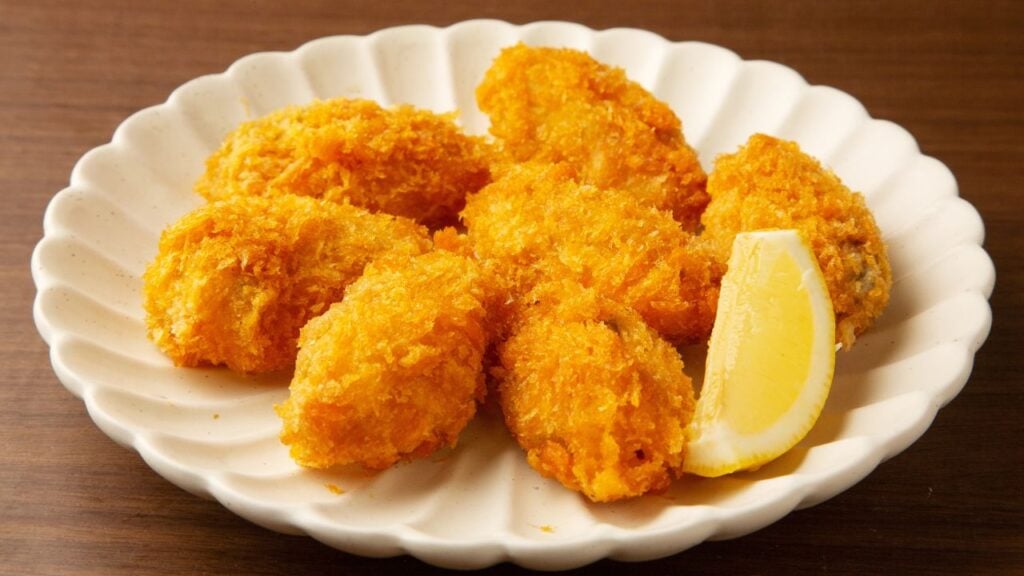
Some dishes on a Kentucky table come with a story about the people who first cooked them.
This list follows a few of those dishes back to the kitchens they came from.
7 Kentucky Foods That Tell the Story of the People Who Settled There
8 Tiny Clues That Reveal Which Part of Kentucky Someone Comes From

Where someone grew up in Kentucky can show in small things, from a word choice to the way a sentence ends.
This list gathers a few of those clues.
8 Tiny Clues That Reveal Which Part of Kentucky Someone Comes From
