
7 Kentucky Foods That Tell the Story of the People Who Settled There

Harrodsburg went up in 1774 as Kentucky’s first permanent settlement.
Nobody wrote down what those families cooked.
The recipes traveled anyway, carried in by German and West African hands among others, and a few of them are still on the table.
These are the Kentucky foods that tell the story of the people who settled there.
1. Stack Cake
Stack cake shows up at Kentucky mountain gatherings looking less like a dessert and more like a group project.
Each cake starts as six, eight, or even a dozen thin, dry molasses layers, and no single household made all of them.
Neighbors carried over one layer apiece to a wedding, a tradition food historian Mark F. Sohn traces to Appalachian folk wisdom, and the bride’s family stacked and filled them with cooked apples right there.
More layers meant more friends.
Some food historians, including Sohn, say frontiersman James Harrod may have carried the idea into Kentucky from his home in Pennsylvania.
He founded Harrodsburg, Kentucky’s first permanent settlement, in 1774.
Nobody can say for certain, and stack cake likely didn’t become a mountain staple until decades later, once flour was easier to come by.
Dried apples carried the whole tradition through winter, since fresh fruit never lasted that long in a mountain cabin.
2. Goetta
Goetta is Northern Kentucky’s birthright, a dish many outside the region have never heard of.
The dish is a loaf of pork, beef, and pinhead oats, seasoned and simmered for hours, then sliced thin and fried crisp for breakfast.
German immigrants from northwestern Germany carried the idea into Covington and Newport in the 1800s, according to Northern Kentucky historians.
The dish stretched a little meat across a large, hungry family with a handful of grain.
Nothing went to waste.
Family producers like Glier’s and Finke’s turned the recipe into a packaged product that outlived the immigrant kitchens that started it.
Order goetta at a Northern Kentucky diner today, and nobody bats an eye.
3. Beaten Biscuits
Beaten biscuits get their name from the labor that made them, not an ingredient.
That took work.
Bakers worked a stiff dough of flour and lard over and over with a mallet, a hatchet handle, or the back of a rolling pin.
The dough blistered, popped, and turned pale and smooth.
Before reliable chemical leavening reached Southern kitchens, enslaved cooks did that beating by hand across the antebellum South, Kentucky included.
It was one of the countless unpaid, physically brutal tasks forced onto them before the Civil War.
Food historians John and Karen Hess theorized the beating technique itself came from West Africa, carried over by the very people forced to perform it.
Writer Toni Tipton-Martin has spent her career recovering the African American cookbook authors written out of Southern food history.
Her work returns credit to the cooks who kept dishes like this one alive after emancipation.
Why Kentucky Biscuits Got Beaten Instead of Kneaded
Beaten biscuits skip baking powder and yeast completely, so mechanical beating was the only way to work air into the dough.
Cooks could spend a half hour or more striking the same lump of dough before it was ready for the oven.
The payoff was a dense, flaky biscuit that could sit in a tin for days without going stale.
4. Leather Britches Beans
Leather britches beans start as ordinary green beans, strung on thread like popcorn garland and hung by a chimney or a porch rafter to dry.
Families reconstituted them all winter long, soaking and simmering the shriveled pods with a piece of pork until they turned tender again.
Food historian Ronni Lundy traced the method to German settlers, whose name for it, Getrocknete Bohnen, describes the exact same trick.
The trick didn’t change.
Lundy, herself Kentucky-born, found the connection at Virginia’s Frontier Culture Museum, where a German settler’s kitchen display still hangs dried apple rings and threaded bean pods by the chimney.
That same setup is what the Appalachian Kentucky kitchens she grew up around passed down for generations.
Psst! How much do you know about Kentucky’s other food history? Take our quiz and see how many you can get right.
Quiz
Kentucky Food History IQ
Answer these questions on Kentucky food firsts and famous names. We bet you can’t get them all right. Prove us wrong?
Which Louisville hotel gets credit for inventing the Hot Brown sandwich in 1926?
5. Soup Beans and Cornbread
Soup beans and cornbread turn up at Kentucky mountain tables on a random Tuesday, not just a holiday.
A pot of pinto beans simmers all day with a piece of pork, a skillet of cornbread bakes alongside it, and that is supper.
Frugality became tradition.
Appalachian seed saver Bill Best lives in Berea, Kentucky, and traces his family's bean stock to Cherokee families who intermarried with settlers and passed down bean-growing knowledge.
His family has kept that line going for more than 150 years.
Some beans outlive the people who planted them.
Those settlers already leaned on a British and German diet built around meat and starch, and the shared beans slotted right into it.
6. Modjeska Candy
Modjeska candy is a marshmallow dipped in caramel, and the story Louisville tells traces it to 1883.
Confectioner Anton Busath had immigrated from France and built a downtown candy shop years before he caught a performance by Polish stage actress Helena Modjeska at Macauley's Theatre.
The story goes that he was so taken with the show that he wrote to Modjeska and asked to name his new confection after her.
She said yes.
Modjeska sent back an autographed portrait, and Busath kept it hanging in his store for decades, long after the actress had moved on to other cities and other stages.
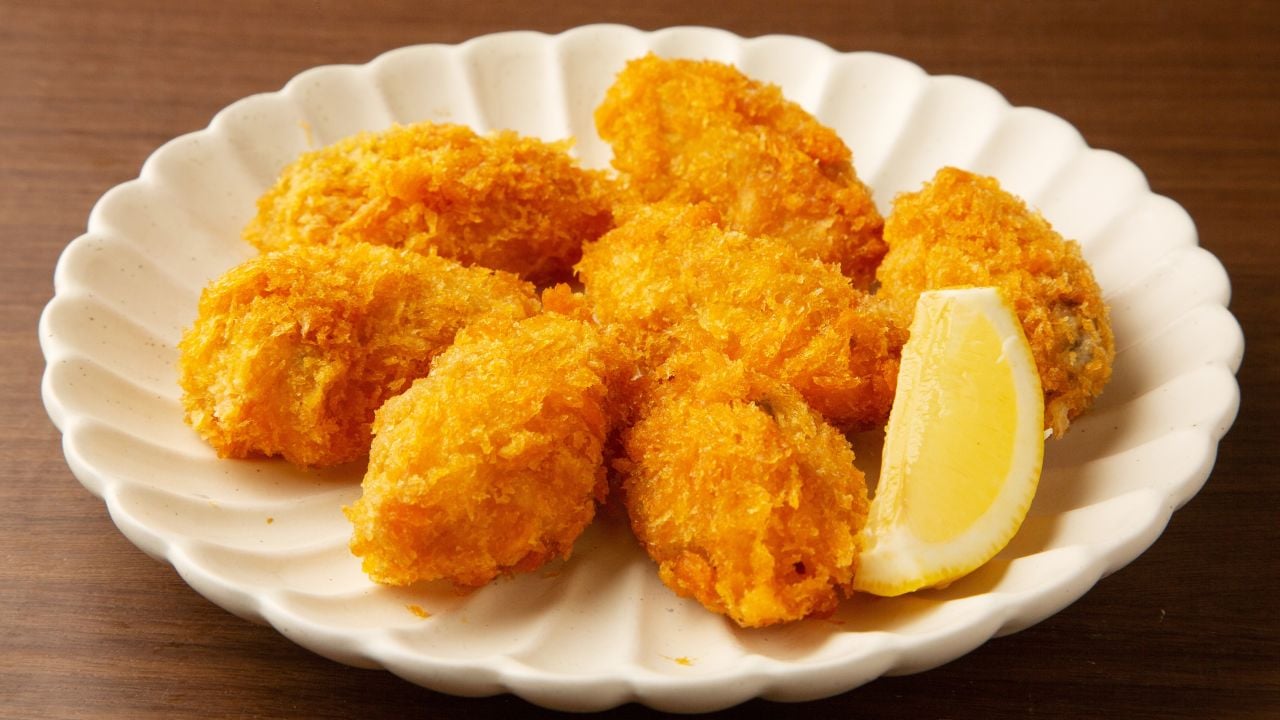
7. Rolled Oysters
Rolled oysters are Louisville's classic bar snack, an oyster rolled in cracker meal, deep-fried, and served hot enough to burn the roof of your mouth.
Regional lore credits Italian immigrant Phillip Mazzoni, who ran a Louisville saloon in the late 1800s once rail lines made it possible to ship East Coast oysters that far inland.
Mazzoni gave away a free oyster with every beer or shot of whiskey a customer bought.
That deal couldn't survive once Prohibition banned the legal beer that came with it.
Free oysters became folklore.
Nobody knows if Mazzoni invented the recipe or brought it from Italy.
Either way, it is pure Louisville now, still tied to the same Italian family name more than a century later.
A few Louisville institutions tried keeping the tradition alive decades later, even as rising oyster prices pushed many other bars to drop it from the menu.
Louisville still calls it by the name of the family that started it, the same Mazzoni who once gave the first rolled oyster away for free.
9 Things That Change the Second You Cross From Ohio Into Kentucky
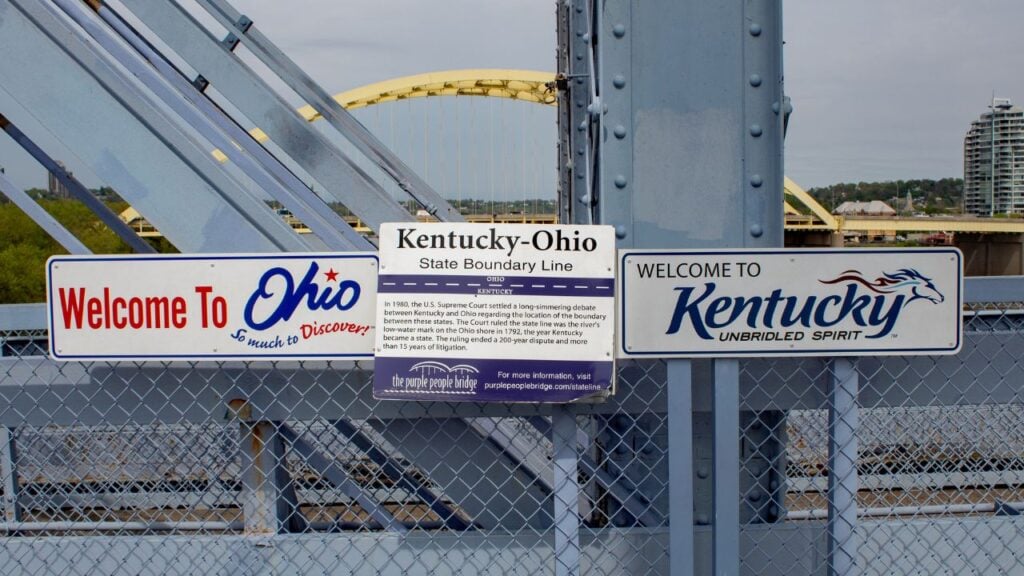
Drive the Roebling Suspension Bridge out of Cincinnati, and Covington, Kentucky waits on the other side. The crossing opened in 1867 as one of the longest suspension bridges in the world at the time.
Nothing about the drive looks different, but the tax on the receipt and the price at the pump change the second the tires cross the state line.
9 Things That Change the Second You Cross From Ohio Into Kentucky
10 Old-School Neighbor Gestures That Need to Make a Comeback in Kentucky
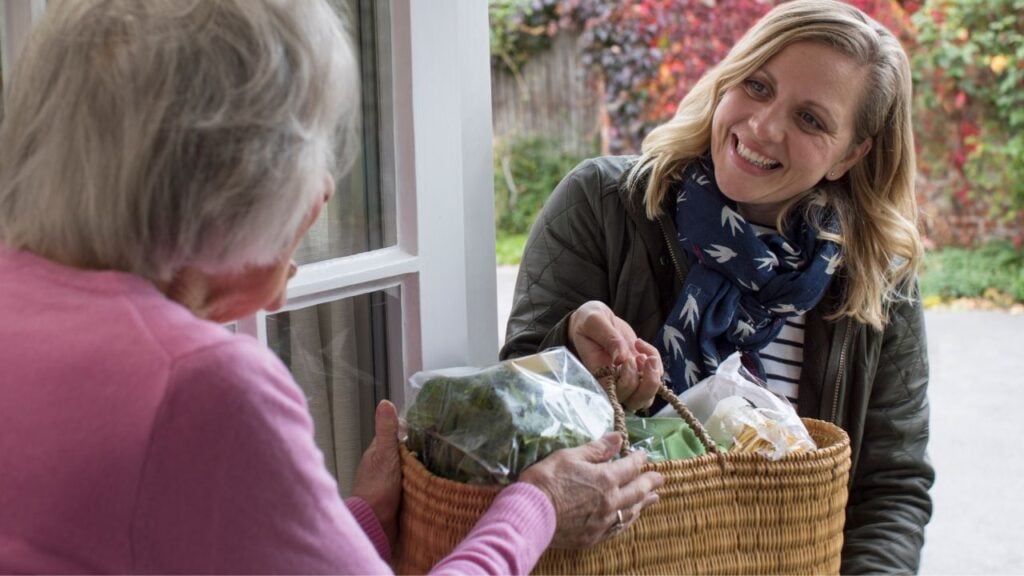
Older generations remember when knowing the neighbors wasn't optional, when the person next door helped with a flat tire or a broken fence without being asked twice.
These days a polite nod at the mailbox counts as a whole conversation for a lot of Kentucky neighborhoods.
10 Old-School Neighbor Gestures That Need to Make a Comeback in Kentucky
