
8 Things Hoosiers Miss Most After They Move Away

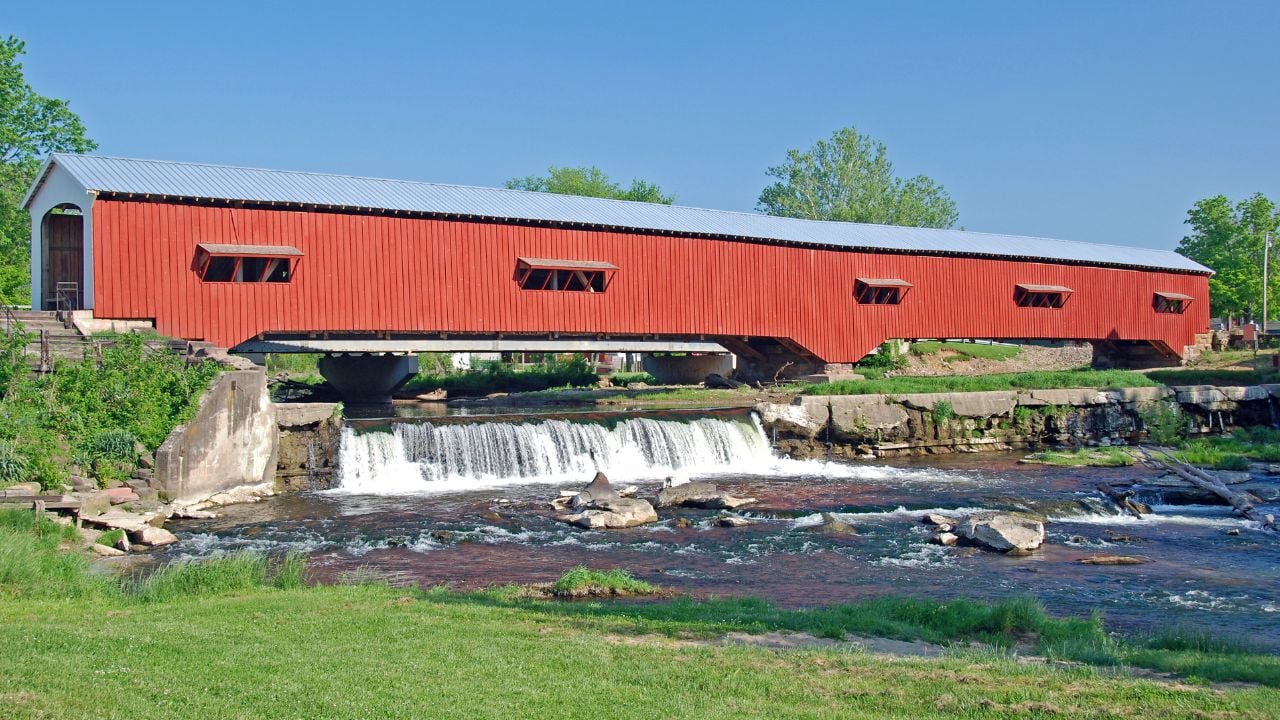
Parke County calls its Covered Bridge Festival Indiana’s largest, and this year the ten-day event opens its gates on October 9.
It’s a homecoming of sorts.
Every fall the festival pulls Hoosiers back from wherever they moved to, the same people who packed up for other states and never quite let go of home.
These are the things Hoosiers miss most after they move away.
1. Tenderloin Sandwiches
The breaded pork tenderloin sandwich traces back to a lunch cart on the courthouse square in Huntington, Indiana.
Nick Freienstein opened Nick’s Kitchen there in 1908, the son of German immigrants who grew up on schnitzel.
He swapped the veal for pork, pounded the cutlet thin, breaded it, and started selling the sandwiches from a cart before the restaurant even had a door.
The recipe never moved.
Nick’s Kitchen still stands at the same Jefferson Street address, frying the same recipe more than a century later.
The tenderloin sandwich still tops the must-eat list on a trip back into Indiana, ahead of anything fancier the trip might include.
2. Hoosier Hysteria
Indiana built some of the country’s biggest gyms for teenagers with a basketball, long before anyone outside the state understood why.
Milan High School proved the obsession wasn’t overblown in 1954, when its tiny roster beat four-time defending champion Muncie Central, 32-30, for the state title.
Bobby Plump made the shot.
An estimated 40,000 people flooded Milan to celebrate, and the run became the basis for the movie Hoosiers three decades later.
That single afternoon still shapes how fans watch basketball, from packed Friday night gyms in the smallest towns to deafening pep rallies before a sectional game.
Few things out of state replace a February sectional or regional, not a college town Saturday and not a big-league arena somewhere else.
3. Indiana’s Month of May
Hoosiers call the weeks before the Indianapolis 500 the Month of May, and many plan a trip home around at least one event on the calendar.
The Indianapolis Motor Speedway has run the race since 1909.
Race Day fills more than 350,000 seats and infield spots, a Guinness World Record for the largest stadium on earth.
Nothing else comes close.
The 500 Festival runs a parade, a mini-marathon, and weeks of downtown events leading up to Race Day.
A trip home for the Month of May means choosing from far more than the race alone.
The Leelanau News columnist calls herself a native Hoosier, and this year she stayed home while her brother and father made the trip to the speedway.
She traded texts with her dad as he made his way into the track, and the play-by-play left her feeling like part of Race Day from hundreds of miles away.
Indiana’s Official State Song
Hoosiers who’ve moved away can usually hum the wrong state song without realizing it.
Indiana’s official state song has nothing to do with the tune everyone hears before the green flag drops.
State lawmakers named Indiana’s state song in 1913: “On the Banks of the Wabash, Far Away,” written by Paul Dresser about the river valley he grew up missing.
“Back Home Again in Indiana,” the song played every Race Day, has never held any official title at all.
4. Covered Bridge Season
Parke County runs what its tourism board calls Indiana’s largest festival, ten days built around the county’s 31 covered bridges every October.
The Parke County Covered Bridge Festival started in 1957 and now takes over nine small towns at once, the courthouse lawn in Rockville included.
It doesn’t fade.
A place with only two seasons doesn’t erase it — Brown County’s hills still turn color every October, on schedule, whether or not the trip home happens that year.
The color usually peaks in the second half of October, right when the covered bridge crowds are thickest.
5. Summer Cornfields
More than 5.4 million acres of Indiana cropland go to corn in a typical year, according to the U.S. Department of Agriculture.
The smell of a field after a summer rain is one of the first things people notice is gone once they’ve left Indiana.
Nothing else smells like that.
A columnist for The Owen News closed her piece on missing Indiana with the words to “Back Home Again in Indiana.”
The 1917 song name-checks new-mown hay drifting through the fields.
Her reason for coming home was simpler than the song: A few homesick months living out of state were enough.
Detasseling a cornfield for summer cash is still a rite of passage for generations of teenagers, the kind of job people complain about for decades and would never trade.
6. Indiana Dunes
A national park sits inside the state’s borders, and many people who’ve never been there assume it doesn’t exist.
The National Park Service renamed Indiana Dunes National Park in February 2019, making it the 61st national park in the country.
It doesn’t look like Indiana.
Fifteen miles of Lake Michigan shoreline and 15,000 acres of dunes, prairie, and marsh draw about 2 million visitors a year.
The closest a landlocked state gets is a reservoir with buoy ropes, nothing like standing on a dune and watching freighters cross the horizon.
7. Waves From Strangers
Small-town hospitality built the state’s reputation on the details: A wave from a stranger on a gravel road, a name remembered after one conversation at the feed store.
A columnist for The Owen News once summed up the same idea: In Indiana, strangers either already know your name or wave like they do.
Nobody has to try.
Small towns across the state still run this way, a wave from every passing pickup truck on a country road.
People who move to bigger cities or other states describe having to relearn eye contact with strangers, since nobody there expects a hello from someone they’ve never met.
Psst! How much do you know about Indiana? Take our quiz and see how many you can get right.
Quiz
Hoosier State IQ
Answer these questions on Indiana history, symbols, and firsts. We bet you can’t get them all right. Prove us wrong?
Historians still argue about where Indiana’s nickname came from. What’s the honest answer?
8. What a Dollar Still Buys
Indiana's typical home costs $260,808 today, according to Zillow, while the same measure puts the national number at $371,774.
That's no small gap.
A backyard, a spare bedroom, and a driveway wide enough for two cars come standard in Indiana at a price that buys a lot less somewhere else.
One Hoosier described it in a piece for Life In Indy: A one-bedroom apartment traded for a house with a yard, family minutes away instead of a flight away.
That math holds up outside Indianapolis too, in college towns and courthouse squares where a starter home still costs less than a down payment would somewhere else.
It's the kind of gap that shows up on a spreadsheet about a year after the move.
That's usually right around the time someone finally prices out a flight home for the holidays.
5 Indiana Basketball Traditions That Baffle the Rest of the Country
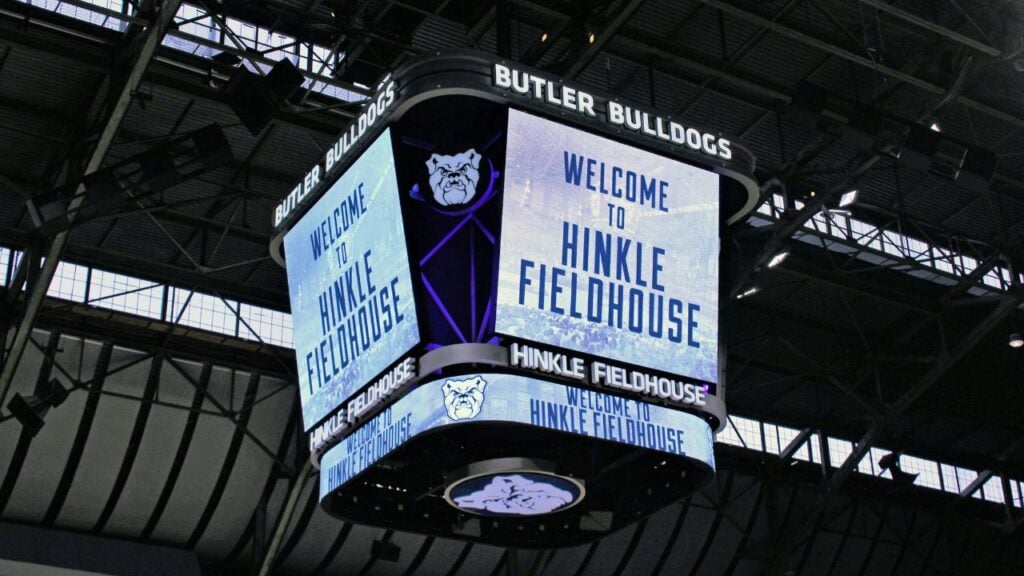
Indiana treats a Friday night gym the way other states treat a stadium, and the state's high school tournament still draws more attention than out-of-staters expect.
Out-of-staters usually need an explanation for why a town of a few thousand cares this much, and why nobody in Indiana thinks that's unusual.
5 Indiana Basketball Traditions That Baffle the Rest of the Country
