
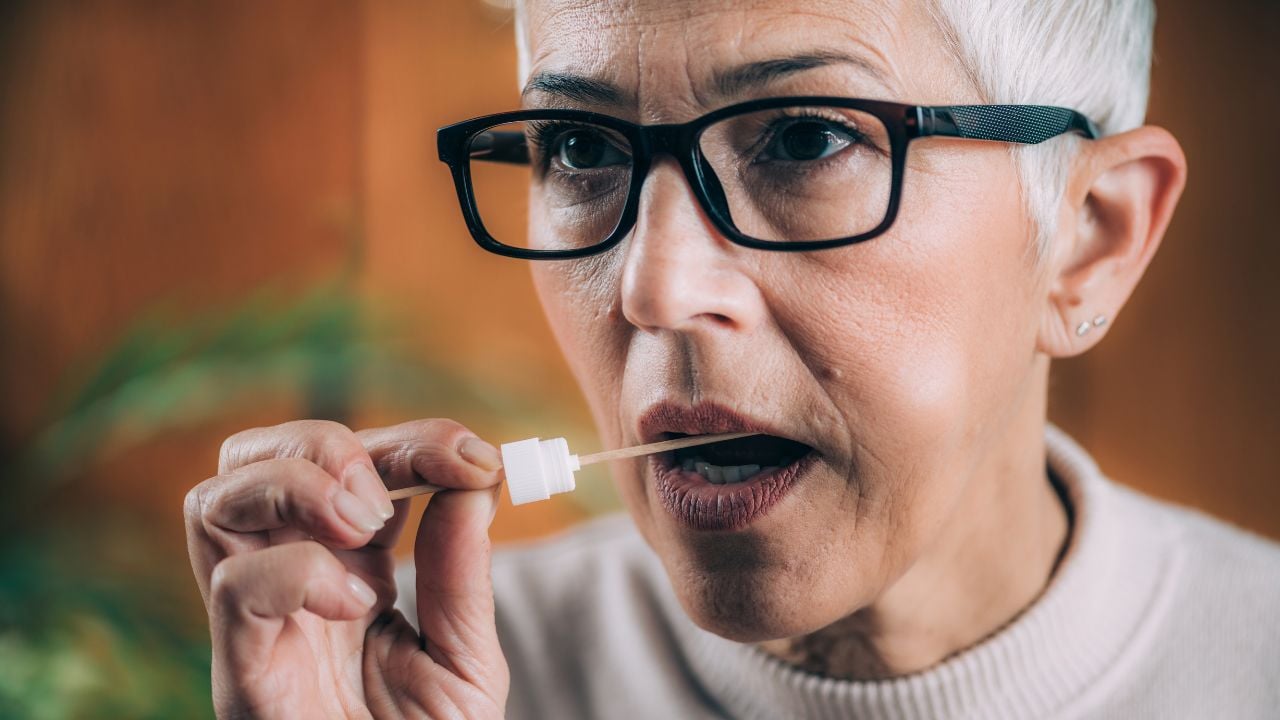
9 At-Home Health Test Claims Illinoisans Shouldn’t Rely On

Researchers once mailed pieces of a single stool sample to seven different at-home gut-health testing companies, according to a study in the journal Communications Biology.
The results barely agreed with each other.
These are the at-home health test claims Illinoisans and Americans everywhere shouldn’t rely on.
Note: This is general information, not medical advice. Guidelines are subject to change, so talk to a doctor about your situation.
1. Food-Sensitivity Panels
A food-sensitivity test panel promises to explain bloating, headaches, or fatigue from one finger-prick blood sample mailed to a lab.
The test measures IgG, a type of antibody your body produces after eating a food, across dozens of foods at once.
What’s the catch?
IgG mostly shows you’ve eaten a food before, not that it’s making you sick now.
The Canadian Society of Allergy and Clinical Immunology addressed this directly in its Choosing Wisely guidance: Skip IgG panels when the question is food sensitivity.
Prior exposure isn’t illness.
A panel that flags twenty foods as problems isn’t proof you need to cut twenty foods from your plate.
2. One-Sample Testosterone Tests
Testosterone test kits sold online promise a same-day verdict on low T from a single drop of blood.
One reading isn’t enough.
Testosterone levels swing hour to hour, running highest in the morning and lowest at night.
A test taken at the wrong hour can read low on an ordinary day.
The Endocrine Society requires two separate morning blood tests, taken between 7 and 10 a.m., before a hypogonadism diagnosis holds up, alongside symptoms that match.
One test, one guess.
3. Gut Microbiome Diet Kits
Gut microbiome test kits ask for a stool sample and promise a personalized diet built around your bacteria.
The pitch sounds precise.
Researchers tested the idea directly.
They split a single stool sample three ways and mailed the pieces to seven different microbiome-testing companies for a study in the journal Communications Biology.
Of the more than 1,200 microbial groups the seven companies reported between them, only three showed up on every single list.
The overlap was tiny.
Harvard Health reviewed the category and said the tests are not yet reliable, pointing readers toward a fiber-rich, plant-heavy diet instead of a lab report.
4. Leaky Gut Test Kits
Leaky gut test kits promise to explain fatigue, bloating, and brain fog by measuring how permeable your intestinal lining supposedly is.
There’s one problem with that promise.
Leaky gut syndrome isn’t a recognized medical diagnosis.
Cleveland Clinic states plainly that no standard test exists to measure intestinal permeability in a doctor’s office, let alone through the mail.
None exists.
The kits sold online are measuring something medicine hasn’t agreed is even measurable.
5. Mold Test Kits
Home mold test kits promise to prove that mold explains a household’s ongoing headaches, fatigue, or breathing trouble.
Every home carries some mold spores in the air, so a positive reading rarely means much on its own.
According to the Environmental Protection Agency (EPA), there’s no federal health standard for what counts as a safe or dangerous mold level indoors.
No standard means no verdict.
The agency adds that a test result can’t even confirm whether a building meets a mold standard because no such standard exists to meet.
A negative result doesn’t clear your house, and a positive one doesn’t diagnose your symptoms.
Psst! Think you can spot which health test claims are backed by solid oversight and which claims are just marketing? Flip each card and find out.
6. Immunity Antibody Tests
Antibody test kits check your blood for signs of a past infection or vaccination.
Sellers often market them as proof you’re protected from getting sick again.
That’s not what they show.
The Food and Drug Administration (FDA) said as much directly in May 2021: People shouldn’t use results from authorized antibody tests to judge their immunity or protection.
Protection isn’t a number on a lab report.
A positive antibody result can still leave someone just as likely to catch the next infection that comes around.
7. UTI Screening Strips
Urinary tract infection (UTI) screening strips promise a clear answer at home: Nitrites and white blood cells either show up, or they don’t.
A negative strip feels like permission to stop worrying.
It shouldn’t always be treated that way.
A 2010 report in U.S. Pharmacist evaluated one branded strip, the Women’s Wellbeing UTI Home Test Stick, now sold as the vH Essentials UTI Home Test.
It found the product caught a true infection correctly about 99% of the time.
That figure comes from the manufacturer’s submitted data on one product, not an independent study of UTI strips as a category.
Certain factors can still produce a false negative, like heavy vitamin C intake, antibiotics, or urine that hasn’t sat in the bladder long enough.
The report’s guidance says a patient with lasting symptoms and a negative strip still needs a doctor’s evaluation, not a shrug.
Symptoms outrank the strip.
8. Genetic Health-Risk Kits
Direct-to-consumer genetic kits promise to spell out your future health risks from a tube of saliva.
A clean result feels like a clearance.
It isn’t one.
The FDA warns plainly that researchers haven’t identified every gene variant tied to a disease yet.
A negative reading can still miss a risk the test was never built to catch.
A positive reading overreaches just as often.
The same FDA guidance states flatly that a positive result doesn’t mean a person will develop that disease or condition.
One reading, dozens of unknowns.
What “Validated” Means for a Genetic Kit
A genetic health-risk kit’s accuracy rests on two separate FDA tests, not one.
Analytical validity checks whether the lab work reads your DNA sample correctly.
Clinical validity checks whether the gene variant it finds is tied to the disease it names.
A kit that passes only the first test can still hand you a health prediction nobody has proven true.
9. Adrenal Fatigue Panels
Adrenal fatigue panels test saliva or blood for cortisol and promise to explain constant tiredness as a worn-out adrenal gland.
Mayo Clinic has a blunt answer for that pitch.
Adrenal fatigue isn’t an official medical diagnosis, the clinic says, but a general term for symptoms that don’t point to one clear cause.
No diagnosis, no test.
The theory behind the panels holds that normal blood tests miss a small drop in adrenal output, but Mayo Clinic says there’s no evidence to support that idea.
Constant tiredness deserves a medical work-up, not a saliva kit sold on a wellness site.
Where At-Home Tests Still Deliver
Not every at-home test is a reach.
Some clear a high bar.
Pregnancy tests, blood glucose meters, and rapid strep or COVID-19 tests went through the FDA’s higher-risk review path before reaching a store shelf.
That’s the same review path the agency reserves for tests whose results carry medical weight.
A glucose meter has to prove its readings match a lab draw closely enough to guide an insulin dose, and regulators check that math before the box gets a barcode.
That’s the kind of proof missing from a saliva vial mailed straight to a wellness startup.
8 Illinois Toll Mistakes That Turn Into a Suspended Registration

A single missed toll on the Illinois Tollway looks small right up until the fine grows.
A few unpaid dollars can rise toward $20 a toll in about four months, and Illinois can eventually come after a driver’s registration over it.
8 Illinois Toll Mistakes That Turn Into a Suspended Registration
8 Yosemite Mistakes Tourists Make Once Summer Ends

The parking lots empty out fast once the summer crowds clear.
The park’s shuttle schedule, road closures, and campsite openings all change once fall arrives.
